Iowa Explosions Could Send Lead Dust Into Illinois
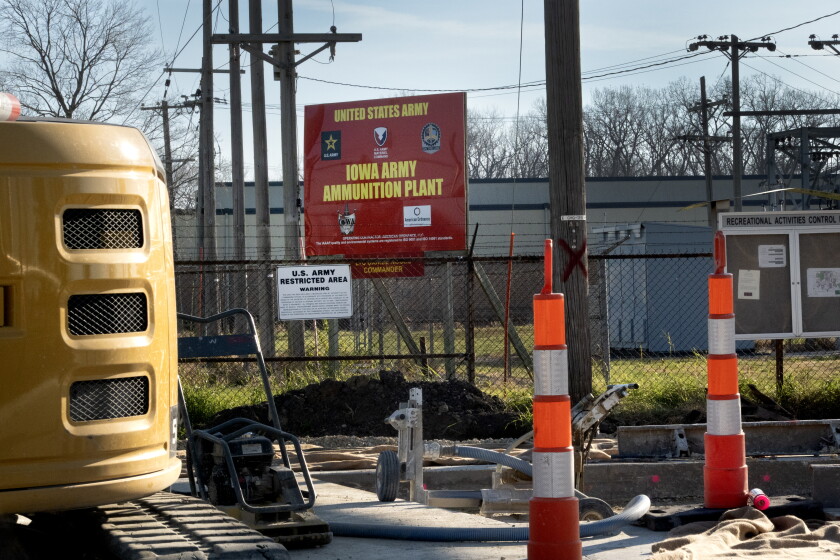
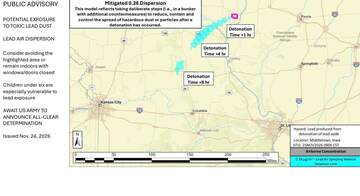
The Army plans to destroy 68 drums containing about five tons of deteriorated lead azide at its Iowa munitions facility in Middletown on November 20. Two detonations are scheduled for around noon. Army maps indicate that airborne lead dust could reach western Illinois, including Mercer County, though wind and weather may change the forecast.
The Army has advised people living or working in potentially affected areas to stay indoors, close windows and doors, and avoid unnecessary travel while the plume passes. Illinois health officials recommend keeping windows closed for 24 to 48 hours after the blasts. They also advise washing hands before eating, leaving shoes at the entrance, and cleaning outdoor surfaces with soap and water if visible dust settles. People concerned about possible exposure can ask a doctor about a blood lead test.
People living close to Middletown's City Park and Butterfly Park have been asked to leave from 8 a.m. to 2 p.m. The Army says this recommendation is mainly to reduce the risk of windows being damaged by blast shockwaves. A local Armed Forces Reserve Center is available for people who need somewhere to stay.
On November 13, the EPA granted the Army emergency authorization to destroy the material at the plant. The agency said the explosives had become more sensitive during storage, making movement risky. The Army plans to use earth-covered concrete structures, sand-filled barriers, water and misting equipment to limit dust. The plume is expected to remain airborne for up to an hour, depending on conditions.
Illinois officials have called for air, soil and surface-dust testing after the operation and public release of results. The Illinois EPA says it will review federal modeling and check readings collected by its northern Illinois air-monitoring system. The Army plans to update its maps before the detonations; its current modeling predicts airborne lead levels below the EPA threshold for requiring protective action.
Illinois Needs Answers Before Lead Dust Crosses the Border
The Army is preparing to detonate 68 drums of deteriorated lead azide at its Middletown, Iowa, ammunition plant on November 20. Its maps show lead dust could reach western Illinois, including Mercer County, putting a cross-border public health concern in focus.
Illinois officials say residents in potentially affected areas should remain inside, with windows shut, for 24 to 48 hours after the blasts. They also advise washing hands before eating, removing shoes at home entrances and cleaning outdoor surfaces if visible dust settles. Lead can harm the nervous system and other organs, and children are especially vulnerable.
The EPA authorized the Army to destroy the explosives at the site, saying deterioration had made them increasingly sensitive and that moving them could risk an accidental explosion. The Army says it will use barriers, water and misting equipment to limit dust, and predicts airborne levels will stay below the EPA threshold for protective action. That forecast does not establish how much lead could settle on individual homes and surfaces.
Illinois EPA Director James Jennings has called for post-blast air, soil and surface-dust testing in potentially affected areas, with results made public. His agency says it had yet to be given information on the extent or techniques for the Army's air monitoring. It plans to review federal modeling and monitor northern Illinois air data, but those steps do not replace the comprehensive local testing officials are seeking.
Residents closest to the plant have been asked to leave for six hours because of blast shockwaves. Others are being told to shelter in place and follow updated Army maps as weather conditions may change the projected plume.
Army Moves to Neutralize Unstable Explosives With Safety Measures
The Army plans to detonate 68 drums of deteriorated lead azide at its ammunition facility in Middletown, Iowa, on November 20. The EPA permitted destruction at the storage site after determining that the material had become increasingly sensitive and that disturbing or moving it could trigger an accidental explosion.
The operation is designed to reduce the risk posed by the unstable explosives. The Army plans to conduct the blasts inside earth-covered concrete structures surrounded by sand-filled barriers, while crews saturate nearby soil and use misting equipment to limit lead dust. Officials expect the airborne cloud to last at most about an hour, with wind affecting its duration.
Army forecasts indicate dust could travel into western Illinois, including Mercer County. The Army says projected airborne levels could rise but remain below the EPA threshold for requiring protective action. The forecast may change with weather, and updated maps are planned before the detonations.
Authorities have issued practical precautions for residents. People in potentially affected areas are advised to stay indoors, close windows and doors, and keep indoor air recirculating where possible. Illinois health officials recommend those measures for 24 to 48 hours after the blasts and advise washing outdoor surfaces if visible dust settles.
The Army has asked residents immediately near Middletown City Park and Butterfly Park to leave from 8 a.m. to 2 p.m., primarily because of possible window damage from shockwaves. Illinois officials are reviewing federal modeling and monitoring air data, while seeking post-operation testing of air, soil and surface dust.
Reported by Newsweek, FOX 2 Detroit, The Boston Globe, The Intercept, Daily Mail US, The Daily Beast, Mother Jones, The Philadelphia Inquirer, Fox News, Ars Technica, CBS Texas, The Conversation US, The Washington Examiner, CNN, ABC News, Townhall, BBC, Wired, Business Insider, Chicago Sun-Times, PBS NewsHour, WTOP, The Daily Caller, NBC News, The Blaze, The Christian Science Monitor, CBS Boston, The Verge, The New Republic, CBS News, The Daily Wire, MSNBC, The Guardian, Breitbart, AZFamily, PJ Media, Raw Story, CBS Miami, Space.com, Deseret News, Common Dreams.