Army Delays Iowa Lead Azide Detonation Until Monday
The Army has delayed its planned destruction of 68 drums of degrading lead azide stored at a munitions facility in Middletown, Iowa. The detonation, initially scheduled for November 20, is now set for November 23, though no time has been announced. The material weighs about 9,700 pounds and has been stored in bunkers for roughly 20 years.
The Army says the lead azide has become so sensitive to movement, friction and shock that transporting it could trigger an explosion. It considers a controlled detonation on site the option posing the lowest immediate risk. The material is used to make detonators.
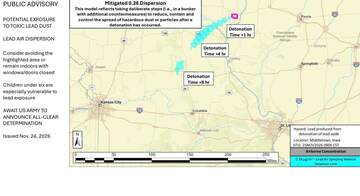
The plan has raised concerns about lead particles escaping into the air. Army models indicate a dust plume could reach eastern Iowa and western Illinois. The blast is also expected to cause loud noise and ground vibrations; the dust could linger for up to an hour. The Army said water would be used to dampen the soil and spray the area during the operation.
People living close to Middletown’s City Park and Butterfly Park were advised to evacuate temporarily because the blast could break windows. Those staying nearby were told to remain indoors and close windows and doors. Several area schools had planned to close on November 20.
Lawmakers from Iowa and Illinois, including Republican Rep. Darin LaHood, pressed the Army and EPA for answers. Sen. Chuck Grassley called for a delay, and an emergency court filing by the Iowa Environmental Council and Sierra Club sought to halt the EPA permit. Acting Army Secretary Adam Telle postponed the detonation to allow more public communication, while saying the delay would extend only until the latest possible moment before a forecast temperature drop that could further destabilize the material.
Army’s Lead Azide Plan Raises Urgent Questions About Public Exposure
A plan to blast nearly 9,700 pounds of lead azide at an Iowa military munitions site could send lead dust across eastern Iowa and western Illinois. On November 20, the Army postponed the detonation, initially scheduled for that day, until November 23, after lawmakers sought answers and environmental groups moved to block the EPA permit.
The material has been stored in 68 drums for about 20 years. The Army says it has degraded to the point that movement could cause an explosion, and says an on-site detonation is the lowest-risk option. But the operation itself could spread lead particles: the expected dust plume may linger for up to an hour, alongside loud noise and ground vibrations.
The Army plans to soak the soil above the concrete bunkers and use water misters to reduce airborne lead. Nearby residents were advised to evacuate around Middletown City Park and Butterfly Park or stay indoors with windows and doors shut. Several schools had planned to close on November 20.
Republican Rep. Darin LaHood and Sen. Chuck Grassley were among those pressing for answers or a delay. An emergency court filing seeking a stay was submitted by the Iowa Environmental Council and Sierra Club. Their challenge underscores the stakes of moving forward with a permit while communities are still demanding information about potential exposure. Acting Army Secretary Adam Telle said the delay would allow more public communication, but also said it would last only until the latest possible moment before colder weather could make the explosive less stable. No detonation time has been announced for November 23.
Army Balances Explosive Danger With Lead Concerns in Iowa Delay
The Army faces a dangerous choice at its Iowa ammunition plant: destroy degrading lead azide where it sits or risk an explosion by moving it. On November 20, acting Army Secretary Adam Telle delayed the planned controlled detonation until November 23 to allow more public communication, while saying the operation would be pushed as late as possible before a forecast temperature drop.
The 68 drums, weighing about 9,700 pounds, have been kept in storage bunkers at the Iowa Army Ammunition Plant for roughly 20 years. The Army says the material is now so vulnerable to movement, friction and impact that transporting it could trigger an explosion. It says an on-site controlled blast is the option posing the lowest immediate risk.
The detonation could release lead dust, with Army models showing a plume reaching eastern Iowa and western Illinois. The Army plans to saturate the soil above the bunkers and use water misters to reduce lead migration. The blast could also break windows, produce ground vibrations and leave a dust plume for up to an hour. Nearby residents were advised to evacuate or stay indoors with windows and doors closed.
Lawmakers from Iowa and Illinois, including Republican Rep. Darin LaHood, pressed the Army and EPA for answers, and Sen. Chuck Grassley sought a delay. An emergency motion seeking to stop the EPA permit was filed by the Iowa Environmental Council and Sierra Club. Those concerns deserve answers, but the delay cannot remove the hazard posed by unstable explosives; the Army says colder conditions could make the material still less stable. The detonation time for November 23 has not been announced.
Reported by The Washington Examiner, Townhall.