Midterm Forecasts Split as Parties Race to Turn Out Voters
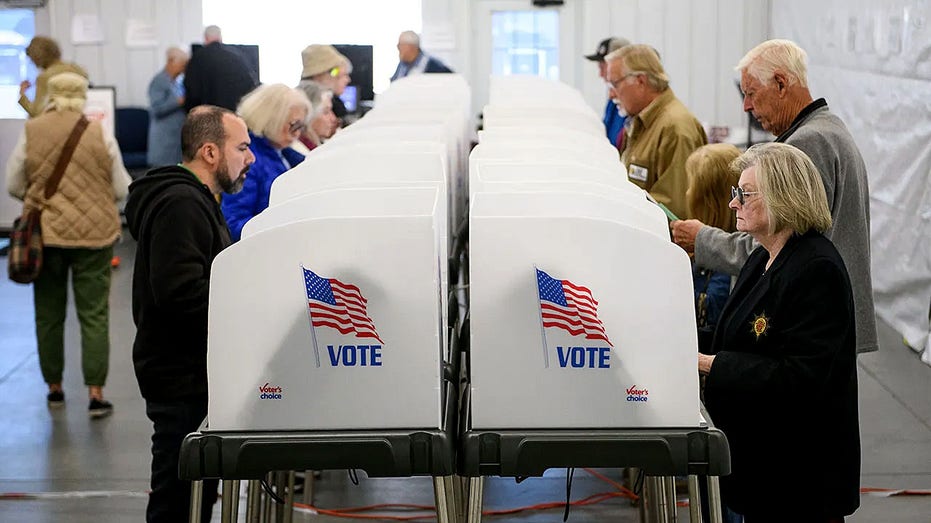
With the November 3 midterms a week away, more than 31 million early votes had been cast and forecasts pointed to a possible Democratic House majority. But the Senate remained highly competitive, and the outcome in closely contested races could turn on who votes.
A NPR/PBS News/Marist poll put Democrats eight points ahead on the congressional ballot among likely voters. It also found that 71 percent of Democratic likely voters expressed strong eagerness to vote, versus 61 percent of Republicans. Among voters under 45, enthusiasm was lower at 42 percent, while 68 percent of MAGA voters said they were very enthusiastic.
The poll found President Donald Trump’s approval at 40 percent among likely voters, with 59 percent disapproving. Yet a lead in national polling may not translate into a large House gain: district map changes could constrain Democratic pickups, and only about four dozen House seats were described as truly competitive.
The Senate presents a steeper challenge for Democrats, who need a net gain of four seats for control. Some analysts see a path through races including North Carolina and Ohio, while Republican candidates are facing unexpectedly close contests in states such as Mississippi and Kansas. Republican leaders, including Trump and Vice President JD Vance, are campaigning in states the president carried comfortably in 2024.
Republican commentators argue that polling errors and stronger conservative turnout could upset expectations; Democratic commentators point to GOP spending in traditionally safe states and signs of weaker Republican early voting. Early ballots do not reveal voter choices, and the final results will determine whether the forecasts hold.
GOP Scrambles to Defend Deep-Red Seats as Voters Reject Trump’s Record
Republicans are spending scarce final-week resources defending territory that should be safe, a sign of how badly Trump’s unpopular agenda is weighing on the party. His approval was 40 percent among likely voters, with 59 percent disapproving, while voters continue to face concerns about prices and household finances.
Democrats led by eight points among likely voters in the NPR/PBS News/Marist congressional poll. Republicans are now campaigning in places including Mississippi and Kansas, while vulnerable House incumbents are drawing new attention. The scramble comes as Democrats seek to regain the House and break the GOP’s control of Washington.
The Senate map remains difficult for Democrats, who need four net seats to win a majority. But close races in traditionally Republican states, including Mississippi, and contests in North Carolina and Ohio could put the chamber in play. District map changes may restrict House gains even if Democrats win more votes nationally.
Democrats also have turnout concerns: enthusiasm among voters under 45 was 42 percent, below the 68 percent recorded among MAGA voters. Still, Democratic voters overall reported greater enthusiasm than Republicans. Early voting figures vary by state and cannot show how people voted, but reports of weak Republican turnout add to the warning signs for the GOP.
Republicans say polling may underestimate their voters and that a late surge could blunt Democratic gains. But Trump’s campaigning in states he previously won by wide margins underscores the stakes for a party trying to defend its majorities on November 3.
Polls Don’t Decide Elections, and Republicans Still Have a Path
Democrats are treating an eight-point congressional-ballot lead as a verdict before voters have finished voting. They should not. Polling has missed the balance between the parties in past elections, and this year’s contests will be decided by actual turnout, not national headlines.
The NPR/PBS News/Marist poll shows a real vulnerability for Democrats: just 42 percent of likely voters younger than 45 expressed strong eagerness to vote, while 68 percent of MAGA voters did. Democratic voters overall reported more enthusiasm than Republicans, but that advantage is no guarantee that younger voters will show up.
Republican candidates are also benefiting from campaign money flowing into close races, while Trump is campaigning to energize voters. The Senate remains a toss-up, and Democrats need four net seats to take control. Even a strong national showing may not deliver a sweeping House majority, because district map changes have tilted the playing field toward Republicans.
The president’s approval rating is a challenge, at 40 percent among likely voters, and 59 percent disapprove. But Democrats have their own liabilities, including low favorability in one poll and uncertainty about whether their coalition’s less enthusiastic voters will turn out. Early voting totals alone cannot tell us how ballots were cast or predict the final result.
The race is not over. Republicans say polling could again undercount their support in key states, while Democrats point to GOP spending in traditionally safe territory as evidence of danger. November 3, not pundit predictions, will settle control of Congress.
Reported by CNN, Fox News, Daily Kos, Daily Mail US, Hot Air, PJ Media, CBS News, FOX 10 Phoenix, PBS NewsHour, Vox, The Boston Globe, The Washington Examiner, Newsweek, The Daily Caller, BBC US & Canada, Raw Story, The Guardian US, The Daily Beast, Townhall, The Daily Wire, Fortune, Breitbart, WBUR, The 19th, Semafor, The Philadelphia Inquirer, The Hollywood Reporter, MSNBC, Deadline, The Christian Science Monitor, Washington Free Beacon, The American Prospect, Slate, ABC News, Variety, Reason, Yahoo News, Talking Points Memo, Mother Jones, Rolling Stone, Fox Business, Jacobin, WDET, AZFamily, NBC News.