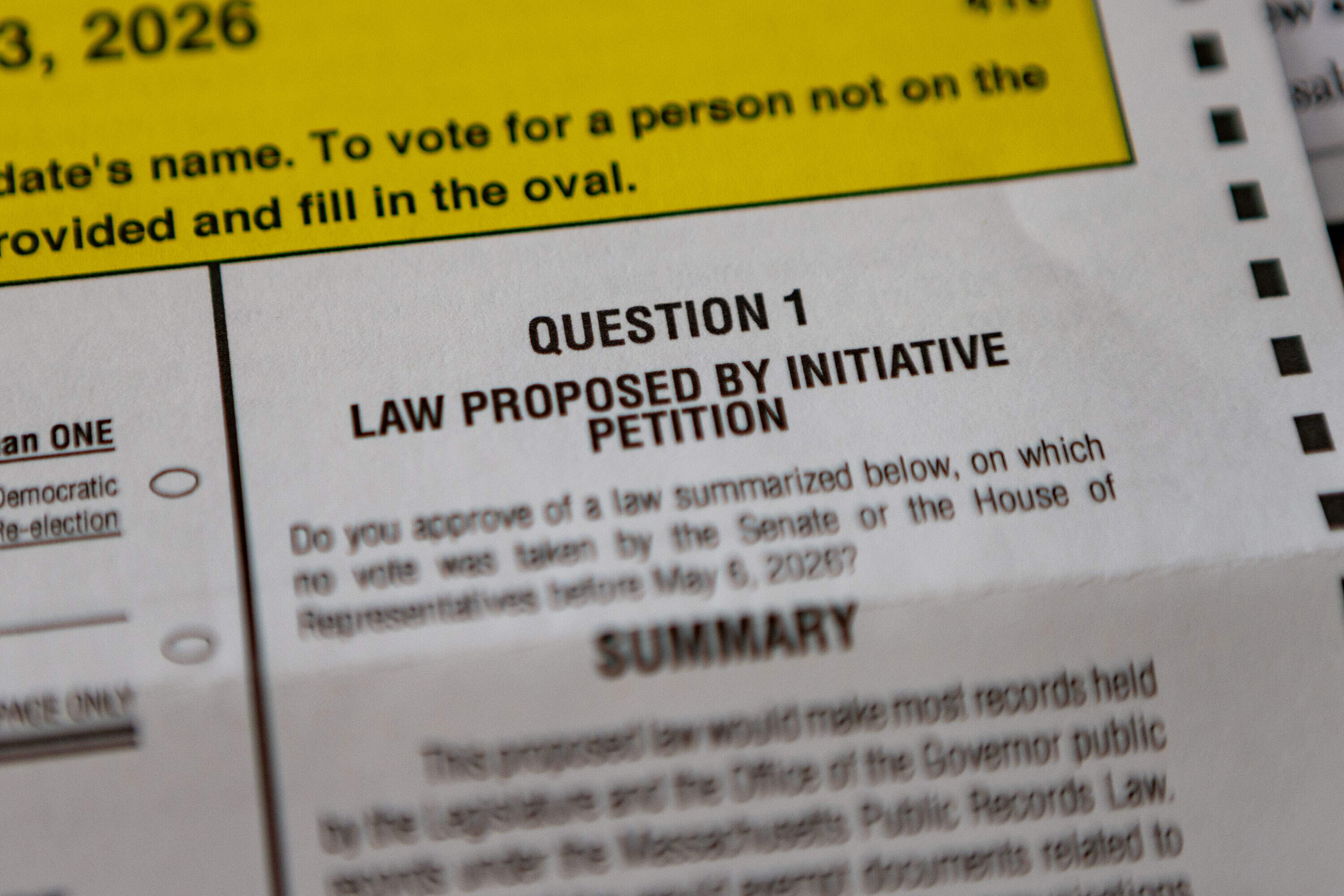
Massachusetts Voters Back Public Records Access to State Leaders
Massachusetts voters approved Question 1 on November 3, bringing the governor and Legislature under the state public records law. The change is scheduled to take effect in January 2027 and extends the rules already applied to state agencies and local governments. Records such as contracts, expenditure documents and settlement agreements would be made available, while some communications, including exchanges with constituents and lobbyists, would remain exempt.
Voters Demand Transparency as Beacon Hill Weighs Narrower Records Rules
Massachusetts voters delivered a forceful demand for transparency on November 3, approving Question 1 to put the governor and Legislature under the public records law. The measure, set to take effect in January 2027, would make records such as contracts, spending documents and settlements accessible, though some communications would remain exempt.
But legislative leaders are working on a competing bill that could provide less access to House and Senate records and give lawmakers greater control over disclosure. The Legislature is entirely exempt under current law; the ballot measure would extend existing rules to it. The proposal being negotiated would keep all correspondence private, while Question 1 covers most emails.
Gov. Maura Healey said last month she would veto a legislative bill that undermines the ballot measure. Democratic supermajorities in both chambers could override her veto. Auditor Diana DiZoglio, a leading supporter of Question 1, said she is considering legal action if lawmakers enact their version, arguing that doing so would override voters’ decision.
The vote follows lawmakers’ resistance to a 2024 ballot measure authorizing DiZoglio to audit the Legislature. Lawmakers have cited separation-of-powers concerns, including objections to an executive-branch office overseeing legislative records. The public records change is due to take effect in January, but what access the Legislature ultimately allows remains at stake.
Voters Back Records Law, but Legislature’s Constitutional Role Remains at Stake
Massachusetts voters approved Question 1 on November 3, extending the public records law to the governor and Legislature, with implementation scheduled for January 2027. The measure would open records including contracts, spending documents and settlements, while leaving some communications exempt.
The Legislature’s separate proposal raises a constitutional question that voters’ decision does not settle: whether an executive-branch office can oversee compliance by the legislative branch. Lawmakers have argued that separation of powers requires them to control their own process. The bill under negotiation would create a framework for legislative records, but would allow less access than Question 1, including keeping all correspondence private.
The proposal could supersede the ballot measure if lawmakers approve it. House and Senate leaders have Democratic supermajorities large enough to override a veto. Healey said last month she would veto a bill that affects the ballot question’s outcome, setting up a potential clash between the governor and legislative leaders.
DiZoglio, a leading advocate for Question 1, is considering a court challenge should lawmakers approve their proposal, saying it would undermine voters’ choice. The vote puts the new access rules on the books, but the Legislature’s eventual approach—and the limits of its authority to set that approach—will determine how much of its work the public can see.
Reported by WBUR, CommonWealth Beacon, The Boston Globe.






