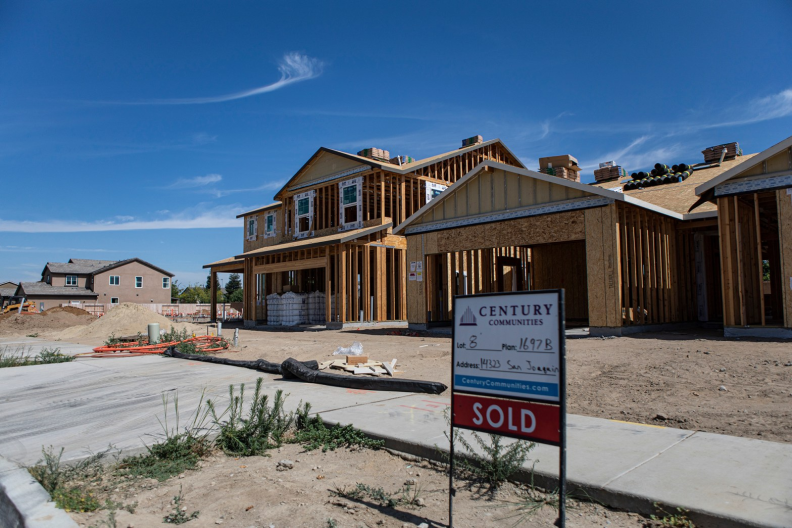
California Voters Weigh $11.25 Billion Housing Bond
Proposition 1 would let California borrow $11.25 billion to support affordable housing, as voters consider the measure on November 3. The legislative proposal is intended to help build as many as 40,000 multifamily rental homes and assist another 40,000 households with buying a home.
Nearly two-thirds of the bond money would go toward rental housing for low-income Californians, including people facing homelessness. The remaining funds would support programs such as home loans for lower-income and veteran buyers, farmworker and student housing, and tribal housing. A total of $1.25 billion is set aside for housing for veterans.
Supporters say the financing could get roughly 40,000 affordable homes moving toward construction, while housing advocates point to the state’s shortfall in homes for people with the greatest need. Backers include veterans’ organizations, teachers, Habitat for Humanity and Gov. Gavin Newsom. Opponents argue that borrowing comes with taxpayer costs and that high construction expenses mean the funding would do little relative to California’s housing needs.
The state would repay the bonds with interest. California is already paying down about $80 billion in bonds from its General Fund, according to the Legislative Analyst’s Office.
California Needs Proposition 1’s Affordable Housing Investment
Proposition 1 offers California a substantial new source of funding for affordable housing at a time when the state has struggled to build for its neediest residents. Voters will decide on November 3 whether to authorize $11.25 billion in bonds to help construct as many as 40,000 multifamily rentals and assist another 40,000 households in buying homes.
Nearly two-thirds of the proceeds would support rental housing for low-income Californians, including people experiencing homelessness. Other funding would go to homeownership programs and housing for veterans, farmworkers, students and tribal communities. The measure reserves $1.25 billion for veterans’ housing.
Supporters say the bond could unlock about 40,000 affordable units that are ready to proceed but lack state funding. With the money from the previous major housing bond nearly depleted, Proposition 1 would provide a needed boost. Its supporters include teachers’ groups, veterans’ organizations, Habitat for Humanity and Gov. Gavin Newsom.
Critics say construction costs are too high for the bond to make a meaningful difference. But that argument should not obscure the immediate need for homes: advocates say the measure would help people most often left behind by California’s housing market. The state would repay the borrowing with interest, while already carrying about $80 billion in General Fund bond repayments.
Proposition 1 Borrows Billions Without Fixing California’s Building Costs
Proposition 1 would put California on the hook for $11.25 billion in additional borrowing, yet opponents say it leaves the state’s core housing problem untouched: the high cost of building. Voters will decide on November 3 whether to approve the bond, which would fund rental construction and homeownership programs.
The proposal aims to support as many as 40,000 multifamily rental homes and help another 40,000 households buy homes. Nearly two-thirds of the money would go toward rental housing for low-income residents, including people facing homelessness. The rest would be divided among programs including veteran, farmworker, student and tribal housing; $1.25 billion is designated for veterans.
Supporters say the funds could advance roughly 40,000 affordable units that lack state financing. But even advocates acknowledge that figure falls well short of the state’s annual housing goal, and critics argue the bond would be only a small contribution to a much larger crisis. Borrowing also means repayment with interest.
California is already repaying about $80 billion in bonds from its General Fund. Backers point to the need for affordable homes, but Proposition 1 would add debt without, opponents say, addressing why building in the state is so expensive.
Reported by CBS Los Angeles, CalMatters, ABC7 San Francisco.