Ninth Circuit Lets Trump Administration Resume Ballot Requests
The Ninth Circuit Court of Appeals on November 3 lifted a temporary restraining order that had barred the Trump administration from directing election officials to set aside ballots suspected of being cast by noncitizens. The decision allows the administration to resume making those requests and warning officials that failing to comply could lead to federal prosecution.
A three-judge panel had initially halted the restraining order, finding the government had shown a likelihood of success in the case. The ruling was then vacated after Chief Judge Mary Murguia ordered the dispute reheard by the full court. On November 3, the full Ninth Circuit reinstated the earlier decision in a 6-5 vote; Murguia was among the dissenters.
The case was brought by labor unions and advocacy organizations, including the union representing service employees and the National Association for the Advancement of Colored People. U.S. District Judge Trina Thompson had issued the temporary restraining order on October 30, blocking the administration’s requests nationwide until November 13.
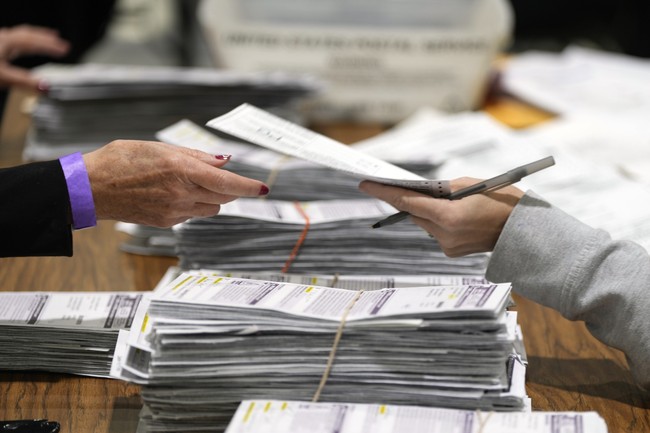
The administration’s actions followed warnings last month from the federal justice agency and the cabinet department overseeing homeland security about potential criminal liability for counting ballots cast by suspected noncitizens. In California, the requests could lead to the setting aside of about 20,000 mail-in ballots. The appeals court ruling allows the administration’s efforts to proceed while the legal challenge continues.
Court Lets Federal Officials Interfere With Ballot Handling
The Ninth Circuit’s November 3 decision gives the Trump administration room to press election officials to set aside ballots based on suspected noncitizen status—and to warn officials of possible federal prosecution if they do not comply. The ruling weakens a temporary court order that had blocked those demands nationwide.
Unions and advocacy organizations, including the union representing service employees and the National Association for the Advancement of Colored People, challenged the administration’s actions. U.S. District Judge Trina Thompson had barred the requests until November 13. A three-judge appeals panel first lifted that order, but the decision was vacated when Chief Judge Mary Murguia called for a rehearing by the full Ninth Circuit.
The full court reinstated the panel’s ruling in a 6-5 vote on November 3, with Murguia among the dissenters. The case now leaves election officials facing federal demands while the challenge proceeds.
The administration’s requests could affect about 20,000 mail-in ballots in California. The court’s action does not resolve the underlying dispute; it allows the federal effort to continue while the legal case moves forward. The stakes are the limits on federal pressure over how states handle ballots, particularly when the allegation is suspicion rather than an established finding about an individual ballot.
Ninth Circuit Clears Path to Hold Suspected Noncitizen Ballots
The Ninth Circuit’s November 3 decision restores the Trump administration’s ability to ask election officials to isolate ballots suspected of being cast by noncitizens. It also permits the administration to warn officials that failing to follow those requests could bring federal prosecution—a necessary tool, supporters of the effort would argue, to protect the integrity of elections.
A three-judge panel initially lifted a temporary restraining order against the administration, finding the government had shown a likelihood of success in the case. After Chief Judge Mary Murguia ordered a full-court rehearing, the Ninth Circuit reinstated that ruling in a 6-5 vote on November 3. Murguia was among the dissenters.
The order had been sought by labor unions and advocacy organizations, including the union representing service employees and the National Association for the Advancement of Colored People. Judge Trina Thompson had blocked the administration’s requests nationwide until November 13. The appeals court’s action means the administration can resume them as the case proceeds.
In California, the requests could result in roughly 20,000 mail-in ballots being set aside. The ruling does not decide the underlying case, but it allows federal officials to continue seeking separation of suspected ballots while the legal challenge is pending.
Reported by PJ Media, The Blaze.