Midterms Put Control of Congress in Play
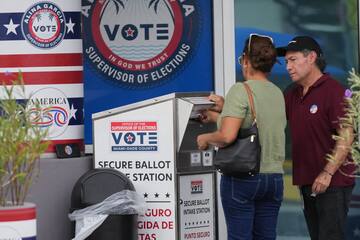
Americans head to the polls on November 3 to choose lawmakers in every House district, 35 senators and governors in 36 states. The elections will decide whether Republicans keep control of Congress or Democrats take over one or both chambers during the closing two years of Donald Trump’s second presidential term.
The House is closely divided: Republicans hold 218 seats, the number needed for a majority. Democrats need a net gain of four seats to take control. In the Senate, Democrats need eight net gains. Analysts have identified 17 toss-up House races and seven toss-up Senate contests; Republicans are defending 12 of the House seats and six of the Senate seats in those close races.
The Senate battleground includes Alaska, Texas, Iowa, Kansas, Maine, Michigan and Ohio. In Alaska, Republican Sen. Dan Sullivan faces former Democratic Rep. Mary Peltola. The ballot also includes a second candidate named Dan Sullivan. Texas, Michigan and Alaska are among states where Senate contests remain toss-ups in recent polling.
Redistricting may also shape the House results. Nine states redrew congressional maps, with 16 seats given a Republican advantage and six leaning Democratic. Current projections point to Republicans winning seven of those seats and Democrats nine, while six remain toss-ups.
Inflation is a prominent concern for voters, and Trump’s unpopularity could complicate expectations for Republicans. The key question is whether Democrats can win enough close contests to change control of Congress. The House and Senate are scheduled to return on November 9.
Voters Can Check Trump by Reclaiming Congress
With inflation weighing on voters and President Donald Trump described as historically unpopular, the November 3 midterms offer Democrats a chance to end Republican control of Congress. Voters will choose all 435 House members and 35 senators, as well as governors in 36 states; the outcome will shape the final two years of Trump’s term.
Democrats need a net gain of four House seats and eight Senate seats to take control. Republicans hold exactly 218 House seats, the number needed for a majority. The close-race map puts the GOP on the defensive: Republicans are defending 12 of 17 House toss-ups and six of seven Senate toss-ups.
The Senate battleground runs from Alaska and Texas to Iowa, Kansas, Maine, Michigan and Ohio. In Alaska, Republican Sen. Dan Sullivan is challenged by former Democratic Rep. Mary Peltola, and another candidate with the same name as Sullivan is also on the ballot. Recent polling puts contests in Alaska, Texas and Michigan among the toss-ups.
The redistricting fight has not guaranteed Republicans a payoff. Maps redrawn in nine states gave 16 seats a Republican advantage and six a Democratic lean, but current projections show Democrats favored to win nine of those seats against seven for Republicans, with six still toss-ups. The election will test whether the party can turn close races into a check on Republican control—or whether it falls short of the gains needed to govern.
Democrats Must Prove They Can Win More Than Toss-Ups
Republicans enter the November 3 midterms with narrow majorities to defend, while Democrats need substantial gains to take control of Congress. Voters will decide all 435 House seats and 35 Senate seats, along with 36 governors’ races. The outcome will settle who runs the legislature throughout the closing two years of Donald Trump’s second presidential term.
The House majority rests on 218 seats, which Republicans currently hold. Democrats need to gain four seats net to take the chamber; taking the Senate requires an eight-seat net gain. Republicans are defending more of the identified toss-ups—12 of 17 House races and six of seven Senate contests—but that exposure does not guarantee Democrats the victories they need.
Close Senate races include contests in Alaska, Texas, Iowa, Kansas, Maine, Michigan and Ohio. Alaska’s Republican Sen. Dan Sullivan faces former Democratic Rep. Mary Peltola, and a second Dan Sullivan is also listed on the ballot. Recent polls place the Senate races in Alaska, Texas and Michigan among the toss-ups.
Redrawn district maps have created opportunities for both parties. Across nine states, 16 seats were given a Republican advantage and six leaned Democratic. Yet current projections favor Democrats in nine of those seats and Republicans in seven, while six remain toss-ups. Republicans’ challenge is to defend their slim majorities and convince the electorate to return them to power for another two-year stretch; the result will depend on whether Democrats convert promising districts into enough wins.
Reported by CBS News, AZFamily, Deseret News, Newsweek, Denver7.