France’s Cost-of-Living Protests Draw 320,000 Amid Clashes
France’s third consecutive weekend of demonstrations drew an estimated 320,000 people on October 31, the Interior Ministry said. That was below the government’s estimates of more than 500,000 on October 17 and 410,000 on October 24. Organizers have put turnout higher than official counts in previous demonstrations.
About 70,000 people marched in Paris, where authorities moved the main route to the city’s eastern edge after a court dispute over the planned march. Around 70,000 police and gendarmes were deployed nationwide. The marches brought together students, union members, climate activists and people protesting living costs, poor school conditions and teacher shortages.
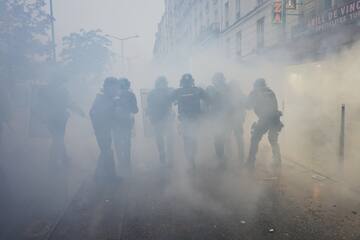
Most demonstrations were peaceful, but clashes broke out in several cities. In Lyon, police used tear gas after projectiles were thrown; in Toulouse, officers deployed water cannon against an unauthorized protest. In Paris, fireworks and bottles were thrown at police near the march’s end, and officers responded with tear gas and stun grenades. Police had made 27 arrests by 2 p.m., compared with 217 at the same point a week earlier.
Authorities imposed restrictions in Paris, including overnight limits on access to some areas and a curfew for unaccompanied minors near the Champs-Elysees. A court had suspended an earlier minors’ curfew, ruling it an unlawful restriction on freedom of movement. The demonstrations began with student concerns about education and have expanded to include living costs and civil liberties.
Police expect more demonstrations as schools reopen. Student groups and unions have called for nationwide protests on Tuesday and Thursday, while students have also threatened new school and university blockades.
France’s Students Protest Costs as Police Clamp Down
France’s October 31 demonstrations showed that student anger over living costs and deteriorating schools has not gone away, even as authorities deployed about 70,000 police and gendarmes and shifted Paris’s march away from the city center. The government estimated 320,000 people joined nationwide, fewer than in the previous two weekends, but organizers have consistently counted more participants than officials.
The movement began with students demanding better-maintained schools, more teachers and a fairer admissions system. It has widened to include economic inequality and civil liberties, after injuries and a security crackdown helped broaden protesters’ demands. The government’s response has centered on policing and restrictions, while school and university blockades are again being threatened.
Most marches were peaceful, but clashes occurred in Lyon, Toulouse and Paris. Police used tear gas and water cannon, and officers in Paris answered bottles and fireworks with tear gas and stun grenades. Authorities also imposed overnight restrictions in parts of the capital and a curfew for unaccompanied minors near the Champs-Elysees. A court had already suspended an earlier curfew as an unlawful limit on freedom of movement.
The turnout was below the government’s estimates for October 17 and October 24, but more demonstrations are planned as schools reopen. Student groups and unions have called for nationwide protests on Tuesday and Thursday. The continuing demands put pressure on a government whose response has so far included a heavy security presence and limits on where people can march.
France Sees Fewer Protesters as Police Brace for More Unrest
France’s October 31 protests brought a smaller crowd than the previous two weekends, but authorities still deployed about 70,000 police and gendarmes to protect public safety. The Interior Ministry estimated 320,000 people marched nationwide, down from more than 500,000 on October 17 and 410,000 on October 24.
Most demonstrators were peaceful, but clashes again broke out. Police used tear gas in Lyon and water cannon in Toulouse; in Paris, officers faced fireworks and bottles near the end of the march and responded with tear gas and stun grenades. The authorities had made 27 arrests by 2 p.m., fewer than at the same point the week before, and had moved the main Paris march to the city’s edge.
The protests began around student complaints about school conditions, teacher shortages and university admissions, then widened to living costs and civil liberties. Those grievances are part of the story, but so are the repeated episodes of looting and attacks on police that prompted the security measures. Paris authorities restricted access to some areas overnight and set a curfew for unaccompanied minors near the Champs-Elysees; a court had suspended an earlier minors’ curfew as an unlawful restriction.
Further demonstrations are planned as schools reopen, with student groups and unions calling for nationwide action on Tuesday and Thursday. The lower turnout and fewer early arrests offered some relief, but the clashes and planned protests leave police facing another test of public order.
Reported by The Philadelphia Inquirer, CBS News, Denver7, KPRC 2 Click2Houston, Rolling Stone.