Viral Debate Moments Raise Stakes for Candidates
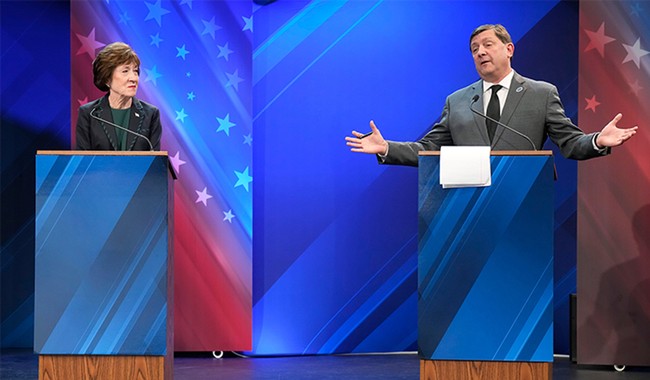
The October 15 Maine Senate debate offered a sharp example of the risks candidates face onstage. After Collins linked a protester to Jackson, the Democratic nominee told the Republican incumbent to “shut up.” Jackson has declined to apologize, and Collins is using the exchange in an advertisement that also cites allegations about his treatment of women colleagues in the Maine Legislature. Those claims have been described as allegations in coverage cited by the ad.
Debates have been absent from 18 of 35 Senate contests and 12 of 36 gubernatorial races this cycle. That includes two Senate toss-ups, Ohio and Texas. In recent cycles, debates were more common in closely contested Senate races, while the share of gubernatorial contests without one has also risen compared with 2022, 2018 and 2014.
Campaign strategists say a debate can bring candidates new attention but also create a damaging clip. In Texas, Democrat James Talarico repeatedly challenged Republican Ken Paxton to debate, then held a solo CNN town hall. Other candidates have said debates would not be productive or would amount to political theater.
Michigan and Alaska debates also generated widely shared clashes. Purdue historian Kathryn Cramer Brownell said social media often reduces debates to brief clips viewed through partisan filters, weakening their ability to expose voters to opposing candidates beyond their usual media circles.
Candidates Avoid Debates as Viral Clips Replace Voter Scrutiny
Voters are seeing fewer direct contests between major-party candidates: 18 Senate races and 12 gubernatorial races have no debate this cycle. Two Senate toss-ups, Ohio and Texas, are among those without one. The retreat leaves voters with fewer chances to hear candidates make their cases side by side.
In Texas, Democrat James Talarico repeatedly urged Republican Ken Paxton to debate, even offering to appear on Fox News. Talarico instead held a solo CNN town hall. In Maine, Democrat Troy Jackson’s “shut up” remark to Sen. Susan Collins became a Republican attack-ad moment; Collins’ new ad also invokes allegations about Jackson’s conduct toward women colleagues.
Candidates have offered sharply different reasons to stay offstage, from concerns about civility to claims that debates produce little beyond political theater. But the pattern raises a basic accountability problem: when campaigns avoid unscripted exchanges, voters lose an opportunity to compare their choices directly. And when debates do happen, attacks and viral snippets can crowd out the broader discussion that makes them valuable.
Debate Stage Shows the Risks of Candidates’ Unfiltered Words
The Maine Senate debate gave Republicans a potent example of why a candidate’s words matter. Democrat Troy Jackson told the Republican senator from Maine to “shut up” after she connected a protester to his campaign. Jackson has refused to apologize, and Collins’ new advertisement uses the exchange alongside allegations about his behavior toward women in the Maine Legislature.
The larger pattern is striking: no debate is planned in 18 Senate races and 12 governor races. Ohio and Texas are among the Senate toss-ups without one. Candidates have argued that debates are unproductive, but refusing to face an opponent also means avoiding public scrutiny of their records and positions.
In Texas, James Talarico has repeatedly challenged Ken Paxton to debate, while Paxton has not joined him onstage. Debates that do occur have produced sharp personal attacks in Michigan and Alaska, with clips quickly circulating online. The format rewards candidates who can stay disciplined under pressure—and gives opponents material when they cannot. Voters deserve a contest focused on what candidates would do, not just the viral moment that may define them.
Reported by CBS News, Townhall.





