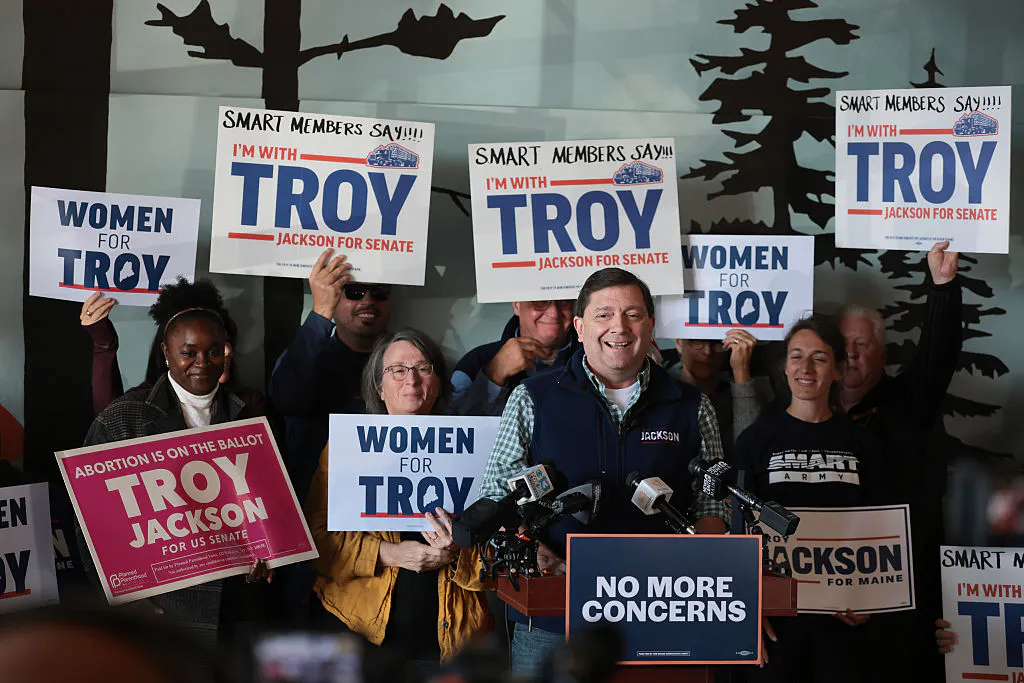
Collins and Jackson Battle for Maine’s Senate Seat
Susan Collins is seeking a sixth term in the Senate against Troy Jackson, a former logger who led Maine’s state Senate. With the election approaching, polls show a close contest, and voters who do not identify with either major party could prove decisive.
Maine Voters Weigh Collins’ Trump Ties in Tight Senate Race
Maine’s Senate race is testing whether Susan Collins can keep selling herself as independent from Donald Trump. The Republican incumbent faces Democrat Troy Jackson, a former logger and state Senate president, in a contest that could affect control of the Senate.
Some voters who once backed Collins while opposing Trump now see her approach differently. Nick Papin, a longtime Collins voter in York County, said he believes she has prioritized political power over Maine residents. Other voters still trust her to break with Trump, while planning to vote for a Democratic candidate for governor.
Jackson’s campaign began late after Graham Platner withdrew in July amid sexual misconduct allegations, which Platner denied. A political science professor said the delay cost Jackson time to introduce himself, though dissatisfaction with Trump and congressional Republicans could help him.
Polls have found the race close. In an October 27 survey, Jackson led Collins among independent voters, while the contest overall was within the margin of error. Those voters’ choices may decide whether Collins’ claim to independence remains persuasive—or whether voters see her record as too closely tied to her party’s leadership.
Collins’ Maine Record Faces a Late Challenge From Jackson
Susan Collins is asking Maine voters to return her to the Senate, where she has represented the state for decades. Her opponent, Democrat Troy Jackson, entered the race in July after Graham Platner withdrew amid sexual misconduct allegations that Platner denied.
The compressed campaign has left some voters unfamiliar with Jackson. In Bangor, James Cox said he has supported Collins before and is considering doing so again because she is familiar to him. A political science professor said Jackson lost valuable time to build name recognition, a disadvantage against a well-known incumbent.
Collins is also counting on voters who split their tickets: people who may oppose Trump but still support her. In 2020, Wells backed Joe Biden for president and Collins for Senate. Some local supporters say Collins has continued to serve Maine effectively, while other Republicans worry that voters’ willingness to separate her from Trump has faded.
The contest remains close in public polling. An October 27 poll put Jackson ahead among independent voters, a large bloc in York County and across Maine. Collins’ campaign depends on persuading those voters that her record and independence matter more than their objections to her party’s leadership.
Reported by Daily Mail US, The Boston Globe, The Philadelphia Inquirer, Newsweek, The Guardian US, ABC7 New York.