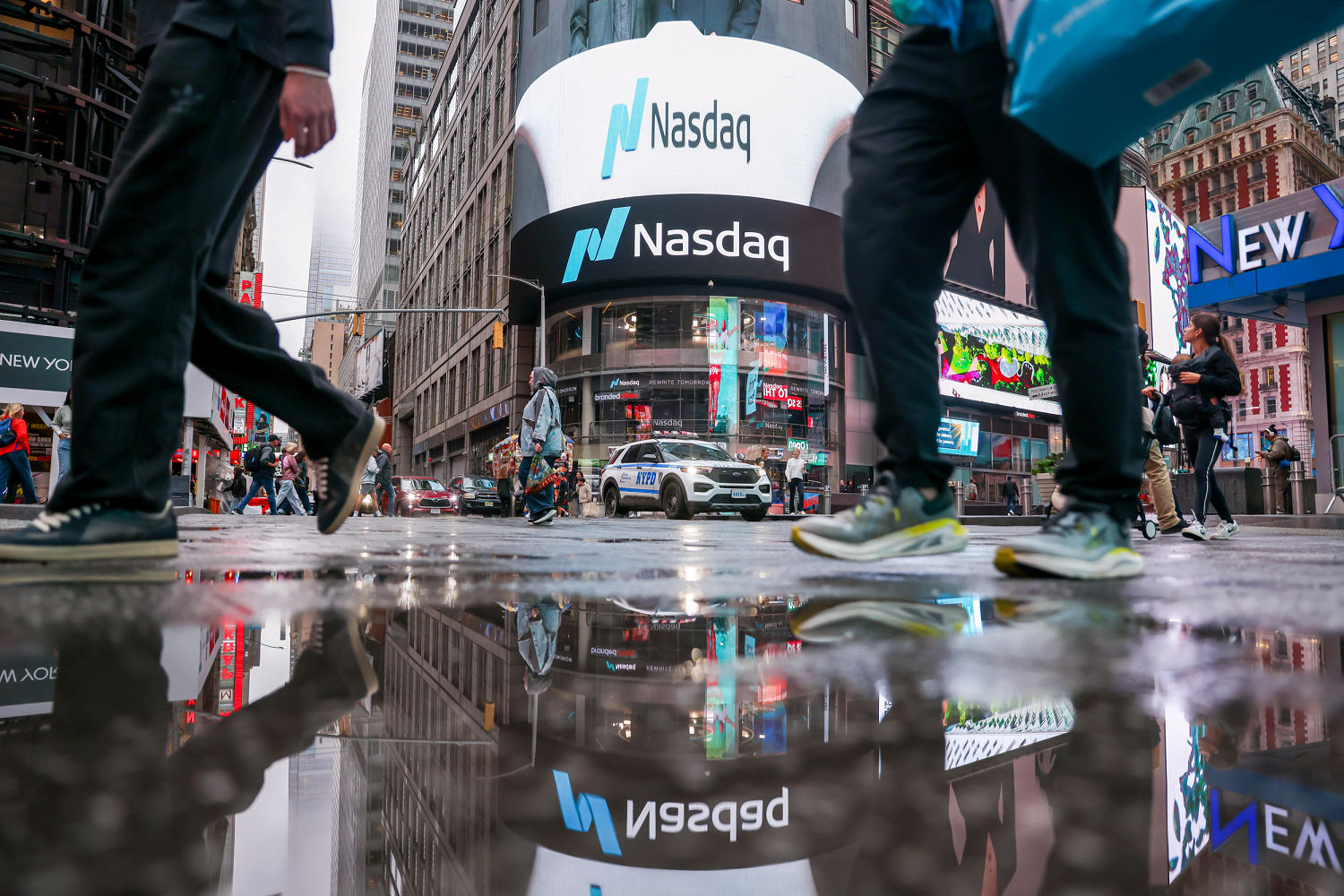
Nasdaq Falls Into Correction as AI and Election Risks Weigh
The Nasdaq Composite fell as much as 4.85% on November 5, entering correction territory after losing over 10% relative to its October 6 record high. The Nasdaq 100 was down about 5% in mid-morning trading, while the S&P 500 fell nearly 3% and the Dow Jones Industrial Average lost almost 700 points.
The sharp decline followed weakly received earnings from chipmakers Qualcomm and Arm Holdings, released on November 4. Qualcomm shares fell 9% and Arm dropped about 15% in early trading. Nvidia, a key supplier to AI companies, slid 7%; its shares have lost 15% over the past three months. Several other chip and memory companies also fell around 10%.
Investors have been questioning whether the productivity gains from artificial intelligence will generate returns large enough to justify the hundreds of billions of dollars being invested in the sector. That uncertainty has grown as data-center construction and AI infrastructure have helped drive a major technology-stock rally in recent years.
Democratic victories in the November 3 midterms added another concern for investors. Several newly elected Democrats have pledged to slow or stop data-center construction, including in Texas, Ohio, Michigan and Georgia, all major markets for such projects. Tesla and SpaceX each fell about 10% amid the election fallout; their owner, Elon Musk, had donated hundreds of millions of dollars to Republican candidates.
The Nasdaq’s losses reversed a 1.44% gain on November 4. The index has swung sharply this year, moving into correction territory in March, recovering to records and then falling back into correction on November 5.
Voters’ Data-Center Rebuke Puts AI Boom Under Scrutiny
The November 5 sell-off puts a spotlight on the risks of an AI buildout whose enormous investment has yet to quiet questions about future returns. The Nasdaq Composite fell as much as 4.85%, entering correction territory after dropping more than 10% from its October 6 record.
Democrats won races across the country in the November 3 midterms, and several winners have pledged to slow or halt data-center construction. The stakes for planned projects are especially clear in Texas, Ohio, Michigan and Georgia, major data-center markets. Investors are now weighing what those election results could mean for the sector’s expansion.
Chip stocks were already under pressure after Qualcomm and Arm Holdings delivered results investors viewed as mixed. Their shares fell 9% and about 15%, respectively, in early trading. Nvidia dropped 7%, while the S&P 500 fell nearly 3% and the Dow lost almost 700 points.
The market’s reaction underscores the tension between massive AI spending and the question of whether it can deliver enough productivity to pay off. The Nasdaq had surged almost 40% since Election Day 2024, but that rise has not prevented renewed volatility. It also entered correction territory in March before recovering to record highs.
Midterm Results Add Political Risk to AI-Fueled Market Sell-Off
Investors are confronting a new political risk to the AI infrastructure boom: several Democrats who won on November 3 have pledged to slow or halt data-center construction. The concern is acute in Texas, Ohio, Michigan and Georgia, major markets for planned facilities, and the Nasdaq Composite fell as much as 4.85% on November 5, entering correction territory.
The losses followed mixed earnings from Qualcomm and Arm Holdings, whose reports landed as investors were already questioning whether AI will produce enough productivity to justify the sector’s huge investment. Qualcomm fell 9% and Arm about 15% in early trading. Nvidia dropped 7%, while Tesla and SpaceX each slid about 10% amid the midterm fallout.
The Nasdaq’s decline of more than 10% from its October 6 record marks a sharp reversal after a 1.44% gain on November 4. The S&P 500 lost nearly 3%, and the Dow Jones Industrial Average fell almost 700 points. Chip and memory companies also suffered steep declines.
The election results now figure into investors’ calculations alongside doubts about AI returns. The Nasdaq had risen almost 40% since Election Day 2024, but it has been volatile this year, entering correction territory in March, recovering to records and falling back into correction on November 5.
Reported by NBC News, CNN, The Philadelphia Inquirer, Yahoo News, New York Post, BBC US & Canada.