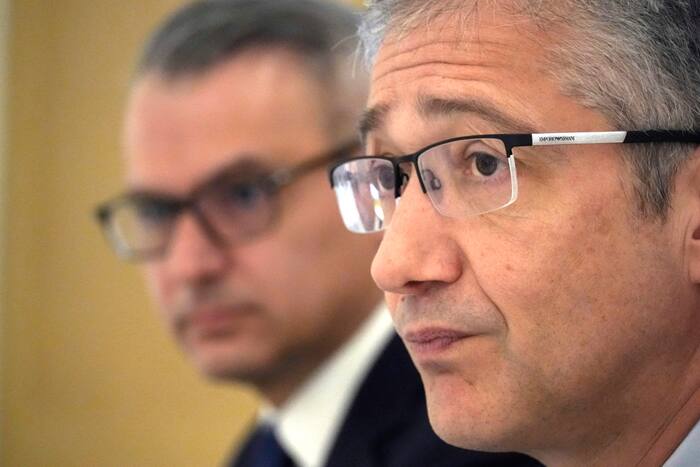
Eurozone Leaders Select Pablo Hernández de Cos to Lead ECB
On November 26, leaders of the 21 countries that use the euro agreed in Brussels to select Pablo Hernández de Cos as the next president of the European Central Bank. He would be the first Spaniard to hold the post, replacing Christine Lagarde upon her February departure.
The nomination still requires formal approval, with a European Council meeting in December expected to finalize it. De Cos, 55, led Spain’s central bank and served on the ECB’s rate-setting council from 2018 to 2024. He currently holds the position of general manager at the Bank for International Settlements.
The leaders also agreed on two other ECB appointments: French economist Laurence Boone and German economist Markus Brunnermeier, a Princeton University professor, to the Executive Board. French President Emmanuel Macron said the selections reflected agreement among eurozone members and described the group as balanced.
De Cos takes charge as inflation stands at 4%, twice the ECB’s target. The bank sets borrowing costs across the eurozone, whose population is 359 million. The incoming president is known for supporting lower interest rates and monetary stimulus, while European governments face high debt and rising borrowing costs.
France is a particular source of concern, with high debt fueling bond-market turmoil and worries about a fiscal crisis. The ECB has so far left budget decisions to the French government, but could face pressure to act if rising bond yields threaten other European economies.
A Pro-Stimulus Central Banker Will Take the ECB’s Top Job
Eurozone leaders have chosen Pablo Hernández de Cos, a central banker known for favoring lower interest rates and monetary stimulus, to lead the European Central Bank. His selection offers a chance for a more growth-conscious approach as governments grapple with expensive borrowing and economic pressure.
The 55-year-old former head of Spain’s central bank is expected to succeed Christine Lagarde in February. Formal approval is still required, with the appointment set to be finalized in December. Leaders also agreed on French economist Laurence Boone and German economist Markus Brunnermeier for the ECB’s Executive Board.
The challenge is acute: inflation is running at 4%, twice the ECB’s target, while high government debt has unsettled bond markets, especially in France. The bank has left France to address its budget problems, but could be pushed to intervene if rising yields threaten other economies.
De Cos served on the ECB’s rate-setting council from 2018 to 2024. His preference for lower rates and stimulus will now be tested against the bank’s responsibility to contain inflation. The appointment puts monetary policy choices—and their consequences for borrowers and indebted governments—at the center of the ECB’s next chapter.
New ECB Chief Faces Inflation and Debt Risks Across Europe
The European Central Bank’s next president will take over with inflation at 4%, double the bank’s target, and bond-market turmoil exposing the risks of Europe’s high public debt. Eurozone leaders selected Pablo Hernández de Cos, a supporter of lower rates and monetary stimulus, for the job.
De Cos, 55, formerly led Spain’s central bank and was part of the ECB’s group setting interest rates from 2018 to 2024. His appointment is expected to be finalized in December, before he succeeds Christine Lagarde in February. French economist Laurence Boone and German economist Markus Brunnermeier were also selected for the Executive Board.
France is a key test. Its high debt has raised fears of a fiscal crisis, yet the ECB has so far left the French government to resolve its budget problems. The central bank may have to step in if bond yields climb steeply enough to endanger other European economies.
De Cos’s record of favoring lower rates and monetary stimulus will be weighed against the ECB’s duty to keep inflation in check. Leaders have chosen an experienced central banker, but the pressing issue will be whether the bank can protect price stability while governments confront costly borrowing and mounting debt.
Reported by The Philadelphia Inquirer, CNN.