European Troops Rehearse Postwar Ukraine Deployment in Poland
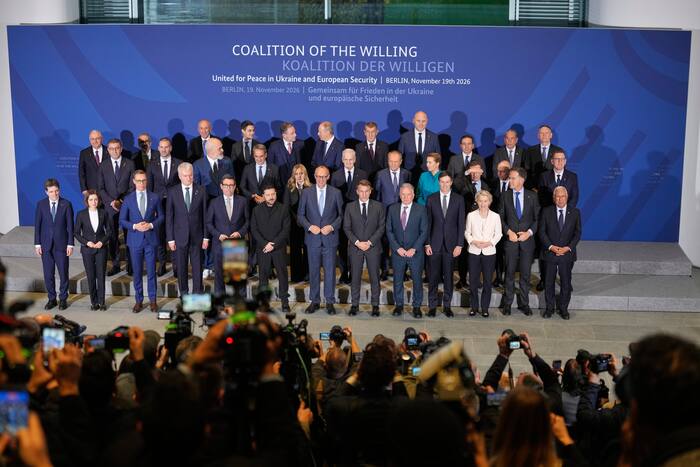
The exercise is testing whether a European-led force can deploy in Ukraine after the war and help support the country’s security and military recovery. France and the United Kingdom lead the non-NATO initiative, part of the 37-nation Coalition of the Willing that supports Ukraine. The drill is also intended to demonstrate that European countries are increasing their military readiness.
Military contingents representing 11 nations—including Spain, Belgium, Sweden, France, Estonia, the Netherlands, Lithuania, Germany and the U.K.—are participating, with Poland handling logistics and Turkey participating remotely from Istanbul. France has deployed 1,100 troops, President Emmanuel Macron said. The exercise follows a year of planning by the Multinational Force-Ukraine.
Troops have practiced moving people and equipment, joint command and control, anti-drone responses and trench warfare. They have also flown fighter jets and an aerial refueling tanker and operated surveillance drones. U.K. Brigadier Campbell Close described the force as defensive and praised Poland’s work moving personnel, vehicles and equipment.
If a ceasefire is reached and the force deploys, it could help rebuild Ukraine’s armed forces, provide reassurance to support reopening the country’s skies and assist with clearing mines in the Black Sea, its commander, Lt. Gen. Tom Bateman, has said. It would not monitor or keep the peace. Any security guarantees for Ukraine remain uncertain, as do Russia’s and Ukraine’s positions on them. Russian President Vladimir Putin has said that foreign forces sent to Ukraine would be viewed as valid targets.
Europe Prepares to Help Protect Ukraine After the War
Europe’s willingness to prepare for Ukraine’s security should be measured in forces ready to deploy, not declarations alone. About 2,800 troops from 11 countries are rehearsing a possible mission in southeastern Poland, under French and British leadership. The two-week exercise, begun on November 9, is testing whether the coalition could move into Ukraine after the war.
The plan reflects a central security problem: Ukraine wants protection against another Russian invasion, while Russia opposes NATO’s presence near its borders. Ukraine has long sought NATO membership and the alliance’s collective defense guarantee. The proposed European force is separate from NATO, and the form of any future guarantees remains unsettled.
The troops are practicing transport, joint command, drone defense and trench warfare; aircraft and surveillance drones are also involved. France has sent 1,100 personnel, and Poland is providing logistical support. If deployed after a ceasefire, the force could help rebuild Ukraine’s military, support reopening its skies and clear Black Sea mines. It would not perform peacekeeping or monitoring.
The exercise is a practical step toward security, but it is not itself a guarantee. Those who would leave Ukraine without credible protection should reckon with the stated purpose of the force: helping the country recover and reducing the risk that the war begins again. Russian President Vladimir Putin has said that troops from other countries deployed in Ukraine would be treated as lawful targets, underscoring the stakes of any deployment.
European Ukraine Mission Raises Questions Before Any Ceasefire
European governments are rehearsing a military role inside Ukraine before the shape of a peace deal or its security guarantees has been settled. About 2,800 personnel from 11 countries are training in Poland for a possible postwar mission under French and British leadership. The force is outside NATO, but its deployment would put foreign troops in a country whose war with Russia remains unresolved.
The exercise tests movement, command, drone defense and combat skills. Poland is managing logistics, France has deployed 1,100 troops, and Turkey is taking part remotely. The proposed mission could help rebuild Ukraine’s armed forces, support reopening its skies and clear mines in the Black Sea. Its commander says it would not keep or monitor the peace.
That distinction does not remove the risk. A force described as defensive would still need to protect itself, and Russia’s President Vladimir Putin has said foreign troops in Ukraine would be treated as legitimate targets. Meanwhile, the terms of potential security guarantees are unclear, and it is not established that Russia or Ukraine would accept them.
Supporters present the drill as proof Europe is ready to contribute to peace. But readiness to deploy is not the same as a settled path to peace, and the exercise cannot resolve the dispute over NATO’s role or the guarantees Ukraine would receive. Any decision to send troops would carry consequences beyond the training ground.
Reported by KPRC 2 Click2Houston, The Philadelphia Inquirer, New York Post.