Iowa Army Plant Detonates Unstable Lead Azide Stockpile
On November 25, the U.S. Army carried out a controlled detonation of 68 drums containing more than 9,700 pounds of degraded lead azide at its Iowa munitions facility in Middletown. Officials said the crystallized explosive had become unstable and could potentially detonate on its own.
Iowa Blast Raises Lead Concerns as Trump Officials Praise Miller
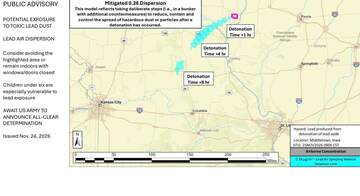
The Army’s detonation of more than 9,700 pounds of unstable lead azide at its Iowa ammunition plant on November 25 resolved an immediate explosive hazard, but it has not ended questions about possible lead exposure in nearby communities. Administration officials praised the White House’s top aide Stephen Miller for organizing the federal government's response as residents and environmental groups had objected to the plan’s potential to spread lead particles.
Army officials said initial observations found no secondary blasts or damage to nearby infrastructure. EPA Administrator Lee Zeldin said initial air monitors detected no lead after the explosion, while stressing that monitoring would continue. The EPA had collected 1,216 samples before the blast and deployed 300 personnel and contractors.
The material was considered too dangerous to move, neutralize chemically or otherwise manipulate, officials said, leaving an in-place detonation as the only viable option. Environmental groups challenged the EPA emergency permit, but the Eighth Circuit allowed the operation to proceed.
A senior Trump administration official also blamed the Obama administration, saying the material was moved to Iowa and improperly stored. The supplied account says the stockpile was relocated during a 2009 base realignment; the blame remains an administration claim, not a finding established in the account. The urgent task now is to complete air, soil, dust and water testing and determine whether lead escaped the mitigation measures.
Trump Team Tackles Iowa Explosive Hazard Left by Earlier Administrations
The Trump administration confronted a dangerous explosive stockpile in Iowa and authorized its controlled destruction on November 25, after officials concluded the degraded lead azide could not safely be moved or chemically neutralized. Army officials said the blast exceeded expectations, with no initial sign of secondary explosions or damage to nearby infrastructure.
Administration officials credited White House Chief of Staff Stephen Miller with bringing federal agencies together. EPA Administrator Lee Zeldin said initial air monitoring detected no lead, and the EPA’s extensive baseline sampling and continuing tests are intended to track possible effects beyond the immediate blast.
A senior administration official blamed the Obama administration for the stockpile, saying it had moved the material to Iowa and stored it improperly. The account also says the lead azide was brought there during a 2009 base realignment. That history matters, but the immediate decision was made under conditions officials described as exceptionally dangerous.
Environmental groups opposed the emergency permit over fears that lead particles could reach surrounding communities and challenged it in court. The Eighth Circuit allowed the detonation to go ahead. Federal officials say further monitoring of air, soil, dust and water will continue in the coming days and weeks, so the operation’s environmental results remain an important part of the response.
Reported by Newsweek, Twitchy.