Silver Sees Democratic Gains as a Likely Midterm Outcome
Silver pointed first to the usual midterm pattern: the president’s party tends to lose House seats. In 2018, during Donald Trump’s first term, Democrats gained 40 seats. Republicans now hold only a narrow House majority, and Silver said Democrats are strongly positioned to take it back this November.
He also cited conditions he sees as unfavorable to Trump and Republicans: gasoline prices above $4, Trump’s low approval, and Democrats’ tendency to turn out in midterm and special elections. Silver added the war with Iran, Trump’s age, discontent among some Republicans over the Epstein files, and opposition to large data centers as factors that could hurt the president’s party.
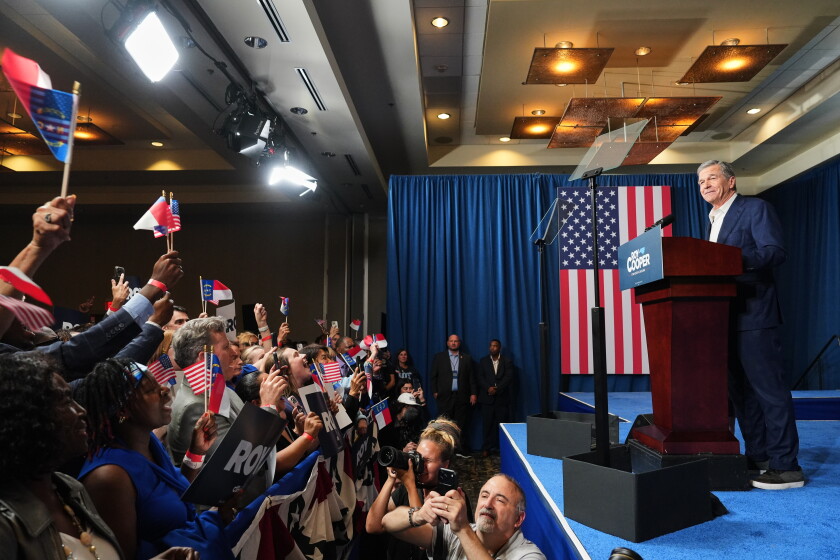
The Senate contest is more uncertain. Democrats need to capture four or more seats currently held by Republicans while keeping the seats they already have. Silver pointed to North Carolina and Maine as more promising targets, while naming Texas, Ohio, Iowa, Kansas and Alaska as other possibilities; Trump carried those states by roughly 10 to 20 points in 2024.
Silver’s forecast model puts Democrats’ chance of taking the Senate at about three in four. He compared the odds to flipping a coin twice and winning if either toss lands heads. Democrats would still fall short if both tosses came up tails.
Trump’s Midterm Vulnerabilities Put GOP Majorities at Risk
The warning for Republicans is not just historical: presidents’ parties often lose House seats in midterms, and Democrats gained 40 in 2018. With the GOP’s House majority now narrow, Silver said a Democratic takeover would be a normal outcome, not a political shock.
Silver also highlighted the pressures facing Trump: gas above $4, low approval, the war with Iran, and anger among some Republicans over the Epstein files. Democrats’ stronger tendency to show up for midterms and special elections could compound those problems. Opposition to major data centers is another issue he said puts Trump on the wrong side of public opinion.
The Senate map is tougher, but Silver’s model still gives Democrats roughly a three-in-four chance of winning it. They must flip at least four Republican-held seats and defend their own. North Carolina and Maine look more attainable, while Texas, Ohio, Iowa, Kansas and Alaska are also in play despite Trump carrying them by about 10 to 20 points in 2024.
The stakes are clear: voters can put a check on a president whose standing is weak and whose party faces multiple sources of backlash. Silver’s forecast makes a Democratic Senate win more likely than not, even as the outcome remains uncertain.
Democrats Face a Hard Senate Map Despite Silver’s Optimism
Silver’s forecast points toward a Democratic wave, but the Senate numbers show how much the party must accomplish. Democrats need to secure four or more seats held by Republicans while holding their own, and several possible targets—Texas, Ohio, Iowa, Kansas and Alaska—went for Trump by roughly 10 to 20 points in 2024.
He identified North Carolina and Maine as more favorable opportunities, but described uncertainty elsewhere. A three-in-four model estimate is a meaningful advantage, not a guarantee: Silver’s own coin-flip comparison leaves a scenario in which Democrats lose both tosses and Republicans keep control.
Silver cited the president’s low approval, gas prices above $4, the Iran war and some Republicans’ frustration over the Epstein files. He also pointed to Democrats’ midterm turnout strength and opposition to large data centers. Those are arguments for a backlash, but they do not erase the scale of the Senate map Democrats must overcome.
The House appears more vulnerable for Republicans: Silver said the president’s party typically loses ground in midterms, and Democrats added 40 seats in 2018. Yet the Senate fight remains a separate test, requiring Democrats to convert national discontent into wins across states Trump carried comfortably.
Reported by The Daily Beast, Raw Story, Newsweek, Jacobin, Daily Mail US, Hot Air, The Washington Examiner, WTOP, NBC News, Daily Kos, The Daily Caller, Breitbart, CNN, Semafor, Yahoo News, Fortune, Talking Points Memo, The Week, PJ Media, The Boston Globe, The Guardian US, KTVU FOX 2, MSNBC, BBC US & Canada, The Intercept, ProPublica, Business Insider, The Daily Wire, Salon, CBS Chicago, New York Post, PBS NewsHour, The Blaze, The Urbanist, The Hollywood Reporter, Reason, Townhall, Los Angeles Times, CBS Texas.