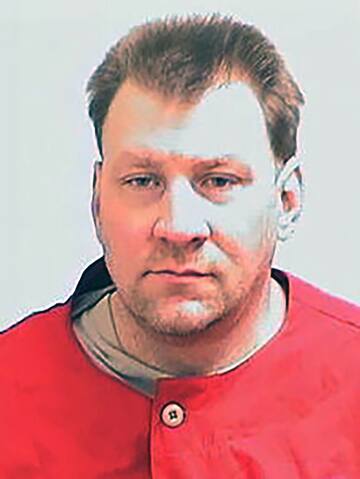
Three US Executions Scheduled on the Same Day
Jeffrey Weisheit, 50, died at 12:45 a.m. on November 5 at the state prison in Michigan City, Indiana. Florida and Alabama planned to execute Jesse Guardado and Michael Taylor later that day, making it the second time this year three people were scheduled to be put to death on one day in the United States.
Weisheit admitted to setting a 2010 house fire near Evansville that killed his girlfriend’s two children. His lawyers sought a life sentence and asked Gov. Mike Braun to allow brain scans related to past blows to the head and psychological conditions. Braun declined clemency. Weisheit’s final objection concerned lethal drugs from a pharmacy facing a disciplinary hearing next week. Indiana Attorney General Todd Rokita called the execution long-awaited justice for the children.
Florida’s planned execution of Guardado would be the state’s 19th this year, matching its 2025 record. Guardado, 64, admitted to fatally stabbing a 75-year-old woman in her Walton County home in 2004 and stealing valuables. She had helped him find work and housing.
Alabama planned to execute Taylor, 54, for killing two people, aged 83 and 79, using a metal rod in a 1991 home robbery. Gov. Kay Ivey rejected calls to commute his sentence. A judge ruled against Taylor’s attorneys, who challenged a switch from nitrogen gas—his selected method—to lethal injection after a court declared nitrogen gas unconstitutional. Opponent Esther Brown said the state would be executing the man Taylor had become, rather than the 19-year-old who committed the killings. The executions were scheduled amid renewed scrutiny following Christa Pike’s failed execution in Tennessee in September.
Executions Proceed Despite Calls for Clemency and Scrutiny
Three men were scheduled to be executed in the United States on November 5, with Indiana’s lethal injection of Jeffrey Weisheit completed before Florida and Alabama planned executions later that day. The pace and persistence of capital punishment are under renewed scrutiny after Christa Pike survived two doses of pentobarbital during a failed Tennessee execution in September.
Weisheit’s lawyers sought a life sentence and brain scans linked to earlier head trauma and psychological conditions. Gov. Mike Braun denied clemency. Weisheit also challenged Indiana’s plan to use deadly substances sourced from a pharmacy facing a disciplinary hearing next week. The state proceeded, and Attorney General Todd Rokita described the execution as justice for the two children Weisheit acknowledged killing in a 2010 house fire.
Florida’s planned execution of Jesse Guardado would bring the state to 19 executions this year, matching its record from 2025. Guardado, now 64, was convicted of stabbing to death a 75-year-old woman who had helped him get work and housing, then taking valuables from her home.
In Alabama, Gov. Kay Ivey rejected pleas to commute Michael Taylor’s sentence. Opponents emphasized that Taylor was 19 when he killed two older people in a 1991 robbery. His attorneys also objected to changing his selected method from nitrogen gas to lethal injection after a judge declared nitrogen gas unconstitutional. Yet the courts and governors allowed the executions to proceed, leaving appeals for mercy and scrutiny of execution methods unable to halt the state’s actions.
Executions Deliver Justice After Decades of Appeals
Indiana carried out Jeffrey Weisheit’s execution on November 5, and Florida and Alabama planned two more lethal injections later that day. The cases involved murders committed years earlier, and officials said the executions served justice for victims and their families.
Weisheit admitted responsibility for a 2010 blaze near Evansville that killed his girlfriend’s two children. Gov. Mike Braun rejected his request for clemency and a life sentence. Indiana Attorney General Todd Rokita said the execution brought long-awaited justice for the children. Weisheit’s lawyers had also sought brain scans related to head trauma and psychological conditions, while his final objection challenged lethal drugs obtained from a pharmacy facing a disciplinary hearing.
Florida planned to execute Jesse Guardado, who pleaded guilty to stabbing a 75-year-old woman in her home in 2004 and stealing valuables. The state’s 19th execution this year would match its record from 2025. Guardado’s victim had helped him find a job and housing.
Alabama planned to execute Michael Taylor for killing two people, aged 83 and 79, during a 1991 home robbery. Gov. Kay Ivey declined to commute his sentence, and a judge rejected his attorneys’ objection to a switch from nitrogen gas to lethal injection after the gas method was declared unconstitutional. The scheduled executions show officials carrying out sentences after convictions and appeals, even as opponents urge clemency and challenge execution methods.
Reported by The Philadelphia Inquirer, The Guardian US.