Charred Vehicle Found in Search for Four Missing Salvadorans
Haitian police discovered the burnt-out wreckage of a vehicle belonging to four Salvadoran aviation technicians who disappeared after an attack on October 18 in gang-controlled territory. Authorities said on November 3 that there was no sign of the men. The vehicle was located the previous day in Santo, in the Croix-des-Bouquets community outside the capital, where police said the operation met no resistance.
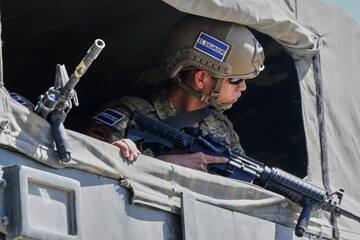
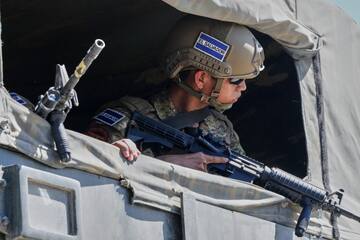
Haitian police, Salvadoran troops and the U.N.-backed gang suppression force took part in the search operation. Salvadoran President Nayib Bukele sent more than 2,000 troops to Haiti after the attack. Their role has raised questions about who commands them as they work alongside the international effort against gangs.
The United Nations has said the Salvadoran troops operate outside the framework of its gang suppression force and must follow international law. Haitian Prime Minister Alix Didier Fils-Aimé said foreign forces in Haiti are under Haitian command and do not replace the state. Bukele has not confirmed whether that applies to the Salvadoran soldiers.
After Fils-Aimé’s remarks, Bukele said on X that people who undermine Haiti’s freedom include gang members and those who finance or arm them. Meanwhile, Wilson Joseph, leader of the 400 Mawozo gang, said he had asked the U.N. secretary-general to send a delegation to Haiti for dialogue. He said he was concerned about civilian deaths as fighting intensifies.
Salvadoran Troop Deployment Raises Questions About Oversight in Haiti
The discovery of a burned-out vehicle has not answered the central question in Haiti: where are the four Salvadoran aviation technicians who disappeared after an October 18 attack? Haitian authorities said on November 3 that the men had not been found. The search took place in Santo, an area controlled by violent gangs, with Haitian police, Salvadoran troops and a U.N.-backed force involved.
The deployment of more than 2,000 Salvadoran troops, ordered by President Nayib Bukele after the attack, makes clear why accountability matters alongside security. The United Nations has said those troops are operating outside the framework of its gang suppression force and must obey international law. Haiti’s prime minister says foreign military personnel are commanded by Haitian authorities, but Bukele has not stated whether this applies to his soldiers.
Haiti’s government says foreign forces are not replacing the state. That assurance does not erase the need for clear command as troops operate in a country confronting gang violence. Bukele’s pledge to help defeat those he called traitors, and his call for Haitians to take back their communities, underscore the forceful role he wants his country to play.
The immediate task remains finding the missing men. Meanwhile, 400 Mawozo leader Wilson Joseph has called for dialogue and said he is worried about civilian deaths amid the surge in fighting. Any response to the gangs must keep the safety of civilians and respect for Haitian authority in view.
Haiti Needs Security, but Foreign Troop Command Must Be Clear
Haiti’s gangs control territory where four Salvadoran aviation technicians were attacked and disappeared. Haitian police found the technicians’ charred vehicle in Santo on November 2, but no trace of the men. The search involved Haitian police, Salvadoran troops and a U.N.-backed gang suppression force, reflecting the urgent security challenge facing the country.
Bukele sent more than 2,000 Salvadoran troops after the October 18 attack. His offer to help Haitians defeat those who finance or arm gangs speaks directly to the danger confronting communities. The discovery of the vehicle, however, shows that the search has not yet brought the missing technicians home.
Haiti’s prime minister says foreign military personnel are commanded by Haitian authorities and are not replacing the state. That principle matters: help against gangs should reinforce Haitian authority, not displace it. The United Nations has said Salvadoran troops operate outside the U.N.-backed force’s framework and must follow international law, while Bukele has not stated whether his soldiers fall under Haitian command.
As Haitian and foreign forces battle gangs, Wilson Joseph, the leader of 400 Mawozo, has requested a U.N. delegation for dialogue and voiced concern about civilian deaths. The competing demands are plain: Haitians need protection from gang violence, and foreign troops must operate with clear accountability. The search for the four technicians continues.
Reported by The Philadelphia Inquirer, Local 10 Miami.