Haiti’s Leader Defends Foreign Troops as Questions Mount
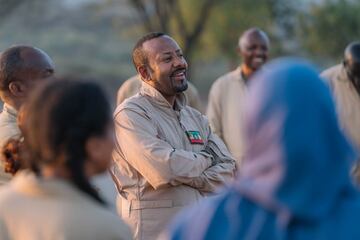
Fils-Aimé said Haiti’s government is responsible for directing foreign forces and that their role is to support the state, not replace it. He appeared alongside Haitian security officials, a Salvadoran army colonel and an official heading the U.N.-supported force tasked with curbing gang activity, in what appeared to be a display of unity as questions grew about Salvadoran troops acting independently.
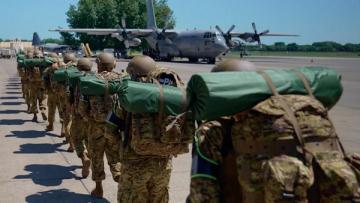
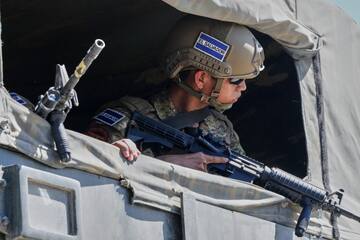
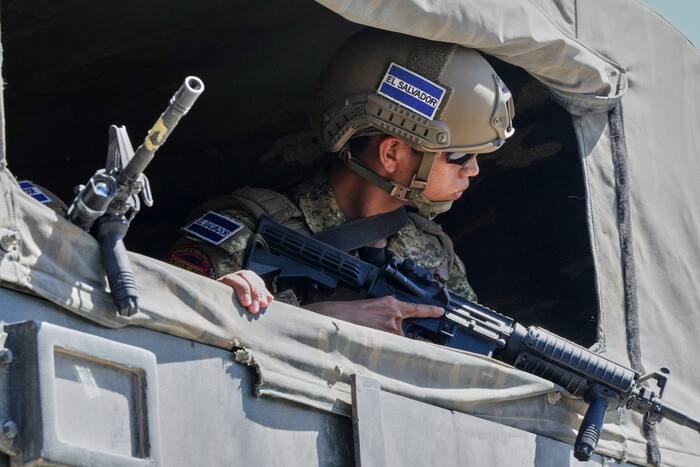
The deployment followed the disappearance of four Salvadoran aviation technicians last month. Until an October 18 attack on the technicians, about 200 Salvadorans in Haiti had primarily provided medical assistance. The recently arrived troops’ locations and activities remained unclear.
A source familiar with operations said El Salvador had yet to conclude an arrangement with the United Nations by the time of the attack, nor a protection agreement with Haiti or an arrangement with the Dominican Republic to evacuate injured personnel. Salvadoran government lobbyist Damian Merlo said the troops were coordinating closely with Haiti’s prime minister’s office and the gang suppression force, but did not explain who commanded them or detail their operations.
The U.N. said most Salvadoran personnel in Haiti were not working within the framework of its backed force. A U.N. spokesman stressed that security operations must respect people’s rights. Security expert Romain Le Cour said the terms, command structure and duration of the deployment were unclear, raising concerns about transparency and accountability. He also cited five separate security structures operating in Haiti without a common plan.
Fils-Aimé said restoring security and holding elections were government priorities. He noted that more than 1,000 police officers had recently graduated and said he hoped to add 4,000 police and 15,000 soldiers. More than 5,700 people were killed or injured in Haiti between January and mid-September, the United Nations said.
Unclear Salvadoran Deployment Raises Accountability Risks in Haiti
Haiti’s struggle to restore security should not come at the cost of unclear rules for foreign forces. Prime Minister Alix Didier Fils-Aimé said the troops were there to support Haiti, but questions about El Salvador’s deployment remain unresolved.
The deployment followed the disappearance of four Salvadoran aviation technicians last month. A source familiar with operations said that, before an October 18 attack on the technicians, El Salvador had no agreement with the United Nations, no protection agreement with Haiti and no arrangement with the Dominican Republic for medical evacuations. The recently deployed troops’ whereabouts and activities were unclear.
The United Nations said most Salvadoran personnel were outside the framework of its backed gang suppression force and emphasized that security operations must respect people’s rights. Expert Romain Le Cour said the deployment’s terms, command structure and duration were unknown, warning that unclear responsibility could put civilians at risk. Five separate security structures are operating in Haiti without a common plan, he said.
Salvadoran government lobbyist Damian Merlo said the troops were coordinating closely with Haiti’s prime minister’s office and the international force, but would not specify who they reported to or describe their operations. Fils-Aimé appeared beside Haitian officials, a Salvadoran colonel and a force leader as he defended the mission.
Haiti faces powerful gangs that control 70% of Port-au-Prince. More than 5,700 people were killed or injured between January and mid-September, according to the United Nations. Fils-Aimé said the government also intends to hold elections and expand police and army ranks, but the need for security does not erase the importance of transparent command and respect for rights.
Haiti Needs Security Support as Gangs Tighten Their Grip
Haiti’s government is confronting gangs that control 70% of its capital, and Prime Minister Alix Didier Fils-Aimé made clear that foreign forces are there to help the state meet that challenge. His remarks came as El Salvador’s deployment drew scrutiny over its command and operating arrangements.
Last month, four Salvadoran aviation technicians disappeared, and an October 18 attack preceded El Salvador’s deployment of more than 2,000 troops. About 200 Salvadorans had previously focused mainly on medical assistance. The activities and locations of the newer contingent remained unclear.
Fils-Aimé said Haiti is responsible for directing foreign forces and thanked Salvadoran President Nayib Bukele for supporting the Haitian people. Lobbyist Damian Merlo said Salvadoran forces were coordinating closely with Haiti’s prime minister’s office and the U.N.-backed gang suppression force, while declining to clarify who commanded the troops.
The United Nations said most Salvadoran personnel were not operating within the framework of its backed force and stressed that security operations must respect rights. Expert Romain Le Cour raised concerns about the deployment’s terms and accountability, and said five security structures were working in Haiti without a shared plan. Those concerns deserve answers, but they do not change the urgent threat posed by gangs.
Fils-Aimé said the government’s priorities are restoring security nationwide and holding elections. More than 1,000 police officers had recently completed training; he hopes to add 4,000 police and 15,000 soldiers. The United Nations said more than 5,700 people were killed or injured in Haiti from January to mid-September.
Reported by The Philadelphia Inquirer.