Qatar Turns to U.S. LNG as Hormuz Disruptions Cut Exports
Qatar is building a major U.S. gas portfolio while trying to restore exports disrupted by the Iran war. Wood Mackenzie estimates QatarEnergy will control 23.7 million tons of U.S. liquefied natural gas a year by 2033, more than any other buyer. The company plans to resell the gas rather than send it to Qatar.
Two agreements signed in late October account for up to seven million tons annually. QatarEnergy agreed to purchase up to four million tons per year from Cheniere Energy starting in 2031, and up to three million tons a year from Woodside Energy’s Louisiana project, with deliveries expected from 2030. QatarEnergy also owns 70 percent of the Golden Pass export plant in Texas, which sent out its first cargo in April.
The purchases are part of a trading strategy that could generate revenue if the Strait of Hormuz closes and gas prices surge, QatarEnergy chief executive Saad Sherida al-Kaabi said. Qatar’s own LNG cannot meet existing contracts when shipments are blocked: those agreements specify particular terminals and destinations.
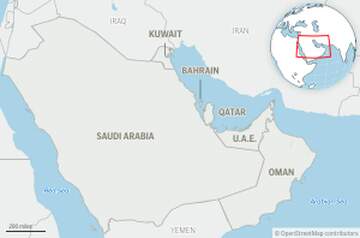
QatarEnergy halted LNG production in early March after Iranian missile attacks and declared force majeure for affected buyers. Two of its 14 production trains at Ras Laffan were damaged, reducing export capacity by about 17 percent; repairs are expected to take roughly three years. Shipments had risen to around one-third of pre-war levels by October, but every Qatari LNG cargo must pass through Hormuz.
The company is seeking further U.S. supply agreements and has previously bought American spot cargoes for customers in Asia. Its strategy could help it serve trading customers during disruption, but U.S. gas does not replace Qatar’s contracted supply when the strait is impassable.
Qatar’s U.S. LNG Bet Raises Stakes in Export Debate
QatarEnergy’s growing U.S. gas portfolio is a striking consequence of the Iran war: a country whose own LNG exports are constrained by Hormuz may control more U.S. supply than any other buyer by 2033. Wood Mackenzie projects the company will hold 23.7 million tons a year, with the gas destined for resale rather than Qatar.
Two agreements made in late October cover up to seven million tons annually. QatarEnergy contracted for up to four million tons a year from Cheniere beginning in 2031 and as much as three million tons from Woodside’s Louisiana project, expected to start deliveries in 2030. It also owns 70 percent of the Golden Pass plant in Texas.
The plan is a commercial hedge against a possible Strait of Hormuz closure, which al-Kaabi said could push gas prices higher. But American supply cannot fulfill QatarEnergy’s existing contracts when shipping is blocked: those deals require gas from designated terminals to designated destinations.
QatarEnergy stopped production in early March after Iranian missile strikes and invoked force majeure. Damage to two of its 14 Ras Laffan trains cut export capacity by about 17 percent, with repairs expected to take three years. Shipments recovered to roughly one-third of pre-war levels by October, but all Qatari LNG cargoes depend on the strait.
The expanding deals also put U.S. export approvals in sharper focus. The legal standard requires regulators to approve applications unless exports would be inconsistent with the public interest. Qatar’s strategy may protect its trading business, but it cannot remove the physical choke point—or make U.S. gas a substitute for the deliveries its customers contracted to receive.
Qatar’s Gas Deals Show the Strength of U.S. LNG
QatarEnergy’s expanding U.S. gas purchases show how American LNG has become a strategic asset as war threatens supply routes. Wood Mackenzie projects QatarEnergy will control 23.7 million tons of U.S. LNG a year by 2033, more than any other buyer. Qatar will resell the gas abroad, turning American production into a hedge for its trading business.
The company’s late-October agreements cover as much as seven million tons annually: up to four million tons a year from Cheniere, with deliveries expected in 2031, and up to three million from Woodside’s Louisiana project, expected from 2030. QatarEnergy also holds a 70 percent interest in Golden Pass, which shipped its first cargo in April.
Chief executive Saad Sherida al-Kaabi said the deals are designed to make money if Hormuz is closed and gas prices jump. QatarEnergy is seeking still more U.S. supply agreements. The arrangement reflects the reach of U.S. LNG: Qatar can buy American gas for customers elsewhere even as its own exports are restricted.
The limits are real. QatarEnergy cannot use these purchases to fulfill contracts tied to specific Qatari terminals and destinations. It halted production in early March after Iranian missile attacks and declared force majeure for affected customers. Damage to two Ras Laffan trains cut capacity by about 17 percent, and repairs could take three years.
Shipments had climbed to around one-third of pre-war levels by October, but every Qatari cargo must still cross Hormuz. U.S. supply gives Qatar a commercial cushion, not a replacement route for its own gas. The crisis nonetheless underscores the value of American export capacity and the ability to sell into global markets.
Reported by Semafor, The Daily Caller.