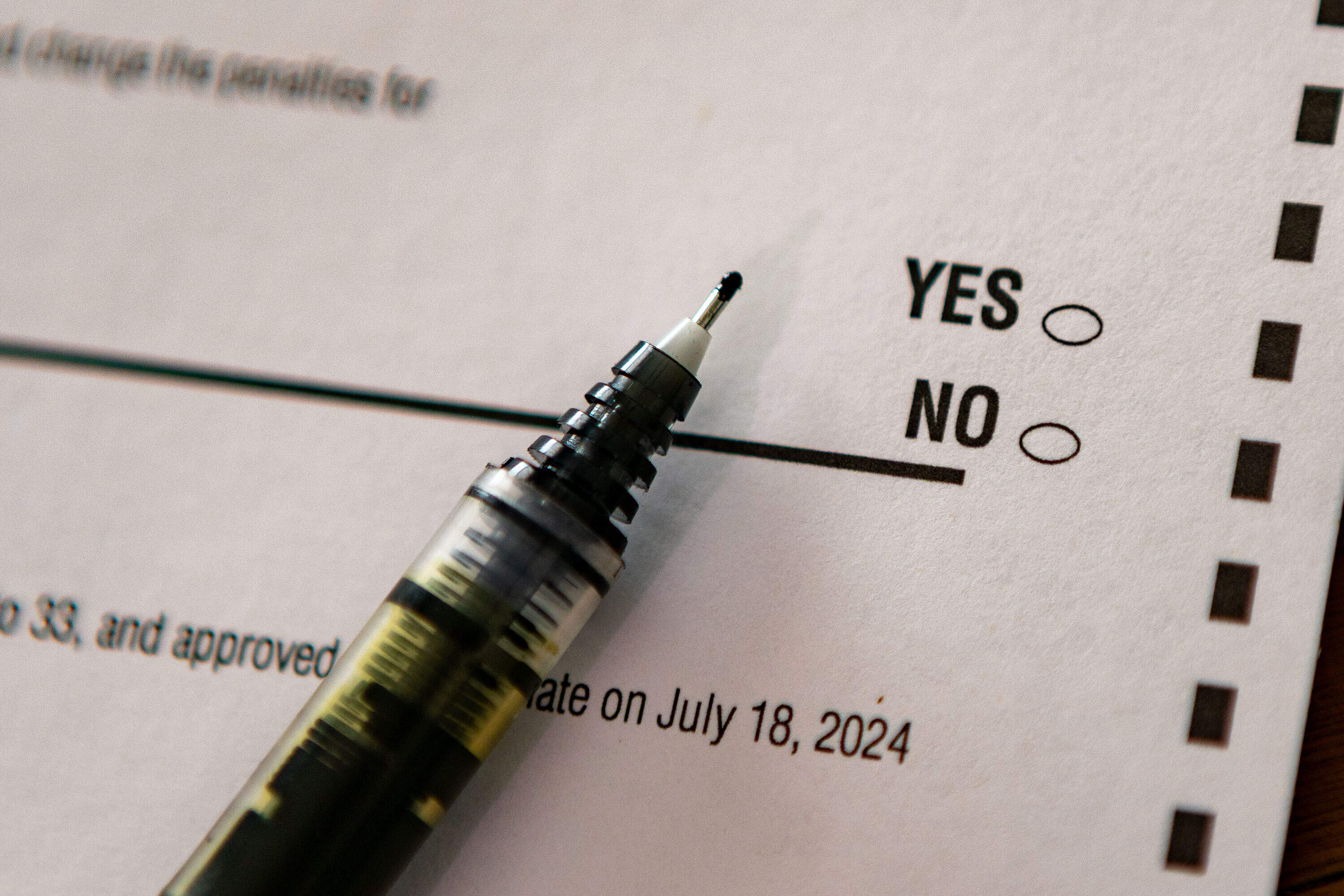
Massachusetts Question 7 Remains Too Close to Call
Question 7 would change Massachusetts zoning law to let most communities permit one detached house on a parcel of at least 5,000 square feet, with over 50 feet of street frontage. The rule would cover areas with public water and sewer service, and would not apply in Boston. If it fails, existing local lot-size rules remain in place.
The result was close as counting continued on November 4. With 80% of ballots tallied earlier in the day, the statewide vote was almost evenly divided. By 4:30 p.m., the Associated Press showed “no” leading with 50.6% of the vote and 94.4% counted, but had not called the question.
Support was strongest in Boston and several nearby communities. Somerville, Cambridge and Boston each backed the measure with nearly 70% or more voting yes. Milton supported it by fewer than 200 votes, while early results in Winthrop showed a one-vote margin in favor. Several other communities that had opposed the state’s MBTA Communities Act largely voted against Question 7.
Supporters say smaller lots could make room for more homes, including starter homes, amid high construction costs and slow permitting. Opponents object to setting a statewide zoning standard. Campaign leaders said they would wait for all votes to be counted before commenting further.
A recount may be possible if the final winning margin is no more than 0.5% of votes cast. As the no side’s lead widened, the likelihood of meeting that threshold could diminish.
Question 7 Could Open Massachusetts to More Starter Homes
Question 7 offers Massachusetts a chance to make more room for homes at a time when high construction costs and slow permitting have hampered efforts to address the housing shortage. The measure would let most communities allow single-family homes on lots of at least 5,000 square feet, where public water and sewer are available.
The count remained tight on November 4. With 94.4% of ballots tallied by 4:30 p.m., the “no” side had 50.6%, but the Associated Press had not called the question. Earlier results showed the state almost evenly split.
The measure drew substantial support in Boston and inner-ring communities, where housing scarcity has added to the cost burden for renters and homeowners. Somerville, Cambridge and Boston each recorded nearly 70% or more support. Worcester, Amherst, Northampton and Springfield also backed it.
The proposal’s opponents object to a statewide zoning standard, but leaving each community’s lot-size rules untouched would preserve the barriers Question 7’s supporters want to change. Proponents argue smaller lots could make starter homes possible for more families. Campaign leaders said they would wait until every ballot was counted before addressing the outcome.
A recount could be sought if the final margin is no more than 0.5% of votes cast. The no side’s lead grew as counting continued, potentially making that threshold harder to meet.
Question 7 Puts Local Zoning Rules at Risk
Question 7 would replace local discretion on lot sizes with a statewide rule for most communities, allowing single-family homes on lots of at least 5,000 square feet where public water and sewer are available. Voters were being asked whether one standard should override the choices cities and towns now make for themselves.
The result remained uncertain on November 4. At 4:30 p.m., with 94.4% of ballots tallied, the “no” side had 50.6%, and the Associated Press had not called the race. The vote had been nearly even earlier in the count.
Opponents have objected to a single statewide zoning standard. That concern was reflected in many communities that had resisted the MBTA Communities Act: several of those towns largely voted no. Other smaller and coastal communities, including Rehoboth, Duxbury, Cohasset, Marshfield and Falmouth, also rejected Question 7.
Supporters say smaller lots could open the way to more modestly priced starter homes. But that aim would come through a statewide change to local land-use rules, rather than leaving each municipality to set its own minimum lot sizes. The campaign’s leaders said they would wait for the count to finish before commenting on the outcome.
A recount is available if the final margin is no more than 0.5% of votes cast. The widening no lead may reduce the chance of qualifying for a recount.
Reported by The Boston Globe, Boston.com, CBS Boston.