Midterm election fears shift to voting day and certification
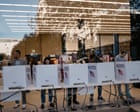
Concerns over the US midterms have moved from actions taken before voting to possible interference on Election Day and during the count. The risks described range from ordinary problems, such as long lines or equipment errors, to intimidation, federal agents intervening at election sites, or officials being detained. The most severe scenarios were characterized as unlikely, but potentially devastating.
Some problems could end when polls close; others could be used to build challenges that persist through state certification. Possible post-election tactics include seizing or withholding ballots, mass challenges to votes, disputes over standard procedures, and candidates refusing to accept losses. The boundary between a legitimate challenge and an attempt to undermine results may not be clear immediately.
Separate warnings focused on President Donald Trump’s claims that Democrats may rig the midterms. Courts have blocked executive orders asserting federal election powers, while district maps have been redrawn and the Supreme Court has weakened protections under the Voting Rights Act. The possibility of immigration officers near polling places, as well as a federal investigation into alleged noncitizen voting in California, could frighten some eligible voters, the warnings said.
In Alaska, Trump called for the prosecution of Democratic Senate candidate Mary Peltola after reports that her campaign recruited a candidate whose name matched that of her GOP rival. The campaign denied the allegation. Alaska’s Republican governor has not pledged to certify a Peltola victory. Election officials, including Republicans, are preparing to resist interference, while early voting has risen. A clear voter verdict could make efforts to dispute the outcome harder.
Trump’s election attacks threaten a fair midterm count
The danger to the midterms is not limited to what happens at polling places. Trump’s assertions that Democrats will steal seats, alongside attempts to expand federal influence over elections, could help lay the groundwork for rejecting results before ballots are even cast.
Potential threats range from voter intimidation and disruption at polling sites to federal agents intervening, election workers being detained, or ballots being seized. Some scenarios are described as unlikely, but their consequences could be severe. Even routine problems could be magnified into excuses for more direct action, while post-election challenges could continue through certification.
Courts have blocked executive orders asserting election powers that belong to states. But the weakened Voting Rights Act and redrawn districts have also reduced safeguards, while the prospect of immigration officers near voting locations could deter eligible voters with undocumented relatives. The concern is that these measures and claims could make participation more frightening and cast doubt on a legitimate result.
The Alaska Senate race adds to the tension: Trump called for Mary Peltola’s prosecution after an allegation that her campaign recruited a rival candidate who shared her GOP opponent’s name, which the campaign denied. The state’s Republican governor has made no commitment to certify a Peltola win. Election officials are preparing to resist interference, and increased early voting offers voters a way to deliver a clear verdict that is harder to contest.
Election warnings risk turning uncertainty into a pretext
Warnings about the midterms now lay out a wide range of possible Election Day problems, from long lines and equipment glitches to federal intervention and ballot seizures. The most severe scenarios are acknowledged to be low-probability, yet they are presented alongside ordinary election complications, a framing that risks making speculation sound like impending fact.
Some disruptions could be brief, while others might feed disputes after polls close. Challenges to ballots and procedures can be difficult to assess in real time, and the warnings themselves recognize that the distinction between lawful challenges and illegitimate efforts may only become clear later. That uncertainty deserves care, not automatic conclusions that every dispute is an attack on democracy.
Trump has claimed Democrats may steal seats, while courts have blocked executive orders asserting federal election powers. The Alaska race has also become part of the debate: Trump demanded prosecution of Mary Peltola after an allegation that her campaign recruited a rival candidate whose name matched her GOP opponent’s; the campaign denied it. The governor has not promised to certify a Peltola victory.
Election officials, including Republicans, are preparing to resist anti-democratic efforts, and early voting has increased. Those facts point to a functioning process as well as genuine risks. Claims of interference should be judged on evidence, rather than treated as proof that the outcome is already being stolen.
Reported by The Guardian US, Talking Points Memo, MSNBC.