Kennedy Defends Michigan Remarks on Islamism in Lengthy Post
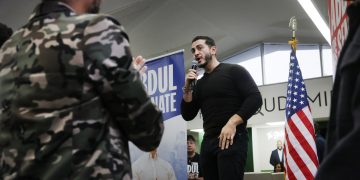
Kennedy’s more than 3,700-word post followed criticism of comments he made during a gathering supporting GOP Senate candidate Mike Rogers. Kennedy said he had criticized Islamism, a political ideology, rather than Islam or Muslims, and accused news outlets of leaving out context from his remarks. He argued that criticism of Islamism was neither racist nor Islamophobic.
At the rally, Kennedy contrasted the Muslim Brotherhood with Islam’s historical contributions to science, mathematics, medicine, philosophy and the arts. He also questioned the scientific and literary output of Arab nations. A New York Times headline characterized his remarks as bigoted comments about Arabs, while Kennedy argued that coverage misrepresented his point. He said he had explicitly distinguished criticism of the Brotherhood from hostility toward Muslims.
The dispute is part of the Michigan Senate campaign between Rogers and Democrat Abdul El-Sayed. Kennedy accused El-Sayed of having longstanding ties to the Muslim Brotherhood and groups he described as its U.S. fronts, and called on him to condemn the organization. The reports also describe Republican criticism of El-Sayed, including claims about his ties to terrorism; El-Sayed is seeking to become the first Muslim elected to the Senate.
Kennedy’s post challenged media coverage and presented Islamism as a departure from Islam’s scholarly past. Critics characterized his rally remarks and follow-up as anti-Muslim rhetoric, with one editorial arguing that Republicans were using bigotry against El-Sayed in the closing weeks of the campaign.
Republicans Escalate Anti-Muslim Rhetoric Against El-Sayed
Robert F. Kennedy Jr.’s lengthy social media post did not erase the central problem: at a Michigan rally for Mike Rogers, he questioned Arabs’ scientific and literary achievements while arguing against Abdul El-Sayed’s Senate candidacy. Kennedy now says he was attacking Islamism, not Muslims, but critics have called the remarks bigoted and his follow-up anti-Muslim.
The stakes reach beyond one campaign. El-Sayed could become the first Muslim elected to the Senate, yet Republican figures have repeatedly cast suspicion on him through claims about terrorism and the Muslim Brotherhood. Kennedy accused El-Sayed of longstanding ties to the Brotherhood and demanded that he condemn it. The criticism of El-Sayed sits alongside Kennedy’s sweeping claims about Islamism and Arab nations.
Kennedy says news outlets omitted context and stresses Islam’s historical contributions to learning. But that defense does not change the impact of rhetoric that links a Muslim candidate to terrorism and questions the accomplishments of Arabs. The campaign’s closing weeks are exposing how religious identity is being made a political weapon.
Kennedy Says Media Miscast His Criticism of Islamism
Robert F. Kennedy Jr. is pushing back against coverage that branded his Michigan remarks bigoted, arguing that reporters stripped away the distinction he made between Islam and Islamism. In a lengthy post, he said his criticism concerned a political ideology and the Muslim Brotherhood, not Muslims as a people or Islam as a faith.
Kennedy pointed to Islam’s historical achievements in science, medicine, mathematics and the arts, while arguing that the Brotherhood’s ideology rejects modernity. He also said he had explicitly stated at the rally that criticizing the Brotherhood was not hostility toward Muslims. He accused major news outlets of omitting that context as they covered his remarks about Arab nations’ scientific and literary output.
The argument is unfolding in a Michigan Senate race between Republican Mike Rogers and Democrat Abdul El-Sayed. Kennedy accused El-Sayed of longstanding ties to the Muslim Brotherhood and called on him to condemn it. Critics say Kennedy’s rhetoric disparages Muslims; Kennedy’s response is that scrutiny of an extremist political movement should not be treated as an attack on an entire religion.
Reported by The Daily Wire, MSNBC, The Washington Examiner.