Republican Islamophobic attacks dominate final days of Michigan Senate race
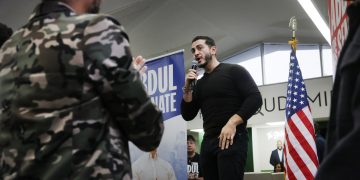
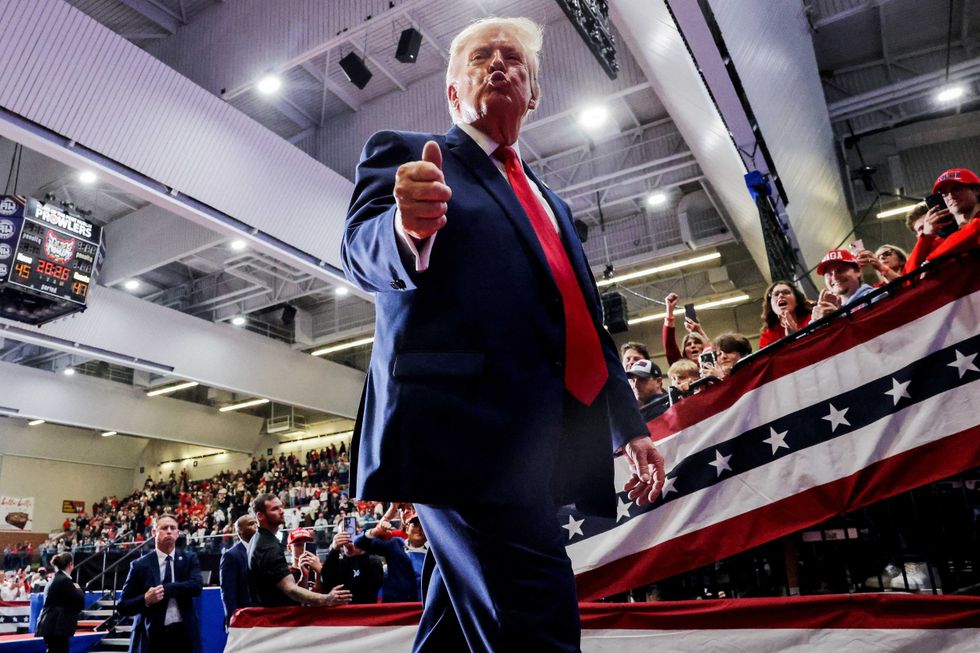
President Donald Trump and other Republicans have made attacks on Democratic Senate candidate Abdul El-Sayed and Muslims a focus of the final stretch of the Michigan Senate race, drawing criticism from television commentators and voting rights advocate Ari Berman ahead of the November 3 midterms. On “Morning Joe,” Joe Scarborough said Trump was using Islamophobia in his closing appeal to Black and Jewish voters and compared the approach to a campaign style associated with former Ku Klux Klan leader David Duke. Analyst Molly Jong-Fast described Republicans as being in “panic mode.”
Republican officials and candidates have made a series of claims about El-Sayed’s religion and ties to the Muslim Brotherhood. Vice President JD Vance called him a “cancer,” Sen. Ted Cruz described him as a “theocratic zealot,” and Sen. Bernie Moreno said El-Sayed did not belong in Washington because of his religious beliefs. Trump warned that Democrats would bring “hordes of jihadists” into the country. In a separate interview, Scarborough faulted Robert F. Kennedy Jr., who leads the Department of Health and Human Services, for remarks about Muslims and said Republican candidate Mike Rogers could have won without Islamophobic attacks.
Berman said a Supreme Court ruling on Louisiana’s congressional districts had energized Black voters, and that early voting had surged. She also warned about legal challenges after ballots are counted, saying she was concerned about what could happen once the legal process was over. Republican legal challenges are already underway. The election will test whether Republican appeals to their base can win, as well as how voters respond to the campaign’s attacks and voting rights disputes.
GOP’s anti-Muslim campaign puts voting rights and representation at stake
Republicans are making anti-Muslim attacks a closing argument in the Michigan Senate race, targeting Democrat Abdul El-Sayed and seeking to turn religious division into a campaign weapon. On October 30, commentators Joe Scarborough and Molly Jong-Fast condemned the strategy, with Scarborough saying President Donald Trump was injecting Islamophobia into his pitch to Black and Jewish voters. Republican figures have labeled El-Sayed a “cancer” and a “theocratic zealot,” while Sen. Bernie Moreno questioned whether his religious beliefs qualified him to serve in Congress. Trump has warned that Democrats would bring “hordes of jihadists” into the country.
The stakes extend beyond one race. Voting rights correspondent Ari Berman said the Supreme Court ruling concerning Louisiana’s redrawn congressional map, which she described as weakening the Voting Rights Act and enabling efforts to break up majority-Black congressional districts, has motivated Black voters. She compared its effect to the Dobbs ruling’s impact on women voters. Berman said voters she spoke with connected efforts to dilute their political power to the importance of their votes, and she pointed to a surge in early voting.
As Republicans face a November 3 election, the campaign’s focus on Islam and identity risks deepening divisions rather than addressing voters’ concerns. Berman also warned that legal challenges after voting ends could become consequential, even as she said a social media post cannot nullify an election. The election will test whether these attacks can mobilize Republicans without alienating other voters, and whether election disputes continue after ballots are counted.
Democrats and commentators cast GOP campaign attacks as a threat
Democratic candidate Abdul El-Sayed and his allies are being used as the focus of a sweeping accusation that Republicans are campaigning through bigotry. On October 30, Joe Scarborough and Molly Jong-Fast criticized President Donald Trump’s appeals to Black and Jewish voters, with Scarborough comparing the rhetoric to the politics of former Ku Klux Klan leader David Duke. Republican officials have sharply criticized El-Sayed: JD Vance called him a “cancer,” Ted Cruz called him a “theocratic zealot,” and Bernie Moreno challenged his place in Congress based on his faith. Trump warned that Democrats would bring “hordes of jihadists” into the country.
The same election debate includes claims about voting rights and the Supreme Court’s Louisiana v. Callais decision. Voting rights advocate Ari Berman said the ruling had energized Black voters and compared its effect to the Dobbs decision’s impact on women voters. She said early voting had surged and that voters saw efforts to redraw districts as an attempt to dilute their political power. Those are serious claims being brought into the final days of the campaign, alongside attacks on Republicans’ rhetoric.
Berman also raised concern about what could happen after election-related legal proceedings, while noting that a post on social media cannot overturn an election. Republican legal challenges are already underway. As the November 3 vote approaches, Democrats and commentators are framing Republican campaign tactics as dangerous, but voters will decide whether those arguments—or the Republican appeals to their base—carry greater weight.
Reported by Raw Story, Mother Jones.