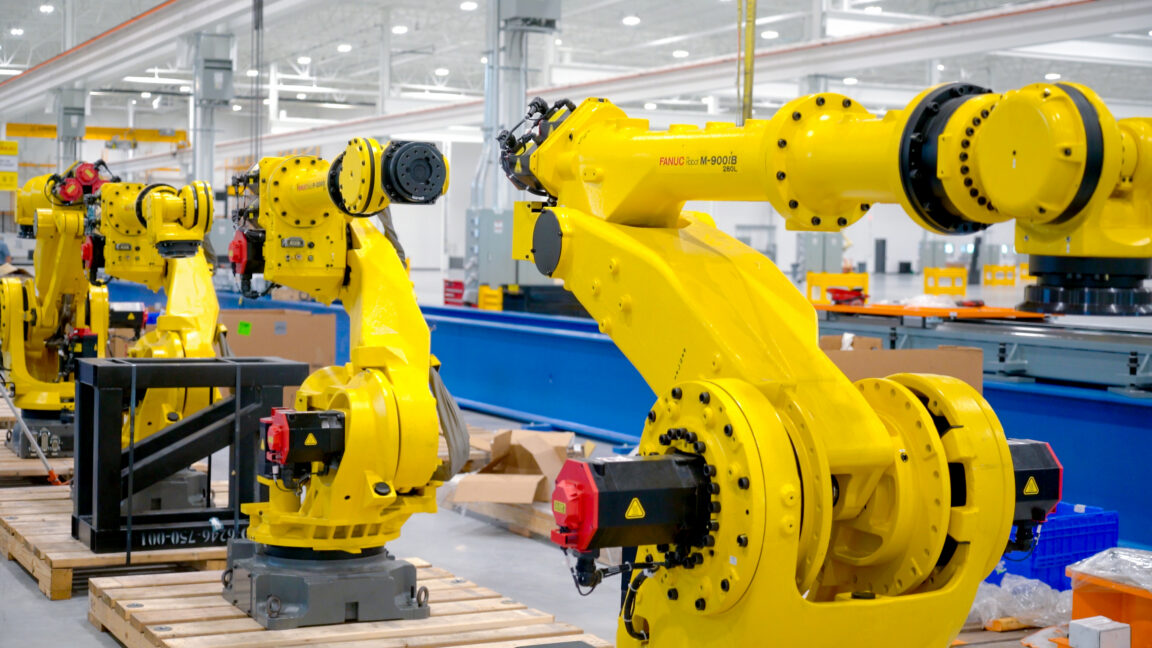
Trump Targets Imported Industrial Robots Over Security Risks
Trump’s proclamation directs the Commerce Department and the U.S. trade representative to pursue agreements with trading partners over foreign supplies of robots, factory equipment and related components. Officials have 180 days to negotiate and report on progress; if talks do not produce agreements, the president may consider tariffs, quotas, duties or fees. No new tariffs were imposed immediately.
The directive draws on a Commerce Department investigation that found U.S. reliance on imported machinery could threaten the industrial base and long-term competitiveness, as well as national security. The administration cited possible cybersecurity vulnerabilities and risks tied to foreign dependence. It also described the equipment as essential to military production and critical infrastructure.
Industrial machinery includes equipment such as welding robots, cutting and milling machines, grinders and heavy presses, used to make components for aircraft, ships, missiles and munitions. The United States does not produce enough of these machines and parts to meet manufacturers’ needs, the proclamation says.
That dependence presents a dilemma: restricting imports could make it harder for defense manufacturers to obtain machinery before domestic production can fill the gap, potentially disrupting weapons and equipment production. But continued reliance could leave U.S. manufacturers exposed if foreign governments restrict exports or access during a conflict. The negotiations are intended to address those risks before Trump decides whether to take further action.
Trump’s Robot Tariff Threat Risks Disrupting U.S. Manufacturing
Trump’s new proclamation puts imported robots and industrial machinery under national security scrutiny, with tariffs and quotas looming if negotiations fail. The administration says foreign dependence creates risks, but the same machinery is needed to build aircraft, ships, missiles and munitions.
That is the policy’s central contradiction: making imports more costly or harder to obtain could disrupt defense production before U.S. manufacturers can supply enough replacement equipment. The Commerce Department’s findings say domestic production does not meet the country’s needs, and the equipment is used throughout industrial and defense manufacturing.
The proclamation gives officials 180 days to negotiate with trading partners before reporting on progress. Trump did not impose tariffs immediately, but reserved the option of duties, quotas, fees or other steps. The debate now risks turning a real supply-chain vulnerability into a near-term obstacle for the manufacturers the administration says it wants to protect.
Trump Moves to Curb Foreign Risks in Critical Industrial Equipment
Machines that produce military equipment can also create a national vulnerability when the United States depends on foreign suppliers. Trump’s October 28 proclamation recognizes that exposure, citing cybersecurity concerns and the importance of robotics and industrial machinery to defense production and critical infrastructure.
The Commerce Department found that U.S. manufacturers lack the capacity to produce enough of these machines and components for the country’s economic and defense requirements. That shortfall leaves production reliant on imports, even as foreign governments could potentially restrict access during a conflict.
Trump has chosen negotiations first, rather than imposing tariffs immediately. Commerce and the trade representative have 180 days to pursue agreements with trading partners. If the talks do not deliver, the president may consider tariffs, quotas, duties or fees. The approach seeks to address foreign dependence while giving officials time to work through a problem that cannot be solved by simply cutting off needed equipment.
Reported by Ars Technica, Deseret News.





