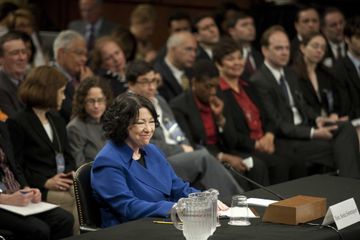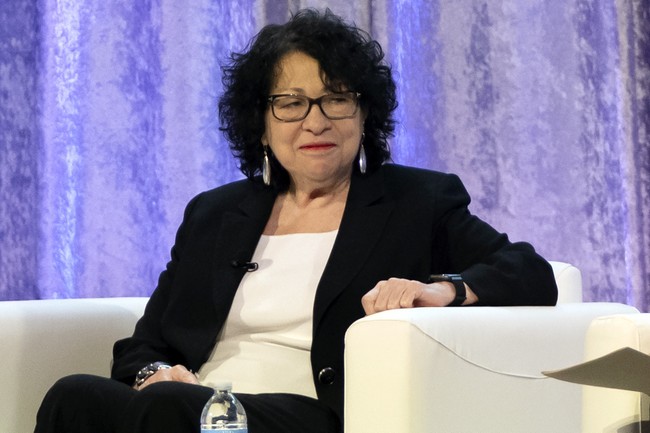
Sotomayor Urges Supreme Court to Consider People Behind Cases
Sotomayor made the remarks while accepting the Philadelphia society’s Benjamin Franklin honor. She contrasted a court guided by legal theory with one that considers what society has learned and understood.
She criticized legal scholarship for often overlooking the people at the center of cases. Her comments addressed how the court approaches legal questions, rather than describing a particular ruling she wanted changed.
Sotomayor also said that established norms had been disrupted and that removing them threatened protections important to the country’s functioning. She referred to the Supreme Court’s 2024 decision on presidential immunity, which recognized immunity for actions within a president’s exclusive constitutional authority and presumptive immunity for some other official acts.
Her remarks prompted sharply differing reactions. Critics characterized her position as a call to replace legal analysis with subjective judgment, while her comments emphasized the human circumstances behind cases and changes in society’s understanding.
Sotomayor Puts People at the Center of Supreme Court Cases
The law is not an academic exercise detached from the people affected by court decisions. In Philadelphia, Justice Sonia Sotomayor argued that the Supreme Court should look beyond legal theory and reckon with what society has learned and understood.
She said legal scholarship often fails to address the people at the center of cases. That is a call to take the human consequences of judging seriously, not a statement that courts should abandon the law.
Sotomayor also warned that disrupted norms can remove protections that have helped the country function. She pointed to the 2024 presidential-immunity ruling, which granted immunity for actions within a president’s exclusive constitutional authority and presumptive immunity for some other official acts.
Critics have recast her remarks as a demand for judges to decide cases by feelings. That framing sidesteps her concern: legal analysis that ignores real people and the erosion of safeguards can leave the public with less protection. Her remarks offer a challenge to a court increasingly focused on abstract doctrines while the consequences fall on individuals.
Sotomayor’s Call to Look Beyond Legal Theory Raises Concerns
The Supreme Court’s job is to apply the law, not let shifting views of society determine what it means. Justice Sonia Sotomayor’s Philadelphia remarks put that principle in contention when she urged the court to look beyond legal theory and consider what society has learned.
Sotomayor also said legal scholarship often overlooks the people at the center of cases. But personal circumstances cannot replace the legal rules judges are sworn to apply. A court guided by broad social understanding risks weakening the consistency that makes the law a constraint on power.
Her warning about disrupted norms included criticism of the Supreme Court’s 2024 presidential-immunity decision. That ruling recognized immunity for actions within a president’s exclusive constitutional authority and presumptive immunity for some other official acts.
The stakes are not academic: the court’s approach shapes the protections and limits that apply to everyone. Sotomayor’s remarks invite concern that legal theory may be treated as an obstacle rather than the framework that keeps judicial decisions grounded in law.
Reported by Townhall, PJ Media.