Peggy Flanagan explains her offer to Trump on health care

The Flanagan TrumpCare proposal would let President Donald Trump put his name on a health-care deal if that helps expand Medicare. The Minnesota senator-elect’s offer is politically striking, but its terms remain undefined. The reports describe a willingness to work together, not a negotiated plan, a bill, or an agreement on what coverage would look like.
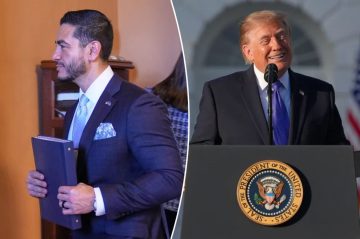
On CNN’s State of the Union, host Dana Bash asked Flanagan about Trump’s apparent openness to a health-care deal with Democrats. According to the program account, Trump had reposted a proposal from Michigan senator-elect Abdul El-Sayed. El-Sayed offered to work on a deal that could carry the TrumpCare name, then replied that he was ready to begin. Flanagan, an incoming colleague of his, said she would accept the label if it helped get Medicare for All across the finish line. CNN’s interview with Flanagan framed the exchange as a possible opening for cooperation, not a deal already in motion.
The pitch turns a familiar Washington fight over branding into a question: would the president back a policy Democrats support? Flanagan’s answer was that the name matters less than delivery. Her emphasis was on people’s costs and access to care. She said voters she met while campaigning in Minnesota described paying for insurance but still struggling to obtain health care. She cited deductibles as high as $18,000. She called that level of expense outrageous and argued that more could be done. Those were her descriptions of what she heard, not a data estimate about all Minnesotans.
There is a practical political calculation here. A policy identified with a president can be easier for that president to defend. Democrats can also claim progress on a goal they have long pursued. Flanagan is signaling that Democrats should not reject a possible opening simply because Trump would get the branding credit. That does not settle the harder questions: what benefits would be covered, how the plan would be financed, who would qualify, or whether Trump is prepared to support Medicare for All rather than a narrower change. The reports supply no answers to those questions.
El-Sayed’s approach and Flanagan’s support are part of the same invitation to the White House. El-Sayed has continued to court Trump on health care, and the president’s repost of his proposal gave the idea public attention. The exchange began with Trump sharing El-Sayed’s branding proposal, but a social-media response and a senator-elect’s conditional offer do not amount to legislative negotiations. The reports do not say that Trump accepted Flanagan’s terms. Nor do they say congressional leaders have begun drafting a shared measure.
The policy phrase itself also carries weight. Medicare for All generally points toward a much broader change than the reports describe in concrete terms. Here, Flanagan uses it to state the destination she wants, while leaving open whether any agreement with Trump could reach that destination. Her message is both an invitation and a test. If the president is serious about helping people afford care, she says, Democrats are willing to work with him and even share the label. Whether that willingness meets a matching commitment from Trump remains unresolved.
Flanagan also spoke about ICE enforcement at Seattle’s airport and about the significance of her election to the Senate. The available accounts identify those subjects but do not provide her comments on the airport activity or explain her views on it. They do report the historic election of Flanagan and Alaska’s Mary Peltola as the Senate’s first women of Native American heritage. Flanagan’s biography and the milestone provide that background, while the interview’s health-care exchange is the clearest account of her immediate policy message.
Her choice of language may matter as much as the proposal’s uncertain details. Democrats often face a choice between protecting a familiar label and pursuing a policy through whatever route can win support. Flanagan is arguing for the second path, on an issue where she says households are paying heavily and still not getting the care they need. But a label is not coverage. The next step would have to be a specific proposal that can be evaluated on cost, access, and who benefits.
For my part, there is something refreshing about treating a name as negotiable when people’s bills are not. I would wait for the actual terms before calling this a breakthrough. The useful development is that Flanagan has made clear she is open to a deal; the question now is whether the president is willing to do the policy work behind the branding.
Reported by CNN, Breitbart, The Washington Examiner, Townhall.