Nationwide Flight Halt Triggers Questions Over Aging FAA Systems
The Federal Aviation Administration halted flights across the United States on November 13 after an outage in air traffic control communications. The stop was lifted shortly before 8:30 p.m. Eastern time, after more than four hours. Officials said more than 3,500 planes were in the air when the halt began.
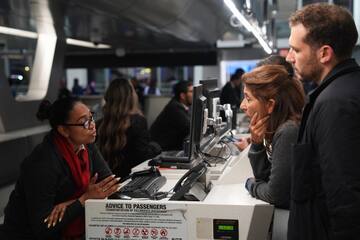
FlightAware recorded at least 8,200 delays and nearly 7,500 cancellations for flights to or from the United States. More than 1,700 cancellations had also been reported for November 14. At airports, travelers faced confusion as some departure boards continued to show flights operating while passengers could not board.
Transportation Secretary Sean Duffy said old hardware had failed and that radar communications instability began at 3:36 p.m. He and Homeland Security Secretary Markwayne Mullin said the outage was not caused by artificial intelligence or a cyberattack. Mullin called the incident a national emergency. Administration officials said a full system overhaul would cost an estimated $50 billion, and Duffy said President Donald Trump had asked Congress for funding.
Former Transportation Secretary Pete Buttigieg, in Denver for a Democratic conference, said he was concerned and questioned why system redundancies had not prevented an outage of this scale. He said he had no inside knowledge and praised the public servants working to resolve the disruption. Wisconsin Sen. Tammy Duckworth called for a thorough investigation, while other Democratic lawmakers pressed the administration for transparency. The FAA said flights had been halted as a safety precaution and every flight had been accounted for.
Flight Crisis Demands Answers on Trump Administration’s FAA
A nationwide air traffic communications failure brought U.S. flights to a halt on November 13, leaving travelers facing thousands of delays and cancellations—and raising urgent questions about the Trump administration’s response. The FAA lifted the stop after more than four hours, but the disruption had already affected airports across the country.
FlightAware recorded at least 8,200 delayed flights and nearly 7,500 cancellations to or from the United States. More than 1,700 cancellations were already reported for November 14. Passengers encountered confusing airport displays, with some boards showing flights as normal even as people were unable to board.
Transportation Secretary Sean Duffy blamed failed, aging hardware and said the government needed an estimated $50 billion to overhaul the system. That explanation makes the administration’s communication all the more important: Democrats said the public was left without adequate information while planes were grounded. California Rep. Robert Garcia called for transparency, and Wisconsin Sen. Tammy Duckworth said the incident warranted a complete investigation.
Pete Buttigieg, the former transportation secretary, said he was concerned that system redundancies had not prevented an outage of this magnitude. He also praised the public servants trying to restore operations. The FAA said flights were halted as a safety precaution and that every flight had been accounted for. Officials said the outage was not caused by artificial intelligence or a cyberattack.
Aging Air Traffic Hardware Exposes Need for FAA Overhaul
A failure in aging air traffic control equipment forced a nationwide flight halt on November 13, underscoring the scale of the infrastructure challenge facing the FAA. The stop lasted more than four hours and disrupted travel across the country.
FlightAware recorded at least 8,200 delays and nearly 7,500 cancellations for flights to or from the United States, with more than 1,700 cancellations reported for November 14. Officials said more than 3,500 planes were airborne when the halt began. The FAA said the precautionary action was taken after a temporary telecommunications outage and that every flight had been accounted for.
Transportation Secretary Sean Duffy said old hardware had gone down and that radar communications instability began at 3:36 p.m. He and Homeland Security Secretary Markwayne Mullin said the incident was not caused by artificial intelligence or a cyberattack. Administration officials put the estimated price of a complete system overhaul at $50 billion; Duffy said President Donald Trump had asked Congress to provide funding.
Democrats, including former Transportation Secretary Pete Buttigieg, demanded answers and questioned why system redundancies had not prevented the outage. Buttigieg said he lacked inside knowledge, while praising the employees working to resolve the crisis. The episode makes the debate over funding consequential: officials say replacing the aging system will require a major investment.
Reported by Daily Mail US, The Daily Beast, Twitchy, New York Post.