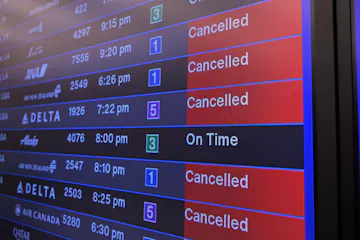
FAA Ground Stop Tied to Copper-Wire Replacement Work
Transportation Secretary Sean Duffy said on November 14 that work replacing outdated copper wire with fiber at a remote Federal Aviation Administration facility was the preliminary cause of Friday’s nationwide ground stop. The maintenance was routine, he said, because the old line was being discontinued.
During the work, a newly installed router flooded other routers with connection attempts, disrupting radar feeds and communications between air traffic controllers and planes. Duffy said officials had not determined whether the cause was faulty hardware, a setup error or poor work by contractor L3Harris. He said officials do not believe the incident was a cyberattack.
FAA chief Bryan Bedford said officials could not locate the source of the communications problem for about 45 minutes before ordering the stop. The halt lasted roughly five hours, with more than 3,500 planes in the air when it began. About 50,000 flights had been scheduled that day, and 30,000 had been completed by the time of the briefing.
Bedford said 4,000 to 5,000 of Saturday’s 40,000 scheduled flights were likely to be canceled. Delays and cancellations were expected to continue through the weekend, with flights projected to return to normal by the end of Sunday.
Duffy called for Congress to provide billions of dollars to modernize air traffic control, saying the system still relies on equipment dating to the 1970s and 1980s. He said Congress had provided only partial funding for the work.
FAA Outage Shows the Cost of Leaving Air Traffic Systems Behind
Friday’s nationwide ground stop exposed the consequences of an air traffic control system that still depends on equipment from the 1970s and 1980s. On November 14, Transportation Secretary Sean Duffy said routine work replacing discontinued copper wire with fiber at a remote FAA facility had triggered the communications failure.
A newly installed router flooded other routers with connection attempts, disrupting radar feeds and contact with aircraft. Officials had not established whether faulty hardware, a configuration error or contractor L3Harris’s work was to blame. Duffy said a cyberattack was not suspected.
FAA chief Bryan Bedford said officials spent about 45 minutes trying to identify the communications problem before ordering the stop. It lasted around five hours, with more than 3,500 planes airborne at the time. Of about 50,000 flights scheduled that day, 30,000 had been completed by the briefing.
Bedford expected 4,000 to 5,000 cancellations among Saturday’s 40,000 scheduled flights, with disruption continuing through the weekend and normal operations expected by Sunday’s end.
Duffy called on Congress to provide billions for modernization, while acknowledging the agency had received only partial funding. The scale of the disruption underscores the stakes of completing that work safely and reliably.
Aging FAA Equipment and Contractor Work Halted Flights Nationwide
A routine effort to replace obsolete copper wire with fiber at a remote FAA facility triggered a nationwide ground stop that lasted about five hours, Transportation Secretary Sean Duffy said on November 14. The incident highlights the risks of relying on air traffic control equipment that dates to the 1970s and 1980s.
During the work, a newly installed router flooded other routers with connection attempts, disrupting radar feeds and communications with aircraft. Duffy said officials were still investigating whether the problem involved faulty hardware, a configuration mistake or contractor L3Harris’s performance. Officials do not believe the cause was a cyberattack.
FAA chief Bryan Bedford said the agency could not identify the source of the communications failure for about 45 minutes before ordering the stop. More than 3,500 planes were in the air when it began. Of roughly 50,000 flights scheduled that day, 30,000 had been completed by the briefing.
Bedford projected 4,000 to 5,000 cancellations from Saturday’s 40,000 scheduled flights. Delays and cancellations were expected to persist through the weekend, though normal operations were anticipated by Sunday’s end.
Duffy urged Congress to approve billions for air traffic control modernization, saying the agency had received only partial funding. The disruption puts the cost of delaying that investment into sharp focus.
Reported by Los Angeles Times, Daily Mail US, The Verge, TechCrunch, The Boston Globe, Fox Business, LAist, FOX 10 Phoenix.