Salvadoran Troops Take Control of Haiti’s Largest Stadium
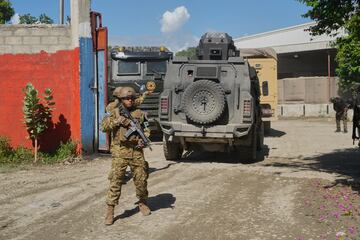
Salvadoran soldiers have taken over Sylvio Cator Stadium in central Port-au-Prince and will use it as a base for operations against gangs, President Nayib Bukele said on November 12. The move followed a joint operation involving Haitian police, armed forces and a private security group, according to statements from the two governments’ forces cited in reports of the takeover.
Bukele said soldiers found several human skulls inside the stadium. He demanded that gang members leave the area before an offensive begins, warning that those who stayed to fight would face consequences. A video he shared showed Salvadoran troops at the stadium and interacting with residents.
Gangs had controlled the 10,000-seat venue since 2024, preventing Haiti’s national football team from playing there. The team moved its World Cup qualifying matches to Curaçao, more than 500 miles away.
El Salvador sent troops to Haiti after four Salvadoran aviation technicians working with a UN-backed mission disappeared following an October 18 gang ambush in Port-au-Prince. Reports say roughly 2,500 Salvadoran soldiers have since been deployed. Earlier this week, Salvadoran forces attacked a gang leader’s mansion and a site described as the headquarters of the 400 Mawozo gang.
The deployment has drawn scrutiny over its oversight and human-rights implications. Amnesty International has called on Bukele and Haiti’s prime minister, Alix Didier Fils-Aimé, to ensure Salvadoran operations comply with international law. Bukele’s anti-gang campaign at home has also faced criticism over rights suspensions, arrests and deaths in custody.
Haiti’s Gang Offensive Needs Accountability, Not Just Firepower
Salvadoran troops now occupy Sylvio Cator Stadium, turning a major public venue in Port-au-Prince into a base for an offensive against gangs. President Nayib Bukele ordered gang members to leave before operations begin, while saying soldiers found human skulls inside.
The takeover followed a joint operation involving Haitian police, armed forces and a private security group. Gangs had held the 10,000-seat stadium since 2024, and Haiti’s national football team has had to play its qualifying matches in Curaçao.
El Salvador’s force in Haiti has grown to roughly 2,500 soldiers since four Salvadoran aviation technicians disappeared after an October 18 ambush. This week, Salvadoran forces also attacked a mansion belonging to a gang leader and a site described as a gang headquarters.
The urgency of confronting gangs does not erase the need for safeguards. The deployment has been criticized for limited transparency and supervision, and Amnesty International has called on Bukele and Haiti’s prime minister to ensure operations comply with international law. Bukele’s domestic anti-gang campaign has faced criticism over suspended rights, arrests and deaths in custody. Those concerns matter as his government expands its military role abroad.
Salvadoran Forces Seize Gang-Held Stadium Ahead of Offensive
Salvadoran forces have secured a stadium that gangs controlled for two years, opening a base for operations in Port-au-Prince. President Nayib Bukele said troops found human skulls inside and issued a direct warning: gang members should leave before the offensive starts.
The operation involved Haitian police, armed forces and a private security group. The 10,000-seat Sylvio Cator Stadium had been out of reach since 2024, forcing Haiti’s national football team to play qualifying matches in Curaçao.
El Salvador sent troops after four of its aviation technicians disappeared in an October 18 ambush. The deployment has since reached roughly 2,500 soldiers. Earlier this week, Salvadoran forces struck a mansion belonging to a gang leader and a location described as the headquarters of 400 Mawozo.
The gang threat has already deprived Haitians of a major stadium and disrupted the national team’s home games. Bukele’s government is pressing the offensive, while Amnesty International urges Haiti’s prime minister and Bukele to ensure operations follow international law. That standard should guide the campaign without obscuring the immediate task: confronting armed gangs that have seized territory and public spaces.
Reported by Local 10 Miami, The Daily Caller, Breitbart.