Bukele Uses Haiti Offensive to Bolster His Image Before Election
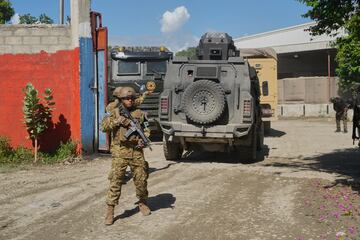
Videos of Salvadoran troops in Haiti—showing helicopter attacks, marching soldiers and armored vehicles—have spread across Bukele’s social media and pro-government accounts. The messaging presents the operation as a mission to help Haitians reclaim their country, while experts say it also serves to bolster Bukele’s image at home and answer scrutiny over the deployment.
The operation began after a gang attack in mid-October left four Salvadoran aircrew specialists assigned to a United Nations-supported mission missing. El Salvador has since sent 2,500 soldiers to Haiti, with little transparency or oversight. As international attention grew and a gang leader said the technicians were dead, Bukele’s public focus shifted from finding them to fighting Haiti’s gangs.
Bukele faces a February presidential election and has approval ratings above 90%, but critics have raised concerns about democratic checks after lawmakers from his party advanced the election schedule and removed presidential term limits. Salvadoran security consultant Luis Enrique Amaya said the Haiti operation gives Bukele a way to highlight his security record before voters. Strategist Roberto Dubon described the campaign as an effort to portray the president as a superhero.
Amnesty International has urged both governments to disclose the agreement permitting Salvadoran forces in Haiti and follow international human rights law, warning the operations could worsen violence and harm civilians. U.S. Secretary of State Marco Rubio said the United States was not actively involved and backed the U.N.-supported gang suppression force, which El Salvador has not joined.
Analysts question whether Bukele’s approach can work in Haiti. Salvadoran gangs were weakened through mass arrests and suspension of some constitutional rights; Haiti has dozens of gangs, including groups with access to smuggled weapons and ties to political elites. Analyst Tiziano Breda said the complexity could lead either to a prolonged deployment or to short, highly visible operations intended to project success.
Bukele’s Haiti Offensive Raises Rights and Democracy Alarms
Bukele is using images of Salvadoran forces in Haiti to cast himself as a solution to the country’s gang crisis—and to reinforce his political standing ahead of an election. The operation began after four Salvadoran aviation technicians disappeared in a gang attack in mid-October. Since then, 2,500 troops have been sent to Haiti with little transparency or oversight.
As international scrutiny mounted and a gang leader said the technicians were dead, Bukele shifted his public message from their rescue to eliminating Haitian gangs. Pro-government accounts have amplified videos of military action. Communications strategist Roberto Dubon characterized the campaign as an effort to sell Bukele as a superhero.
The stakes go beyond Haiti. Bukele’s party advanced the election schedule and removed presidential term limits, prompting democratic concerns as he prepares to run in February. His high approval ratings are tied to a domestic crackdown that curtailed important constitutional protections and jailed over 1% of El Salvador’s population; that campaign has also faced accusations of mass human rights abuses.
Amnesty International has called on El Salvador and Haiti to release the pact permitting the deployment and honor global human rights standards, cautioning that operations could intensify violence and affect civilians. Haiti’s gangs are numerous, well-armed and connected to political elites, making a direct transplant of Bukele’s model highly uncertain.
The administration’s image-making cannot resolve those risks. Analysts say the operation could become prolonged or be reduced to short displays of force designed to claim victory. Rubio has distanced Washington from the Salvadoran offensive, backing a separate U.N.-supported force instead.
Bukele Takes Haiti Fight to Gangs as Critics Question His Mission
Bukele is putting El Salvador’s hard-line security reputation on display in Haiti, where gangs have devastated communities. Videos of Salvadoran troops and military operations have circulated widely, carrying a promise to help Haitians reclaim their country. The deployment began after four Salvadoran aviation technicians disappeared in a gang attack in mid-October.
El Salvador has since sent 2,500 soldiers. Bukele’s message has evolved from rescuing the missing technicians to defeating Haitian gangs, after a gang leader said the technicians were dead. The president is preparing for a February election, with approval ratings above 90% and strong domestic backing for his crackdown on gangs.
The operation also faces real obstacles. Haiti has dozens of armed groups, some linked to political elites, and analysts say the conflict is more complicated than El Salvador’s. They question whether Bukele’s security model can be replicated, and warn the deployment could become a drawn-out engagement or rely on brief operations meant to show progress.
Amnesty International has called for the governments to disclose the agreement behind the deployment and meet international human rights obligations, warning of possible harm to civilians. Rubio said the United States was not actively involved and backed the U.N.-supported gang suppression force, which El Salvador is not part of.
Critics point to democratic concerns in El Salvador after Bukele’s party advanced elections and removed presidential term limits. Yet the central test in Haiti remains whether the mission can deliver security amid a far more complex gang conflict—not simply whether its critics approve of the president’s politics.
Reported by The Daily Caller, The Philadelphia Inquirer, Breitbart, The Conversation US, Fox News.