US Measles Elimination Status Faces Likely Loss
The United States may lose its measles-free status as a Pan American Health Organization panel considers whether the virus has spread continuously within the country for at least 12 months. The designation, held since 2000, means measles is not spreading continuously domestically; it does not mean the virus never enters the country.
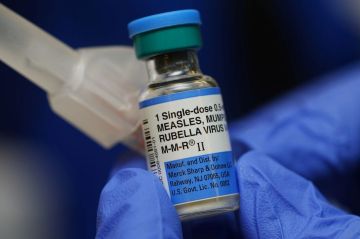
CDC Director Erica Schwartz said the agency would continue working with states and promoting the measles, mumps and rubella vaccine if the status is revoked. She expected a decision by early next week. The panel’s announcement is expected by November 17.
The US recorded 5,182 confirmed measles cases in 2026, the highest yearly figure in 35 years and over twice the 2,289 cases recorded in 2025. State health departments have reported 11 deaths since early 2025. Genetic evidence has identified transmission chains continuing for more than a year, including chains linked to an earlier Texas outbreak that spread in Utah and neighboring states.
Vaccination coverage among kindergartners was 92.4% in the 2025-26 school year, below the 95% level the CDC says is generally needed for community protection. Schwartz highlighted close-knit communities with lower vaccination rates and said the CDC would focus on helping states explain the role of vaccination.
Health experts say higher vaccination rates could help stop transmission and eventually restore the status. Brazil regained its designation in 2024 after losing it in 2019, following targeted vaccination campaigns and stronger disease surveillance.
Falling Vaccination Rates Put Measles Protection at Risk
The US is on the brink of losing a public health achievement as measles spreads through the country, with 5,182 confirmed cases in 2026 and vaccination coverage among kindergartners at 92.4%—below the CDC’s general 95% benchmark for community protection.
A Pan American Health Organization panel is weighing whether measles has spread without interruption across the US for at least 12 months. Its decision is expected by November 17. CDC Director Erica Schwartz said the agency would keep working with states and emphasizing the MMR vaccine even if the designation is revoked.
Transmission chains linked to a Texas outbreak have continued in Utah and reached neighboring states. The country has reported 11 deaths since early 2025. These figures underscore the consequences of gaps in vaccination and the importance of public health agencies explaining vaccine protection, especially in communities with lower coverage.
The debate also comes as Health Secretary Robert F. Kennedy Jr. has questioned the MMR vaccine and sought to reduce childhood immunizations. President Donald Trump and Kennedy have called for splitting the combined MMR vaccine into three injections; drug makers said the process might require several years, whereas doctors warned it could confuse families.
Experts say a renewed vaccination effort could curb transmission and eventually restore the US status. Brazil did so in 2024 after targeted campaigns and stronger disease surveillance.
CDC Says Measles Response Won’t Change if Status Is Lost
Even if an international panel strips the US of its measles-free status, CDC Director Erica Schwartz says the agency will continue its existing response: working with states and urging vaccination. The decision, expected by November 17, would mark a major public health setback after the designation was achieved in 2000.
The US has recorded 5,182 confirmed cases in 2026, more than twice the 2,289 cases in 2025, and state health departments have reported 11 deaths since early 2025. A panel will assess whether transmission has continued domestically for at least a year, with evidence pointing to long-running chains linked to an earlier Texas outbreak.
Kindergartner MMR vaccination coverage was 92.4% in the 2025-26 school year, below the CDC’s general 95% benchmark for community protection. Schwartz said close-knit communities with lower vaccination rates are a focus for the agency’s outreach. She said the final decisions and direction of the CDC rest with her, while also noting she communicates with Kennedy daily.
The status decision is consequential, but it does not change the CDC’s stated plan. Schwartz says the agency will continue its work with states and emphasize MMR vaccination. Experts say increased coverage could eventually help halt spread and restore the designation, as Brazil did in 2024 after targeted campaigns and stronger surveillance.
Reported by CNN, New York Post, Denver7, Newsweek, The Guardian, The Philadelphia Inquirer.