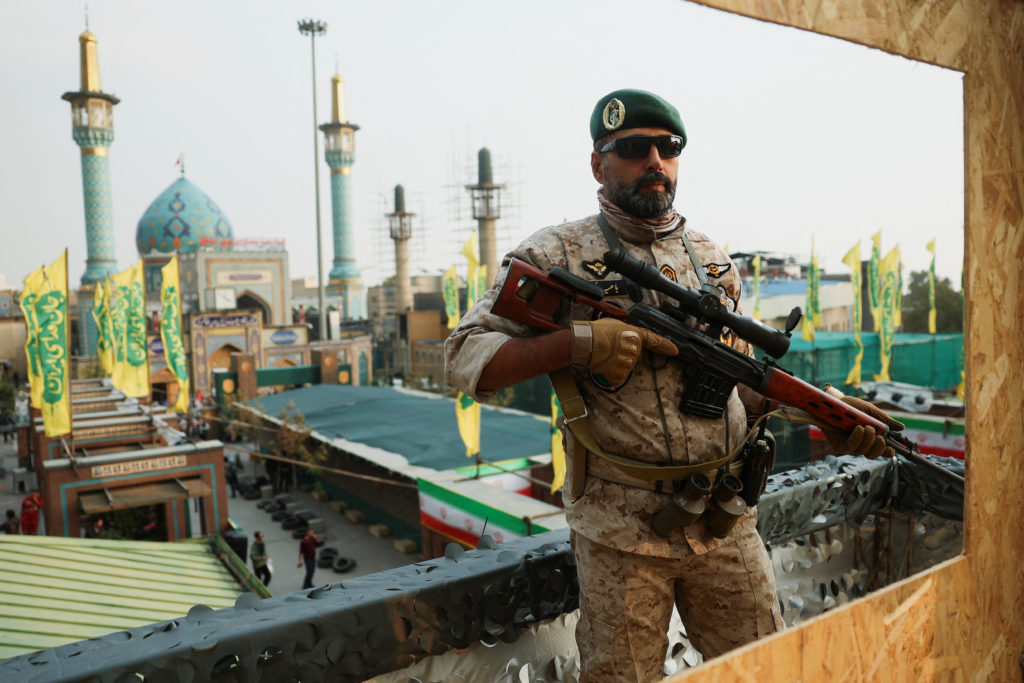
US Warns Gulf Allies to Prepare for Possible Iran Strikes
The United States has cautioned several Middle Eastern allies to prepare for possible renewed attacks on Iran after November 3, along with the risk that Tehran could retaliate against them. Allies received the cautions through diplomatic contacts and military communications, and were urged to protect energy facilities and other critical infrastructure.
President Donald Trump has said he is considering military action after the elections, but has not approved new strikes. U.S. forces are replenishing munitions, preparing bombers and fighter jets, strengthening missile defenses in the region and moving troops away from vulnerable bases. A deployment of about 9,000 sailors and Marines is also bolstering the U.S. presence.
The possible operation could last several days, diplomats briefed on the warnings said. Regional officials are concerned Iran and its allied groups might respond, potentially prolonging the fighting. The conflict began in late February, and the United States has not struck Iran since early September.
Iranian Foreign Minister Abbas Araghchi said Tehran is still giving diplomacy a chance and reviewing proposals intended to provide a basis for returning to a ceasefire. The United Arab Emirates urged the parties to pursue political solutions and contain tensions.
The war has weighed on Republican candidates ahead of the midterms, amid rising fuel prices. The Pentagon’s latest estimate puts the cost to U.S. taxpayers at $47.1 billion. The timing of any possible U.S. action after Election Day remains unclear.
Trump’s Post-Election Iran Threat Risks Expanding an Unpopular War
The United States is preparing for another round of attacks on Iran just as President Donald Trump’s war is already weighing on households and Republican candidates. Officials have warned allies to brace for strikes after the midterm elections and for Iranian retaliation against energy facilities and other critical infrastructure.
Trump has not approved an operation, but U.S. forces are restocking weapons, preparing aircraft, reinforcing missile defenses and moving troops away from exposed bases. A deployment of about 9,000 sailors and Marines is adding to the regional force. The possible strikes could last several days, while retaliation by Iran and allied groups could make the conflict longer.
That is a serious escalation, not a settled path to peace. The war began in late February, and the United States has not struck Iran since early September. Tehran says it is still pursuing diplomacy and reviewing proposals to support a return to a ceasefire. The United Arab Emirates has also urged political solutions.
The conflict has already pushed up fuel costs and become a burden for Republican candidates. The Pentagon estimates the war has cost U.S. taxpayers $47.1 billion. With voters facing higher costs, the prospect of renewed bombing after Election Day raises the stakes for the country and the region, while the timing and consequences remain uncertain.
US Must Keep Iran From Turning Nuclear Ambitions Into a Threat
Iran remains at the center of a dangerous regional confrontation, and U.S. officials are preparing allies for the possibility that military action may resume after November 3. The warnings include the risk of Iranian retaliation against energy facilities and other critical infrastructure.
President Donald Trump has not approved new strikes. But U.S. forces are replenishing munitions, preparing bombers and fighters, strengthening missile defenses and shifting troops away from vulnerable bases. About 9,000 additional sailors and Marines are also deploying to the region. These preparations give the United States options if Tehran refuses to resolve the crisis.
The administration says it wants to ensure Iran never obtains a nuclear weapon. Trump has said he is weighing action after the midterms, while Iran’s foreign minister says Tehran is still giving diplomacy a chance and reviewing proposals for a return to a ceasefire. The United Arab Emirates has likewise called for political solutions.
The risks of a wider conflict are real: allies fear retaliation, and officials say a response could extend beyond a U.S. operation expected to last several days. The war has cost the United States an estimated $47.1 billion and has contributed to rising fuel prices. But the threat of renewed fighting underscores the consequences of leaving Iran’s nuclear ambitions unresolved.
Reported by Daily Mail US, The Daily Beast, New York Post, The Daily Caller, The Philadelphia Inquirer, The Free Press, Slate, Jacobin, CNN.