Prediction Markets Shift From Midterms to Trump Cabinet Bets
Prediction markets that tracked the midterms have moved on to a new question: who might be the next member of President Donald Trump’s Cabinet to leave. A Polymarket market had attracted nearly $190,000 in trading by November 6, 2026, with Pete Hegseth, who leads the Defense Department, White House chief Susie Wiles and Secretary of State Marco Rubio among the leading possibilities.
Hegseth was priced at about 31%, Wiles at 24% and Rubio at 8%. Traders assigned roughly 27% odds to no Cabinet departure before 2027. Hegseth’s position comes amid scrutiny over his role in the Iran war. Impeachment articles accusing him of launching the war without congressional approval could come to a House vote next week; Republican Thomas Massie plans to revive the effort after the GOP’s midterm losses.
Wiles has drawn criticism from Republicans seeking explanations for the election losses. Former Trump aide Caroline Sunshine called for her resignation in a television interview. Rubio, meanwhile, has faced speculation about leaving and a possible 2028 presidential run. He has rejected the departure talk publicly, saying he has consistently intended to stay in the job through Trump’s final term.
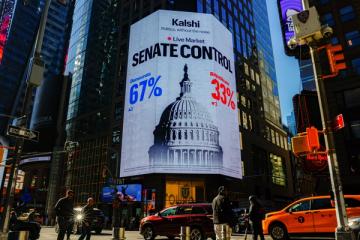
The markets’ election forecasts were notably accurate: they favored Democrats taking both chambers, and Kalshi’s leading pick won 479 of 487 midterm races. But the platforms’ growing profile is sharpening scrutiny. Lawmakers from both parties have proposed banning election contracts, while federal and state officials are challenging how the markets operate. Supporters argue they offer useful probability estimates and are already subject to federal oversight; critics question whether the platforms can adequately detect insider trading and protect consumers.
Accurate Election Markets Still Need Strong Oversight
The midterms showed that prediction markets can forecast political outcomes with striking accuracy. They also exposed why a booming industry that lets people wager on elections cannot be left to police itself.
Markets favored Democrats taking both chambers, and Kalshi’s leading pick won 479 of 487 races. Traders have now shifted to bets on which Trump Cabinet official might leave first. On November 6, 2026, Polymarket put Defense Secretary Pete Hegseth at about 31%, White House chief Susie Wiles at 24% and Secretary of State Marco Rubio at 8%; the chance of no departure before 2027 was about 27%.
The central issue is not whether markets can produce useful forecasts. It is whether companies can reliably prevent insiders from using privileged information and ensure meaningful consumer protections. Senators Elizabeth Warren and John Curtis questioned the platforms’ ability to catch such activity, and lawmakers from both parties have introduced legislation to bar election contracts and related trades.
The platforms’ defenders point to federal oversight and argue that market prices provide probabilistic estimates that complement polling. But claims of accuracy do not settle the question of accountability. With state regulators also pursuing legal challenges, Congress should take seriously the risks lawmakers have identified rather than treating a successful forecast as a reason to give the industry a pass.
Election Forecast Accuracy Isn’t a Case for a Betting Ban
Prediction markets delivered a strong midterm performance, yet lawmakers from both parties are using concerns about election betting to press for restrictions. Accurate forecasts should prompt a serious debate about oversight—not a rush to outlaw the contracts.
Before votes were counted, major markets correctly favored Democrats to take both chambers. Kalshi’s leading pick ultimately won 479 of 487 races. Traders are now pricing possible Cabinet departures: on November 6, 2026, Polymarket put Defense Secretary Pete Hegseth at about 31%, White House chief Susie Wiles at 24% and Secretary of State Marco Rubio at 8%.
Critics warn that people with influence or inside information could exploit election markets. Senators Elizabeth Warren and John Curtis have questioned whether the platforms can police misconduct, and legislators in both parties have proposed banning election contracts. State officials are also challenging the markets under gambling laws.
But the case for prohibition should not be confused with the case for oversight. The platforms are subject to federal regulation, and experts say market estimates complement polling rather than replace it. Treating these products as nothing more than gambling risks dismissing the information they provide and handing government a sweeping role in deciding which forecasts people may trade on.