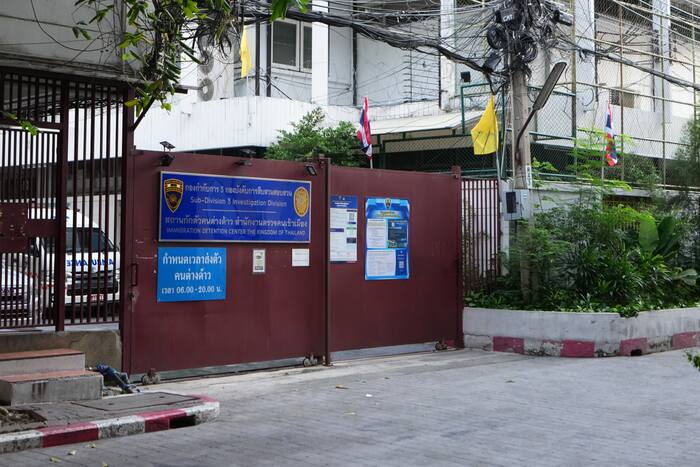
Thailand Says China Must Seek Extradition of Two Uyghur Men
The two men, ages 26 and 35, left prison in the latter part of October but remain in immigration detention in Bangkok. They were among more than 300 Uyghurs detained by Thai authorities in 2014 while fleeing China. Both have pleaded not to be returned, fearing abuse or torture.
Thailand’s National Security Council leader, Chaipruak Doungprapat, said the case would be decided by the courts, and that the men would have an opportunity to defend themselves. If judges rule against them, they will be extradited under the relevant treaty, he said. A decision in their favor could enable resettlement in another country.
China’s foreign ministry spokesperson, Mao Ning, said cooperation with Thailand against cross-border crime and illegal immigration follows national and international law. She did not say whether Beijing had made an extradition request. China has previously sought the return of the Uyghurs, describing them as terrorists.
Thailand sent 109 members of the detained group to China in 2015, prompting international protests. In February 2025, it returned 40 more despite appeals from lawmakers and U.N. officials. The fate of those men remains unknown. Opposition lawmaker Sasinan Thamnithinan said Thailand must not send anyone to a place where they might be subjected to torture or cruel treatment, and argued human rights and the rule of law should outweigh diplomatic concerns.
Thailand Must Not Return Uyghur Men to Risk of Abuse
Two Uyghur men held in Bangkok have asked not to be sent to China, where they fear abuse or torture. Thailand said on November 4 that China must submit a formal extradition request and that judges, not the National Security Council, will decide their case.
The men, 26 and 35, left prison in the latter part of October and remain in immigration detention. They were among more than 300 Uyghurs detained in Thailand in 2014 while fleeing China. A favorable court decision could let them settle in another country; an unfavorable one would lead to extradition under a treaty, security chief Chaipruak Doungprapat said.
The stakes are not abstract. Thailand sent 109 Uyghurs to China in 2015 and returned 40 men in February 2025, despite appeals from lawmakers and U.N. officials. The fate of the 40 remains unknown. Thailand’s human rights commission previously said officials had not shown evidence that those men consented or that their safety was assured.
Opposition lawmaker Sasinan Thamnithinan said Thailand is bound to protect people from return to places where they might be subjected to torture or cruel treatment. Diplomatic cooperation cannot justify putting the two men in danger. China’s foreign ministry said cooperation on cross-border crime follows domestic and international law, but its spokesperson did not say whether Beijing had filed an extradition request.
Thailand’s Courts, Not Political Pressure, Must Decide Uyghur Case
Thailand has placed the case of two detained Uyghur men in the courts, rather than leaving deportation to a security agency. On November 4, National Security Council chief Chaipruak Doungprapat said China must submit a formal extradition request and that the men can defend themselves before a judicial decision.
The men, ages 26 and 35, left prison in the latter part of October and remain in Bangkok immigration detention. They have pleaded not to be sent to China, saying they fear abuse or torture. If the court rules against them, Chaipruak said, they will be extradited under the treaty; a ruling for them could permit resettlement elsewhere.
The dispute follows earlier returns of Uyghurs to China: Thailand deported 109 in 2015 and sent 40 men back in February 2025, despite appeals from Thai lawmakers and U.N. officials. What happened to the 40 remains unknown. China has described Uyghurs it seeks to recover as terrorists, while its foreign ministry says cooperation with Thailand on cross-border crime complies with law.
Opposition lawmakers argue that Thailand must prevent returns where people might be subjected to torture or cruel treatment. Those concerns deserve consideration, but the government has said the present case will be tested through a legal process, with the men able to make their case before the courts.
Reported by KPRC 2 Click2Houston, The Philadelphia Inquirer.