Colorado voters approve school funding measure that redirects TABOR refunds
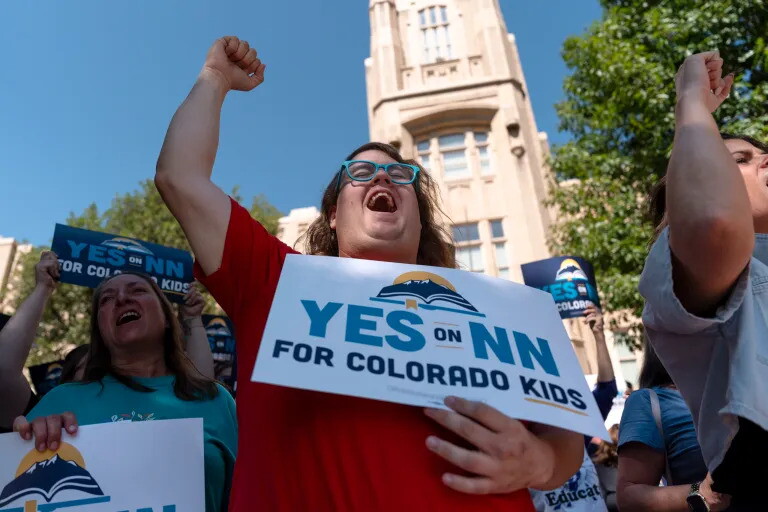
Proposition NN held a 55.3% to 44.7% advantage when the Associated Press called the race late on November 3. The measure allows Colorado to keep money that otherwise would have been returned to taxpayers under the Taxpayer’s Bill of Rights, or TABOR, and use it for education and children’s programs.
The proposal is expected to provide about $330 million in its first year. Schools would receive an initial 2% annual funding increase, estimated at $107 million in year one. For the next decade, at least half of the additional money retained from TABOR surpluses must go to K-12 schools; other funds can support programs including preschool and childcare. After 10 years, the limits on other spending expire, while the 2% annual school increase remains.
Legislative Democrats referred the measure to voters, and the state teachers union supported it. Supporters say the money could help increase teacher pay, reduce class sizes and expand early-childhood programs. State Sen. Jeff Bridges, who authored the measure and was elected state treasurer, said it raises the spending limit to put more money into education.
The change follows decades in which TABOR constrained state spending and generated refunds when revenue exceeded the limit. Douglas Bruce, who wrote TABOR, questioned whether state law can override the constitutional provision and said the funding approach could face court challenges. The measure increases the cap by $4.6 billion, with its effects on school funding and taxpayer refunds tied to economic growth.
Voters choose Colorado schools over TABOR’s refund limits
Colorado voters have approved a major expansion of school funding, choosing to direct money that would have gone back to taxpayers toward public education and children’s services. Proposition NN was ahead 55.3% to 44.7% when the race was called late on November 3.
The measure raises the TABOR spending cap by $4.6 billion. It is expected to generate about $330 million in its first year, including a 2% annual increase in school funding estimated at $107 million initially. For the next decade, at least half of additional money retained from TABOR surpluses must go to K-12 schools, with other funds available for preschool, childcare and related programs.
The vote follows years of funding constraints under TABOR, which limits state spending and has required refunds when revenue exceeds the cap. Colorado schools have faced difficulty retaining teachers and covering costs; more than half of school districts have shifted away from five-day classroom weeks to save money.
Democrats referred the proposal to the ballot, and the teachers union backed it. Supporters say the funding can improve teacher pay, reduce class sizes and expand early learning. The measure’s school funding rules last a decade, after which the legislature can use the remaining retained revenue for other purposes, while the annual 2% school increase continues.
Colorado voters give up TABOR refunds for a larger state budget
Proposition NN’s passage means Colorado will be able to keep revenue that otherwise would have been refunded to taxpayers, shifting the balance established by TABOR toward a larger state budget. The measure led 55.3% to 44.7% when the race was called late on November 3.
The cap rises by $4.6 billion. The measure is projected to produce about $330 million in its first year, while requiring a 2% annual increase in K-12 funding. For 10 years, at least half of additional money retained from TABOR surpluses must go to schools; the rest can support programs such as preschool and childcare. After that period, restrictions on other uses end, though the school-funding increase continues.
TABOR has limited state spending and returned money to taxpayers when revenue exceeded its cap. The new measure changes that arrangement, with the scale of future school funding and foregone refunds dependent on economic growth.
Douglas Bruce, TABOR’s author, questioned whether state law can supersede the state constitution and warned the funding plan could be challenged in court. Supporters, including the teachers union and the measure’s legislative author, say the revenue can improve teacher pay and reduce class sizes. The vote leaves those promised benefits alongside a substantial change to the constitutional spending limit and the refunds it has produced.