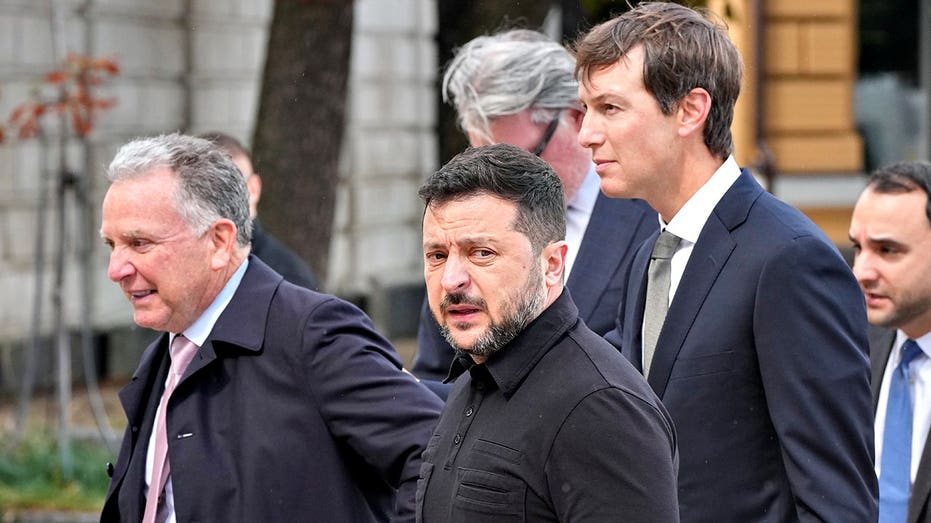
U.S. to Mediate Ukraine-Russia Talks in Abu Dhabi
The United States will mediate a new round of working-level negotiations between Ukraine and Russia in Abu Dhabi on November 10 and 11, special envoy Steve Witkoff said on November 2. Russian officials have confirmed that Moscow will take part, but the delegations have not been detailed in the announcements described by officials cited in the reports.
The talks are expected to address postwar security arrangements, de-escalation, humanitarian efforts and possible steps toward peace. Witkoff said the meetings would advance President Donald Trump’s effort to end the war.
Before the Abu Dhabi meeting, U.S. negotiators are due to meet in Brussels with representatives of France, Germany, the United Kingdom, the European Union and NATO. Their discussions are to cover security guarantees for Ukraine, Europe’s postwar security framework and economic support for Ukraine’s reconstruction.
The planned negotiations follow earlier diplomatic discussions in Kyiv, Oslo and St. Petersburg. Previous U.S.-mediated rounds during Trump’s second term have produced prisoner exchanges or other limited agreements, while the central dispute over territory remains unresolved. Russian President Vladimir Putin has maintained demands concerning land Russia claims to have annexed; Ukrainian President Volodymyr Zelenskyy has rejected accepting territory seized by force.
The announcement comes amid continued fighting. A localized ceasefire in the southern Kherson region ended on November 1 after allowing humanitarian supplies into Russian-occupied Oleshky. Russian strikes continued elsewhere in Ukraine, including attacks that Ukrainian authorities said killed at least 29 people in Zaporizhzhia and wounded 25 at a medical facility in Kharkiv.
Ukraine Talks Must Not Turn Occupation Into a Bargaining Chip
The new U.S.-mediated talks in Abu Dhabi will test whether diplomacy can advance without legitimizing Russia’s seizure of Ukrainian land. Steve Witkoff said negotiations on November 10 and 11 will address security, de-escalation and humanitarian issues, but the core territorial dispute remains unsettled.
Russian President Vladimir Putin has maintained demands concerning territory Russia claims to have annexed. Ukrainian President Volodymyr Zelenskyy has rejected accepting land taken by force, a position shared by European allies concerned that recognizing such gains would set a dangerous precedent. Any agreement that pressures Ukraine to surrender territory rather than protects its sovereignty would leave the central injustice intact.
The talks are working-level, not a meeting of national leaders. Russia has confirmed it will participate, while the details of the delegations have not been announced. U.S. officials will first meet European and NATO representatives in Brussels to discuss security guarantees for Ukraine and Europe’s postwar security framework.
Diplomacy is taking place as attacks continue. A localized truce in Oleshky ended on November 1, and Ukrainian authorities said strikes killed at least 29 people in Zaporizhzhia and wounded 25 at a medical facility in Kharkiv. The contrast underscores why de-escalation and credible security protections must be more than aspirations. The Abu Dhabi discussions are the next step, but their success depends on whether peace can protect Ukraine rather than reward force.
Trump’s Ukraine Diplomacy Brings Russia Back to the Table
The Trump administration is moving its Ukraine peace effort into a new round of talks, with Russia confirming it will join U.S.-mediated discussions in Abu Dhabi on November 10 and 11. Steve Witkoff said the working-level negotiations will focus on security arrangements, de-escalation and humanitarian efforts, along with next steps toward peace.
The meeting offers a practical opening after earlier U.S.-mediated rounds produced prisoner exchanges and other limited agreements. The conflict’s territorial dispute remains unresolved: Vladimir Putin has maintained demands concerning land Russia claims to have annexed, while Volodymyr Zelenskyy has ruled out accepting territory seized by force. Those competing positions make a durable agreement difficult, but continued fighting makes diplomacy essential.
The administration is also bringing European and NATO representatives into discussions in Brussels this week. The agenda includes Ukraine’s security guarantees, Europe’s postwar security framework and economic support for reconstruction. Those conversations can help establish what a settlement would require beyond an immediate halt to fighting.
The stakes are visible in the continued violence. A localized ceasefire in Oleshky ended on November 1, while Ukrainian authorities said Russian strikes killed at least 29 people in Zaporizhzhia and wounded 25 at a medical facility in Kharkiv. The Abu Dhabi talks are not a final agreement, but they put both sides into another negotiating round and give the U.S. effort a concrete next step.
Reported by Fox News, CBS News, Breitbart.






