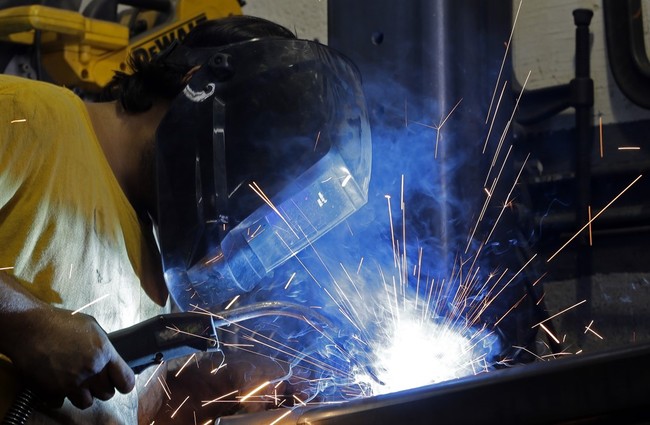
US Manufacturing Growth Accelerates in October
The ISM manufacturing index rose to 55.5 in October from 54.5 in September. Readings above 50 indicate expansion, and October’s result was the second-highest in more than four years.
Factory Growth Is Real, but Costs Still Squeeze Manufacturers
US factories expanded again in October, but a stronger headline number is no reason to overlook the costs and uncertainty manufacturers still face. The ISM index rose to 55.5, while its prices index remained high at 75.2, despite easing from September. Managers’ comments were negative more often than positive, reflecting pressures that the expansion alone cannot resolve.
Production rose to 59, its highest level since November 2021, and new orders continued to grow. Those gains matter, but the survey does not show that factories produced 55.5% more goods, nor does it identify what caused the improvement. It also cannot settle whether workers and businesses are getting relief from high costs.
Employment remained in growth territory for a fourth consecutive month, though its index slipped to 52.4 from 52.7. Supplier deliveries took longer, and the prices measure, while lower, still pointed to widespread cost increases. Celebrating growth while brushing aside these strains would give an incomplete picture. The data show an expanding sector—and a continuing need to address the pressures manufacturers describe.
Ten Months of Factory Growth Challenge Economic Pessimism
The latest factory data make sweeping claims of economic failure harder to sustain. In October, the ISM manufacturing index climbed to 55.5, marking a 10th straight month of expansion. Production rose to 59, its strongest reading since November 2021, while orders continued to grow.
Growth reached 12 industries, including machinery, electrical equipment, computers and electronics, primary metals, and transportation equipment. Five leading manufacturing sectors, among six, recorded growth. The employment index stayed above 50 for a fourth month in a row, and factory inventories returned to growth.
There are real pressures: the prices index remained elevated at 75.2, hiring growth eased slightly, and supplier deliveries took longer. But those concerns do not erase the evidence of expanding activity. Nor does one survey prove which policies caused the gains. The sensible case for economic growth is to acknowledge both points: factories are working through a sustained expansion, and the obstacles manufacturers describe still deserve attention.
Reported by Breitbart, PJ Media.