Polish Court Leadership Dispute Sparks Protests and President’s Return
According to the tribunal, Judge Anna Korwin-Piotrowska, its most senior member, had removed Święczkowski from his post and taken charge. She accused him of preventing recently appointed judges from occupying their positions and of irregularities in assigning cases. The tribunal’s official account rejected her authority and maintained that Święczkowski remained its president. The competing claims reflect a broader dispute over who has the right to lead the court.
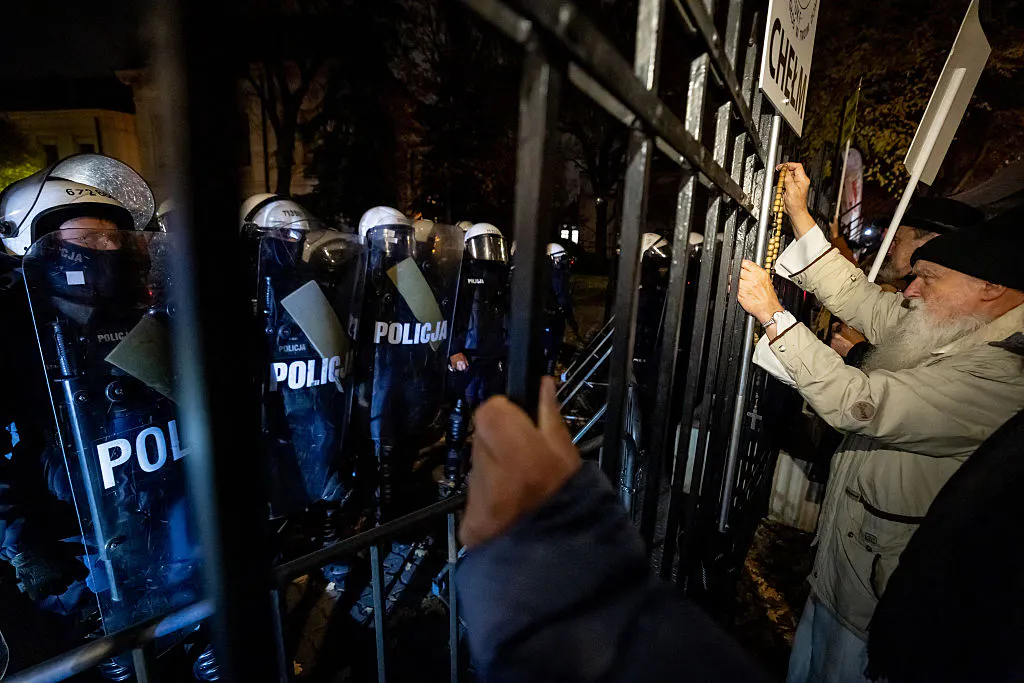
Police secured the tribunal grounds as protesters gathered. Officers said three people were detained after some demonstrators tried to enter the complex and objects were thrown at police. Some protesters prayed or held rosaries; others criticized Prime Minister Donald Tusk and his government. Police said they were acting following a petition from Judge Korwin-Piotrowska and Justice Minister Waldemar Żurek, citing possible threats to judges and staff.
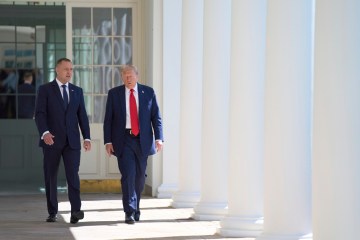
Nawrocki, an ally of the opposition Law and Justice party, cut short his flight to Senegal and returned to Poland. He has declined to administer the oath to three of the six judges selected by parliament, while Święczkowski had declined to admit judges chosen by the current parliamentary majority.
Tusk said decisive action was needed to restore the rule of law after years of abuses under the previous Law and Justice government. Critics of the suspension, including a constitutional law scholar who has also criticized earlier judicial changes, questioned its legal basis. The dispute has left the tribunal at the center of a continuing struggle between Tusk’s pro-European government and its nationalist opponents.
Poland’s Court Crisis Shows the Cost of Years of Judicial Capture
Police secured Warsaw’s Constitutional Tribunal after judge Anna Korwin-Piotrowska suspended Święczkowski, who had refused to admit judges selected by parliament’s current majority. The tribunal disputed her authority, and protesters denounced Prime Minister Donald Tusk’s government. The confrontation underscores how years of political conflict over the court have made its leadership a flashpoint.
Tusk says his government is trying to restore the rule of law after abuses under the Law and Justice administration. Critics at home and in the European Union have accused that party of imposing political control on judicial institutions, and its reforms led to EU fines against Poland. Nawrocki, aligned with Law and Justice, has declined to administer the oath to three of the six judges selected by parliament, helping keep the dispute unresolved.
The government’s critics are right to scrutinize the legal basis for Korwin-Piotrowska’s move; a constitutional law scholar who opposed earlier judicial changes also questioned it. But the standoff cannot be separated from Święczkowski’s refusal to let the newly selected judges take their seats. Police detained three people after protesters tried to enter the complex, while others threw objects at officers.
Nawrocki cut short his Senegal trip and returned to Poland. The court’s competing claims of authority show the stakes of rebuilding independent institutions: decisive steps may be necessary, but they must be grounded in law and restore a tribunal that can function legitimately.
Tusk’s Court Power Grab Triggers Protests and Presidential Return
Police surrounded Warsaw’s Constitutional Tribunal after judge Anna Korwin-Piotrowska suspended its president, Święczkowski, and declared herself in charge. The tribunal rejected her authority. Protesters condemned the move, and police detained three people after demonstrators tried to enter the complex and objects were thrown at officers.
The clash raises a basic question: can a government restore the rule of law by imposing its own disputed leadership on a court? Tusk says decisive action is necessary following a prolonged period of misconduct during Law and Justice’s rule. But a constitutional law scholar who has criticized that party’s judicial changes also questioned the legal basis for Święczkowski’s suspension. Replacing one contested arrangement with another risks deepening the crisis rather than resolving it.
Nawrocki, an ally of Law and Justice, cut short his flight to Senegal and returned to Poland. He had declined to administer the oath to three of the six judges selected by parliament, while Święczkowski declined to admit judges chosen by the current parliamentary majority. Those conflicting decisions have kept the court at the center of a prolonged political struggle.
Tusk’s government says it is restoring judicial independence; its opponents see the suspension as an unlawful takeover. With police securing the building and the tribunal disputing who leads it, the government’s claim to defend the rule of law faces its own test: whether its methods can command legal legitimacy.
Reported by The Daily Wire, The Washington Examiner, Fox News, The Daily Caller, New York Post, CNN, The Philadelphia Inquirer, Breitbart, Hot Air.