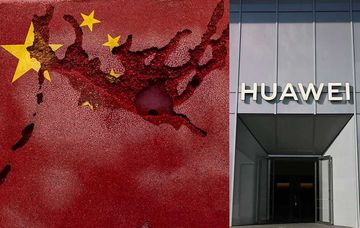
Huawei Convicted, but the Jury Rejected the Broadest Case

The Huawei verdict came on November 24, 2026, when a federal jury in Brooklyn convicted Huawei Technologies of conspiring to steal trade secrets and committing bank fraud, among other offenses. But jurors rejected the prosecution’s broadest theory: that Huawei operated as a criminal enterprise through a racketeering conspiracy. That split verdict leaves the company facing potentially severe penalties while also giving its defense a significant point to emphasize on appeal. The verdict followed a trial lasting about two months, and sentencing is scheduled for September 14, 2027.
The jury found Huawei and three subsidiaries guilty on 10 federal counts, including conspiracy to steal trade secrets, bank and wire fraud, sanctions violations, money laundering conspiracy, and conspiracy to defraud the United States. It acquitted the company on racketeering conspiracy and conspiracy to obstruct justice. The prosecution’s case drew together alleged intellectual-property theft, dealings involving Iran, and statements to financial institutions and U.S. officials. The verdict does not resolve every claim made during the trial: it records the jury’s decision on the specific charges before it.
Prosecutors portrayed a years-long campaign to acquire rivals’ and partners’ proprietary technology. Court records name Fujitsu and Quintel USA, alongside T-Mobile, Cisco Systems, and Motorola Solutions, as companies involved. The alleged material ranged from software source code and router documentation to antenna technology and equipment designs. One prominent example involved T-Mobile’s “Tappy,” a robot built to simulate a person’s touch on a phone screen. Prosecutors said Huawei staff learned sensitive details about the device and took a component to study and reproduce its technology. Other allegations included copied code in routers and attempts to photograph or measure rival equipment. The prosecution’s account put those episodes forward as evidence of a broader pattern.
Huawei’s lawyers argued that prosecutors had stitched isolated incidents together into an unfair story about the company as a whole. They said some disputed material was already public, pointed to licensing payments, and maintained that the company had disciplined or dismissed employees for wrongdoing. The defense also cited Huawei’s response after Cisco code appeared in its software more than two decades ago, saying the company recalled routers sold in the United States and offered replacements. Its central argument was that individual episodes did not prove a coordinated criminal enterprise. The jury’s racketeering acquittal rejected that count, though it convicted Huawei on other allegations.
A separate strand of the case concerned Iran. Prosecutors said Huawei used Skycom, described to banks as an independent business partner despite being a wholly owned subsidiary, to conduct business there. They alleged that Huawei misled financial institutions about those operations to retain access to U.S.-dollar clearing and obtain billions of dollars in financing. Prosecutors also accused Huawei of providing Iran’s government with surveillance cameras and services that could help officials monitor internet users and track protest activity. The company denied the allegations, and its statement after the verdict called the charges without legal or factual merit. The convictions included offenses tied to sanctions and financial dealings, while the jury acquitted Huawei of obstruction conspiracy.
The case began with federal charges announced in 2019, during the first Trump administration, and became part of a wider dispute between Washington and Beijing over technology, trade, and national security. Huawei’s former chief financial officer, Meng Wanzhou, had faced a separate U.S. case alleging she gave HSBC a misleading account of Huawei’s Iran operations. Arrested in Canada in 2018, she returned to China in 2021 under an arrangement that ended the U.S. prosecution; China also released two detained Canadians. Chinese officials have called U.S. action against Chinese firms economic bullying and argued that national security is being used as a pretext. The broader policy debate over technology companies and China is also reflected in questions about Qualcomm and U.S. policy.
The verdict’s commercial consequences are uncertain. Huawei has been barred from selling equipment to U.S. carriers for years over security concerns, and Canada and Britain have also restricted the company. Yet it continues to sell telecommunications equipment and smartphones internationally and has expanded into chipmaking. Its growing role in China’s semiconductor ambitions gives the case significance beyond the immediate prospect of fines, forfeiture, and restitution. Scrutiny of Nvidia’s China-related position offers another example of how technology competition has become entangled with policy and corporate risk.
Huawei says it will appeal, and its lawyers framed the racketeering acquittal as a repudiation of the government’s overall account. Prosecutors, by contrast, argued that company leaders set a tone that included deception and violations of law. Those are competing interpretations of a verdict that was mixed, not a blanket endorsement of either side. For my part, the distinction between a company’s alleged individual acts and a sweeping organizational theory is worth watching. The appeal will test how much the remaining convictions can stand apart from the charge the jury rejected.
Update, November 25, 2026: Prosecutors called more than 60 witnesses, while Huawei’s defense presented 15, according to one account of the trial. The trade-secret allegations were expanded in 2020 and included an accusation that Huawei hired a professor to gain access to a circuit board developed by semiconductor company CNEX. Jurors deliberated for five days before reaching their decision. The New York trial also overlapped with a meeting in Shenzhen involving Donald Trump, Xi Jinping, and Vladimir Putin.
Reported by The Daily Wire, The Philadelphia Inquirer, BBC, NBC News, PBS NewsHour, The Daily Caller, New York Post, The Verge, PJ Media, Newsweek, Engadget, Hot Air, CNN, FOX 11 Los Angeles, Business Insider, Fortune, Semafor, Fox Business, The Washington Examiner, Ars Technica.