Nvidia’s Spy Inquiry Puts Huang’s Leadership and China Policy Under Scrutiny

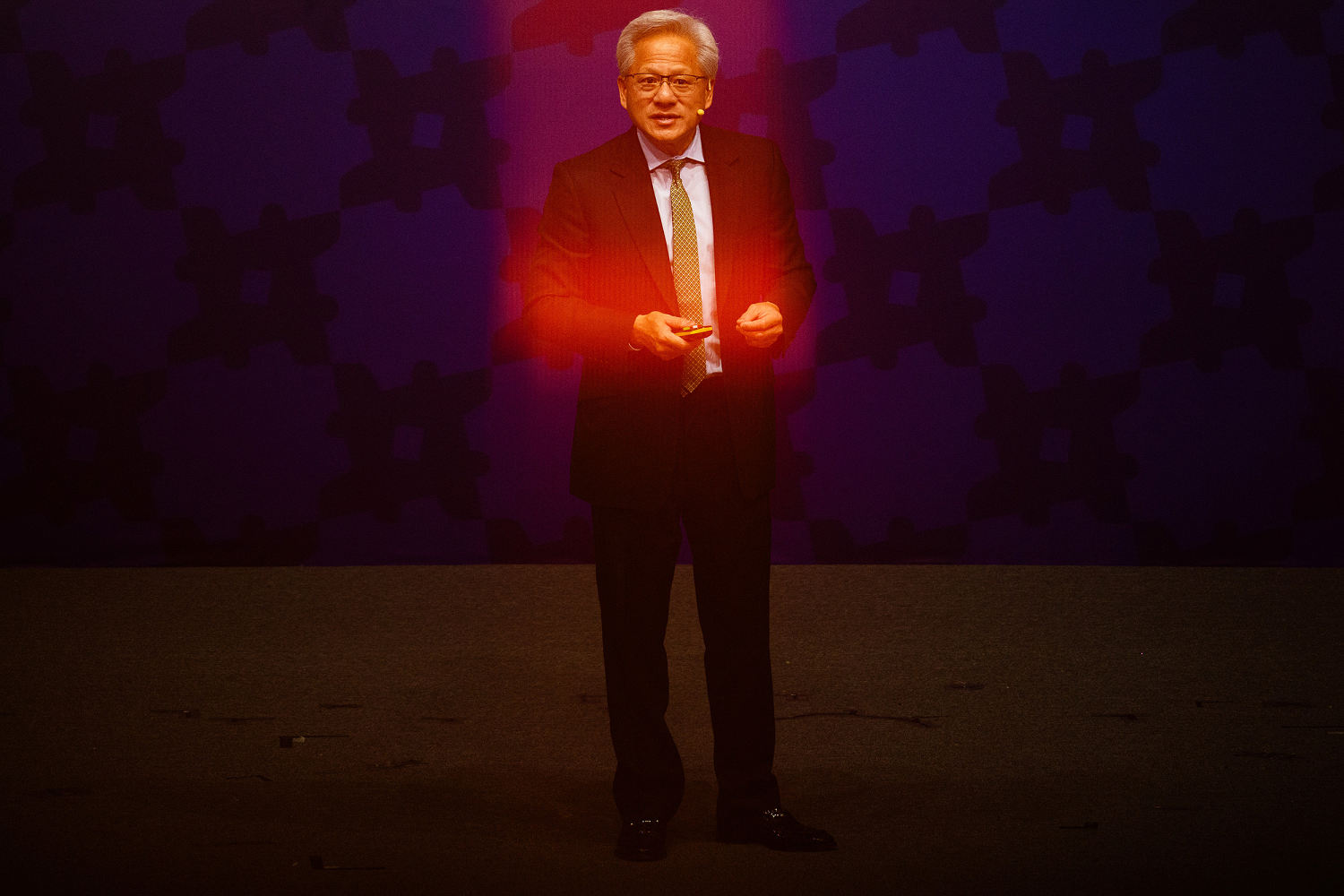
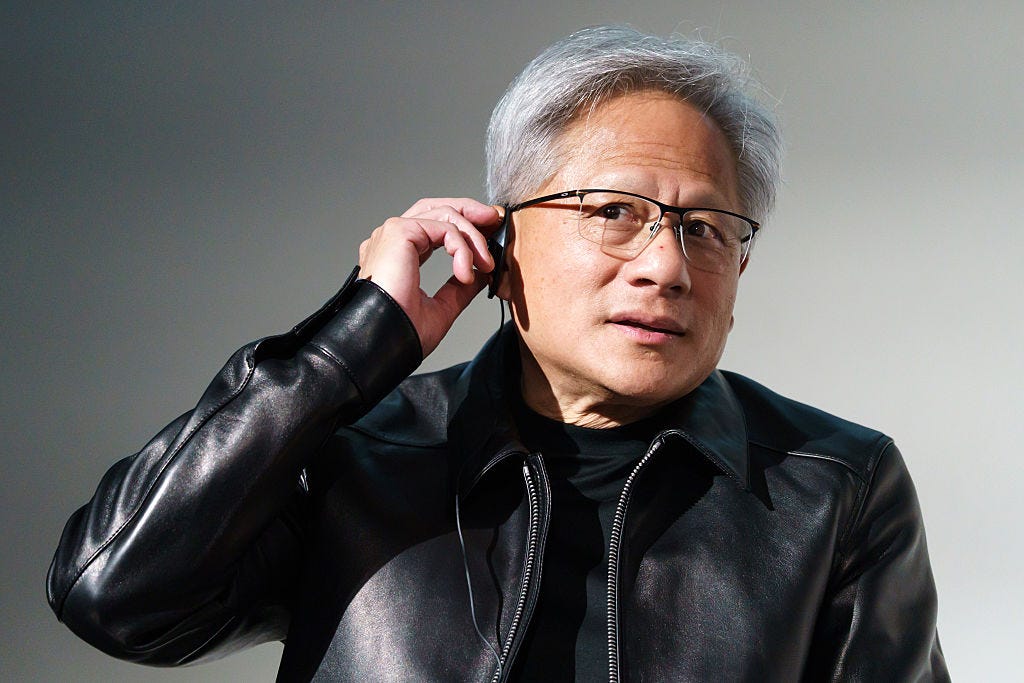
The Nvidia spy inquiry centers on whether CEO Jensen Huang was targeted in a foreign intelligence effort, after reports linked his relationship with a Chinese business executive to U.S. concerns about technology reaching China. Huang has acknowledged an extramarital relationship and said he will cooperate. The allegations remain under review; the reports do not establish that Huang knowingly assisted a spying operation, or that Nvidia’s chips were diverted through the woman’s company.
The market reaction was sharp, though not uniform across the technology sector. Nvidia fell roughly 4.5% to 5% in premarket trading on November 9, with one report estimating that the decline could erase about $190 billion from the company’s value relative to Friday’s close. The stock had already lost about 20% over the preceding month. Other chip shares were mostly higher in early trading, including AMD and Broadcom, while the wider market’s futures also rose. That contrast suggests investors were treating this as a company-specific leadership risk, not simply another broad retreat from AI stocks. The board’s inquiry is now part of a story about corporate governance as much as geopolitics.
The reporting traces the immediate concerns to an account published in late October. U.S. intelligence agencies, according to that account, had identified a close relationship between Huang and Alice Huang, a Chinese citizen who is an executive at a data-center company based in Singapore. U.S. officials reportedly suspected that the company was directing Nvidia’s advanced AI chips to China and assessed that Alice Huang was a Chinese intelligence asset. Those are reported assessments and suspicions, not findings made public in the material available here. Nvidia’s earlier response was that Jensen Huang’s interactions with her were not unusual or unexpected. The initial report set off the public scrutiny now facing the board.
On November 8, Huang sent employees a memo saying he had broken his marriage vows to Lori Huang and expressing regret for the harm to his family. He also said he supported the investigation and would cooperate fully. Nvidia’s board has opened a review of whether he was the target of a foreign intelligence operation. The question is not merely whether the relationship existed: Huang has acknowledged it. The unresolved issue is what, if anything, it meant for corporate security, access to sensitive information, or the movement of chips. The reports provide no conclusion on those points.
Investors have an obvious reason to care about the board’s eventual answer: Nvidia’s business and its public identity are unusually tied to its co-founder. Huang has led the company since it was founded in 1993, and the AI boom has made Nvidia a company valued in the trillions. Analysts cited in the reports described him as central to its success, while one observed that the share price might fall much further if markets thought he was about to leave. Nvidia reportedly has no clear successor. Huang has also placed his children in senior company roles, a detail that sharpens questions about succession and governance, though it does not itself establish wrongdoing. Questions about Huang’s ties are now reaching Congress as well as the boardroom.
The timing adds another layer. Nvidia’s chips power enormous facilities and specialized hardware that develop and operate AI models. At the same time, Washington has spent years restricting technology trade with China amid disputes over trade practices and intellectual property. The broader U.S.-China trade conflict began with tariffs and other trade barriers in 2018, followed by retaliation and a 2020 agreement that did not deliver the specified additional Chinese purchases. That history helps explain why semiconductor sales are treated as a national-security issue, not just a commercial one. The trade dispute’s background is one reason a business relationship can quickly become a matter of state concern.
Huang’s public comments on China are also back in focus. In footage recorded in October and released on November 9, he argued that the United States had made a mistake by restricting engagement with Chinese markets. He said the two countries should communicate and work together on AI safety, and described Chinese researchers as a significant part of the global research community. Those comments reflect his longstanding commercial argument for serving the Chinese market; they do not prove a connection to espionage. In December 2025, President Donald Trump had allowed Nvidia to sell its older H200 chip to approved customers in China, while other restrictions remained. Huang welcomed that decision. Nvidia’s exposure to China-market questions therefore predates the current inquiry.
The Chinese government has rejected the spying allegations. Its Foreign Ministry described the reporting as unsubstantiated and a smear against China, according to the reports. President Trump, meanwhile, publicly supported Huang, even as the board investigation proceeded. The material gives no further details about what evidence the board is examining, what investigative steps it has taken, or when it expects to report. Separate reports say members of Congress want answers, but the available account does not establish what the board or lawmakers will ultimately conclude.
For my part, the striking thing is how quickly a private relationship became a corporate and national-security question. The board has a difficult job: separate what is known from what is suspected, and explain its process without treating either as proof. What happens next depends on evidence the reports do not yet provide.
Update, November 9, 2026: The board has now said it has no reason to believe national security or Nvidia’s secrets were compromised, while pledging to examine all available information. Huang also told staff he was committed to protecting the company and supporting U.S. national security, and apologized to colleagues, directors, partners and shareholders for falling short of his responsibilities. One report says the review will consider whether he misled the board or investors about the relationship and whether disclosure could have affected Nvidia’s value. Shares fell as much as nearly 8% in Monday trading, to $172.20.
Update, November 9, 2026: Nvidia said an independent-director committee, supported by outside counsel, would oversee the inquiry, but gave no timetable for completing it. A company spokesperson also said Huang was committed to remaining CEO without interruption. One report put his stake at about 3.5% of Nvidia’s outstanding shares and noted that the company has a single class of stock. Another said the shares fell more than 4% to $178.83 on Monday, while a separate account estimated the decline erased over $200 billion in market value.
Update, November 9, 2026: A later account adds that Secretary of State Marco Rubio warned senior officials last spring about Huang’s relationship with Alice Huang, also known as Huang Le, who managed Singapore-based Megaspeed. Another report says surveillance showed her passing information to Beijing and describes her company as one of Nvidia’s largest Southeast Asian customers. On Monday, Nvidia fell 4.3% as the S&P 500 gained 2.3% and the semiconductor index rose nearly 7%. Nvidia had also dropped almost 9% the previous week, leaving it about 25% below its early-October peak.
Reported by Business Insider, Semafor, Newsweek, Yahoo News, The Philadelphia Inquirer, CBS News, Daily Mail US, CNN, New York Post, KTVU FOX 2, Fox Business, ABC News, NBC News, BBC, The Boston Globe, The Verge, The Free Press, The San Francisco Standard, TechCrunch, The Daily Wire, Variety, PBS NewsHour.