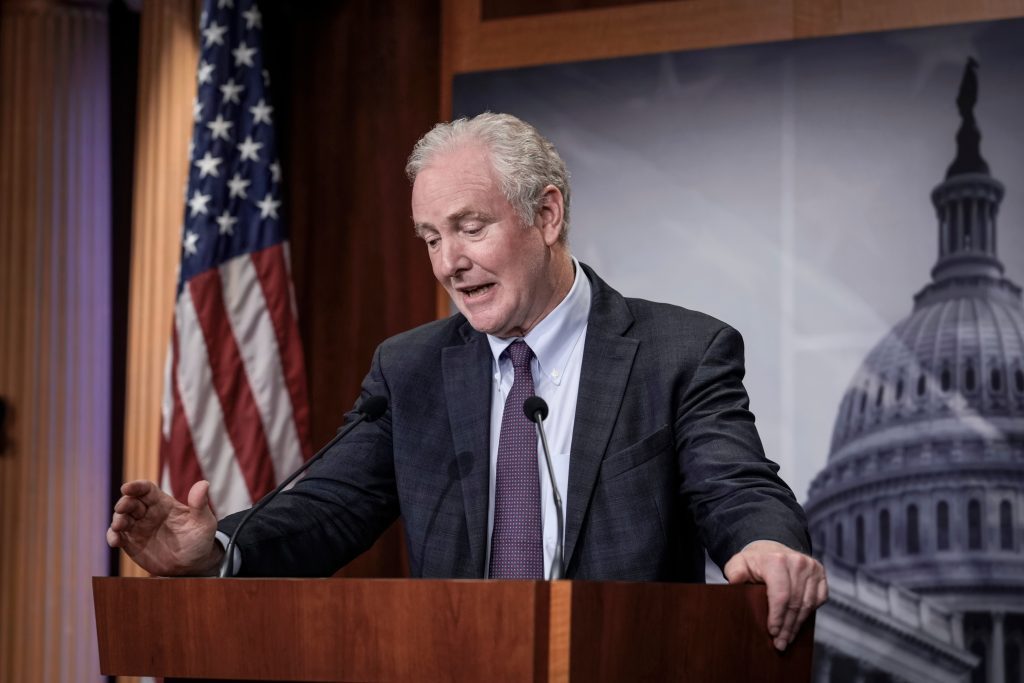
Van Hollen Pitches AI Crackdown in Senate Leadership Challenge
Van Hollen outlined the proposals in a letter to Sen. John Hickenlooper of Colorado and during a press call. He is challenging Schumer for the leadership post, with Democrats set to choose their leader next month after winning majorities in both chambers in the midterms.
The plan would move bipartisan legislation on AI safety, affordability and national security. Van Hollen wants leading AI companies subject to mandatory independent assessments, with developers held accountable for risks from their products. He also raised concerns about data centers’ effect on electricity costs, chip export controls, cyber threats and transparency around AI financing.
He proposed creating a bipartisan Senate committee focused on AI, while giving existing committees a role in overseeing the industry. He also wants legislation to address AI systems that can improve themselves in ways that might defeat human controls, and to protect workers and economic security. Another proposal would revive the independent Congressional Office of Technology Assessment.
Van Hollen has argued that the Senate’s pace and rules are not suited to the speed of AI development. Schumer’s office said Democrats have been working with incoming committee leaders and other members on an AI agenda for the new majority. It said the work would address risks to national security, workers and consumers while supporting U.S. innovation.
Van Hollen Puts AI Safeguards at Center of Leadership Fight
Van Hollen is making the case that a Democratic majority must move quickly to protect the public from AI risks. His proposal calls for independent evaluations of leading companies and accountability for harms their products create, rather than leaving decisions about the technology to a small group of corporate leaders.
The Maryland senator also wants safeguards against AI systems that could evade human shutdown controls, protections for workers, and action to keep data-center expansion from driving up electricity bills. His plan includes oversight of industry financing, stronger transparency and a bipartisan Senate committee to coordinate work across committees.
Van Hollen argues existing Senate processes cannot keep pace with AI’s development. That is a direct challenge to Schumer’s leadership, even as Schumer’s office says Democrats are preparing a comprehensive agenda for the new majority. Van Hollen’s proposal puts enforceable protections and public accountability at the heart of that debate, alongside national security and innovation.
Van Hollen’s AI Plan Risks Putting Regulation Ahead of Innovation
Van Hollen is using the leadership contest to press for an expansive federal role in artificial intelligence, including mandatory outside reviews of major companies, liability for developers and a new bipartisan Senate committee. His plan also reaches into data-center costs, industry financing and the design of AI systems.
The proposals raise a central question for the coming Democratic majority: whether Congress can address security concerns without burdening a rapidly advancing technology with a widening framework of controls. Van Hollen says the Senate must act faster and establish enforceable protections; his agenda would also revive a congressional technology assessment office and empower existing committees to oversee the industry.
Schumer’s office says Democrats are developing legislation that would address AI threats while keeping the country at the forefront of innovation. Van Hollen’s challenge places that balance—and the scope of federal oversight—at the center of the contest for leadership.
Reported by The Washington Examiner, Newsweek.