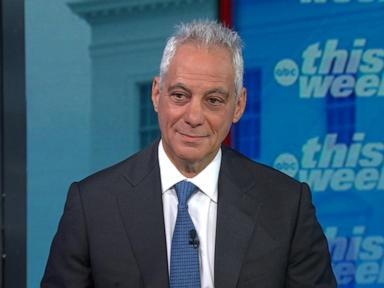
David Axelrod sends Chuck Schumer a message after the midterms

The Schumer leadership transition is at the heart of David Axelrod’s advice to Chuck Schumer: don’t mistake a victory for a mandate to stay forever. The Democratic strategist says Schumer deserves credit for the party’s sweeping midterm gains, but should pledge to hand leadership to a new generation after two years. The point, Axelrod argues, is to make a successful tenure a bridge rather than a barricade.
Axelrod drew his comparison with Joe Biden. Biden had described himself as a transitional president, Axelrod said, but after Democrats’ 2022 midterm performance he changed course and remained in office. In Axelrod’s telling, that was a misreading of what voters wanted, and it harmed Biden and the country. His warning to Schumer is to avoid interpreting the latest election as permission to hold on indefinitely.
The political arithmetic is very different from 2022. This month, Democrats won control of both chambers of Congress and flipped nine seats previously held by Republicans, producing a 56–44 majority in the incoming Senate. It is the party’s largest midterm Senate gain since 1958. In 2022, Democrats gained one Senate seat, reaching a 51–49 majority when independents are included, while Republicans took the House. Biden then said the expected Republican “red wave” had failed to materialize and defended his optimism about the result.
That contrast gives Axelrod’s intervention its force. A party that has just won big can take the result as proof its current leadership worked—or as evidence that voters want a broader change. Axelrod credits Schumer for the victory while insisting it should not settle the question of who leads next. He wants Schumer, if reelected, to name a two-year horizon and put emerging leaders forward as the party’s public faces. The argument is about succession, not a denial of Schumer’s record.
Schumer has led Senate Democrats since 2017 and recruited some of the moderate candidates who helped secure the new majority. He says he has the votes to continue. About 15 of the 55 elected Democrats in the next caucus have publicly backed him, while four senators have declared for his challenger; the rest have not said where they stand. Schumer has called the election result a generational remake of the Senate and says he expects to become majority leader before the incoming senators take their seats. His leadership plans therefore carry consequences beyond the internal vote: they will shape who speaks for the party as it prepares for 2028.
Maryland Senator Chris Van Hollen has announced a challenge, presenting the election as a demand for change from a status quo that does not work for working people. He has support from progressive groups. Van Hollen and Schumer agree on most issues, but Van Hollen has called for a more forceful push to end the Iran war and has raised the possibility of shutting down the government next month to stop war funding. That approach marks a sharper political posture, not simply a generational change in personnel.
Israel has become another fault line. Van Hollen is one of the Senate’s most vocal critics of Israel’s government; Schumer has a long record of support for Israel. The dispute follows earlier anger among some voters and progressive groups over Schumer’s vote alongside Republicans to keep the government open, and calls for a stronger response to Israel’s war in Gaza. As the contest over Schumer’s leadership takes shape, the question is not only who gets the title. It is also what the party will do when foreign policy, spending and its own coalition pull in different directions.
Axelrod’s voice carries weight in this debate because he helped Barack Obama win the presidency in 2008, and also worked on Obama’s 2012 campaign. He has criticized Schumer before: in 2025, he said the leader appeared to be in trouble amid progressive anger over a spending agreement with Republicans. Now he is making a more specific proposal, one that leaves Schumer in office for a period but asks him to commit to an eventual handoff. Schumer’s office had not responded to requests for comment in the reports.
The Senate leadership election is scheduled for December 1 and will use a secret ballot. Until then, public endorsements will offer only a partial picture of the caucus. The result could reshape the party’s leadership after an election that restored Democrats to power in both chambers, but the reports do not establish whether Van Hollen can assemble enough votes to defeat Schumer. The wider argument—whether the party should treat victory as validation or as an opening for renewal—will remain even after the ballot.
For my part, Axelrod’s advice is more interesting because it asks for a timetable than because it invokes a familiar political cautionary tale. A pledge is easy to make and harder to keep. The secret ballot will show where the senators stand now; it cannot settle what kind of party they want to build.
Reported by Newsweek, The Daily Beast.