Texas Supreme Court Ends Challenge to Private Abortion Lawsuits
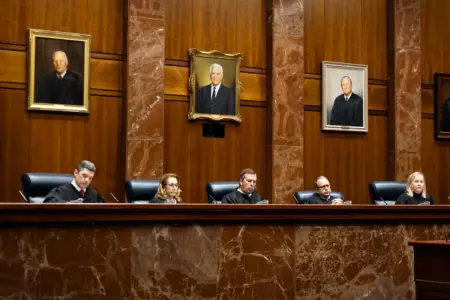
The Texas Supreme Court on November 20 dismissed a five-year legal challenge to the state’s 2021 Heartbeat Act. The ruling leaves in place a provision allowing private citizens to sue people who help someone obtain an abortion prohibited by the law.
The case began after Texas Right to Life said it planned to bring lawsuits under the act. Planned Parenthood of Greater Texas and other abortion advocacy groups sued the organization and its president, John Seago. Fourteen lawsuits were later combined into one proceeding.
The law bars abortions after about six weeks of pregnancy and allows successful plaintiffs to receive at least $10,000 for each violation, as well as attorney fees. The groups seeking dismissal argued that the case was moot, citing a four-year deadline for lawsuits and saying no physician had performed a prohibited abortion in Texas since 2022.
A lower court had found the private enforcement provision unconstitutional, and Texas Right to Life appealed. The state’s separate Human Life Protection Act took effect in 2022 after the U.S. Supreme Court overturned Roe v. Wade. The latest dismissal does not decide whether the challenged provision is constitutional.
Seago called the outcome a victory and said his organization would continue using private lawsuits to enforce anti-abortion laws. Planned Parenthood of Greater Texas did not respond before publication, one outlet said.
Texas Court Leaves Private Enforcers’ Abortion Ban Tool Intact
A Texas Supreme Court dismissal leaves one of the state’s most consequential abortion-enforcement mechanisms untouched: the Heartbeat Act’s authorization for private citizens to sue people who help someone obtain a prohibited abortion. The court ended the challenge on November 20 without ruling on the provision’s constitutionality.
Planned Parenthood of Greater Texas and other advocacy groups brought the case after Texas Right to Life announced plans to sue under the 2021 law. The litigation, which began with 14 lawsuits later combined into one proceeding, continued for five years. A lower court had found the private enforcement provision unconstitutional before Texas Right to Life appealed.
The groups argued the case had become moot, pointing to a four-year filing deadline and saying no physician had performed a prohibited abortion in Texas since 2022. But the dismissal means the private-suit provision remains in place, even as the state’s separate Human Life Protection Act took effect in 2022 after Roe v. Wade was overturned.
The Heartbeat Act permits successful plaintiffs to obtain at least $10,000 for each violation, plus attorney fees. Texas Right to Life president John Seago celebrated the result and said the group would keep pursuing private legal action. The court’s decision leaves that strategy available without settling the underlying constitutional dispute.
Texas Supreme Court Preserves Citizens’ Role in Enforcing Abortion Law
The Texas Supreme Court has left Texas citizens’ ability to enforce the Heartbeat Act through private lawsuits intact, dismissing a five-year challenge on November 20. The ruling does not decide the constitutional merits, but it ends the case that sought to block the provision.
Texas lawmakers passed the act in 2021, prohibiting abortions after about six weeks and allowing people to sue those who assist with a prohibited procedure. Successful claimants can receive at least $10,000 per violation and attorney fees. Texas Right to Life said it intended to bring such cases, prompting Planned Parenthood of Greater Texas and other advocacy groups to sue.
The challengers argued that the case was moot, citing a four-year statute of limitations and saying no physician had performed an abortion prohibited by the act since 2022. A lower court had ruled the private enforcement section unconstitutional, but Texas Right to Life appealed. The Supreme Court’s dismissal leaves that disagreement unresolved rather than striking down the citizens’ enforcement option.
After Roe v. Wade was overturned, Texas’s separate Human Life Protection Act took effect in 2022. Texas Right to Life president John Seago described the dismissal as a victory and said his group would continue pursuing private lawsuits. The result preserves that avenue for enforcing the state’s abortion restrictions.
Reported by Houston Public Media, The Texas Tribune.