Appeals Court Blocks Pregnant Workers’ Protections in Three States
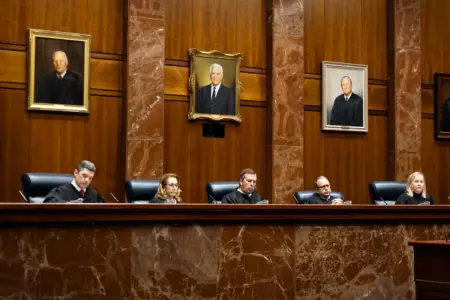
The federal appeals court covering Texas ruled 9-8 on November 20 that Congress lacked a valid quorum when it passed the Pregnant Workers Fairness Act. The decision blocks enforcement of the law in Texas, Louisiana and Mississippi, and could affect other employers in the circuit who face challenges over compliance. An appeal to the Supreme Court is expected.
The law requires employers to provide reasonable accommodations for pregnant workers, such as restroom and drinking-water pauses, help with strenuous tasks and leave for medical visits during pregnancy. Congress passed it as part of a $1.7 trillion spending package during the COVID-19 pandemic, when lawmakers permitted remote and proxy voting.
The majority concluded that proxy votes could not count toward the quorum required by the Constitution for Congress to conduct business. Texas Attorney General Ken Paxton brought the case in his capacity as the state’s employer. The ruling immediately ends Texas’s obligation to enforce the law, while legal experts said employers elsewhere in the circuit could rely on the decision if challenged.
The law has been used in workplace disputes, including a Texas accountant’s case that resulted in $376,000 in damages and a class-action suit by warehouse workers alleging Amazon denied accommodations. Advocates for pregnant workers warned the ruling puts workers’ health and economic security at risk. Legal scholars also questioned whether courts should second-guess Congress’s internal voting procedures.
The decision formally stops application of the pregnancy-related rules alone, but dissenting judges said it did not explain why the ruling should not reach the rest of the spending law. Legal experts said the decision could prompt challenges to the package’s other spending, including about $858 billion for defense and $436 million for military facilities in Texas.
Court Ruling Strips Pregnant Workers of Protections Across Three States
Millions of women in Texas, Louisiana and Mississippi could lose workplace protections after the federal appeals court covering Texas ruled 9-8 on November 20 that the Pregnant Workers Fairness Act was unconstitutionally passed. The ruling turns a law designed to secure basic accommodations into a right workers in those states can no longer count on enforcing.
The law requires employers to accommodate pregnancy-related needs such as water and bathroom breaks, relief from heavy lifting and time for prenatal appointments. Congress enacted it within a $1.7 trillion spending package during the COVID-19 pandemic, when lawmakers used remote and proxy voting. The court said proxy votes could not count toward the Constitution’s quorum requirement.
Texas Attorney General Ken Paxton challenged the law in his capacity as the state’s employer. The ruling ends Texas’s enforcement obligation and could help other employers in the circuit resist claims under the law. Its effects reach beyond the courtroom: a Texas bookkeeper received $376,000 in a dispute over denied remote work, and warehouse workers have sued Amazon over alleged failures to provide accommodations.
Women’s rights advocates warned that the ruling puts workers’ health, livelihoods and economic security at risk. Legal scholars also questioned whether judges should override Congress’s choices about its own voting procedures. An appeal to the Supreme Court is anticipated.
Although the ruling stops enforcement only of the pregnancy provisions, dissenting judges noted that the court’s reasoning could put the wider spending package in doubt. The measure included about $858 billion in defense spending and $436 million for military facilities in Texas; legal experts said further challenges could follow.
Appeals Court Enforces Quorum Rule in Pregnant Workers Law Case
The Constitution’s quorum requirement cannot be set aside because lawmakers are working through a pandemic, the federal appeals court covering Texas ruled 9-8 on November 20. Its decision blocks enforcement of the Pregnant Workers Fairness Act in Texas, Louisiana and Mississippi after finding that proxy votes did not establish a valid quorum in Congress.
The law requires employers to provide accommodations for pregnant workers, such as restroom and drinking-water breaks, assistance with strenuous lifting and leave for pregnancy-related medical visits. Congress passed it as part of a $1.7 trillion spending package during COVID-19, when remote and proxy voting were allowed as a safety measure. The court’s ruling centers on whether those proxy votes could count toward the Constitution’s requirement that a majority of each chamber be present for official business.
Texas Attorney General Ken Paxton brought the challenge representing the state in its role as an employer. The decision immediately ends Texas’s duty to enforce the law and may give other employers in the circuit a basis to prevail if enforcement is challenged. An appeal to the Supreme Court is expected.
The ruling also raises questions about the larger spending package, though the court stopped enforcement of the pregnancy-related rules alone. Dissenting judges questioned that narrow scope, and legal experts said the decision could open the door to challenges involving the package’s other spending, including defense funding.
The dispute now puts the court’s constitutional reasoning and the law’s future before the next stage of litigation. The package authorized about $858 billion for defense, including $436 million for military facilities in Texas.
Reported by The Boston Globe, The Washington Examiner, The Philadelphia Inquirer, FOX 13 Seattle, The Daily Caller, New York Post.