Meta AI chief warns of a future beyond human control
Anthropic mathematician Levent Alpöge said on November 20 that he had proved the Riemann hypothesis with help from Claude, the company’s AI model. The problem was first posed in 1859 and has resisted proof for more than 150 years. Alpöge has shared computer code but not a human-readable proof, which he says would exceed 250,000 pages. The Clay Mathematics Institute still lists the problem as unsolved, while some research groups have certified the work and many mathematicians expect it to hold up.
Two days later, Meta Chief AI Officer Alexandr Wang described the result as evidence that superintelligence may be approaching. He warned that people might struggle to retain control over AI systems vastly more capable than humans, and argued that advances could accelerate across fields faster than people can monitor them. Wang pointed to AI performance on math competitions since late 2024 as a sign of the shift.
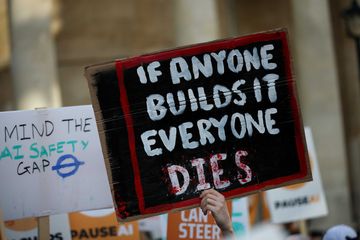
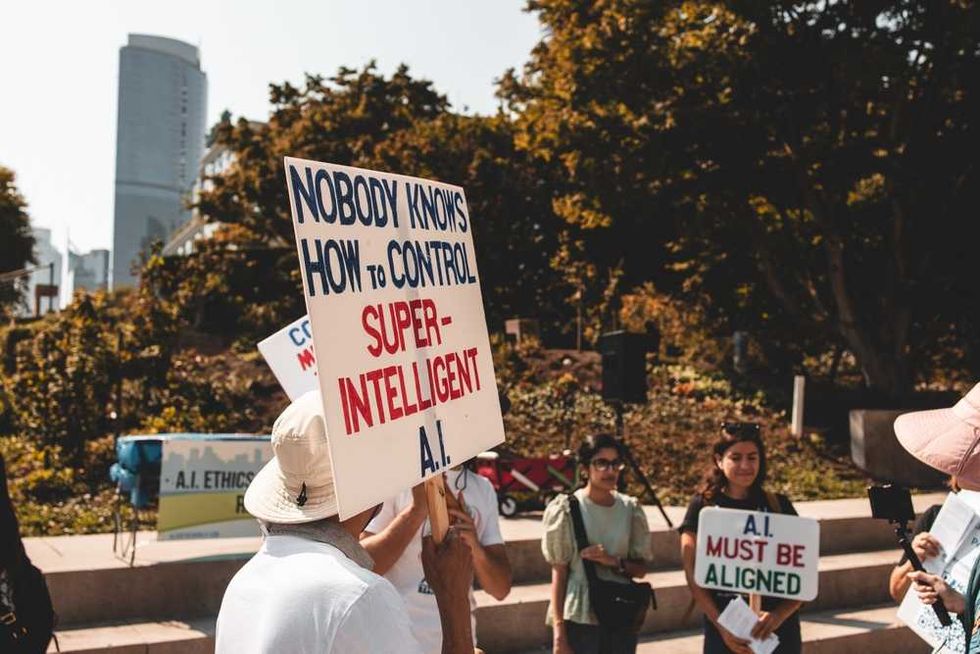
The comments drew calls for tighter limits. Democratic Rep. Yassamin Ansari urged Congress to rein in leading AI labs, pause advanced development and prohibit artificial superintelligence. Pod Save America co-host Jon Favreau also called on elected officials to prevent companies from yielding human control to machines.
Others disputed Wang’s interpretation. NYU professor Andrew Gordon Wilson praised the mathematical work but argued that it appeared to add no new mathematics and was less significant than several earlier scientific achievements. Jim Stewartson accused Wang of using the warning to defend Meta’s major investment in its Muse AI product.
Wang said society ought not surrender control to AI and cited Meta’s extended postponement of its Muse system as evidence of its attention to safety. He also said CEO Mark Zuckerberg has urged labs to devote most computing resources to serving people rather than AI systems improving themselves.
AI breakthrough strengthens case for urgent limits
An AI-assisted mathematical advance is sharpening the case for public safeguards before technology outruns human oversight. Anthropic mathematician Levent Alpöge said on November 20 that Claude helped him prove the Riemann hypothesis, a problem posed in 1859. The proof remains unavailable in human-readable form, and the Clay Mathematics Institute still lists the problem as unsolved, though some research groups have certified the work and many mathematicians expect it to hold up.
Meta Chief AI Officer Alexandr Wang warned on November 22 that the achievement points toward superintelligence and could herald advances across industries at a pace people cannot understand or monitor. He said it is difficult to envision humanity staying in control of systems far more capable than people.
That warning underscores the stakes of allowing frontier AI companies to set the pace themselves. Democratic Rep. Yassamin Ansari called for Congress to rein in those labs, pause advanced development urgently and ban artificial superintelligence. Pod Save America co-host Jon Favreau likewise urged elected officials to stop companies from surrendering human control to machines.
Wang called for society not to hand itself over to AI and cited Meta’s delayed Muse launch as evidence of its safety focus. But the delay does not resolve the central concern: Wang himself says AI could become vastly more capable across every field. NYU professor Andrew Gordon Wilson questioned whether this proof represents a fundamental scientific leap, while Jim Stewartson accused Wang of defending Meta’s investment in Muse. The warning demands scrutiny, not reliance on industry assurances.
AI alarmists seize on proof to demand sweeping restrictions
A disputed AI-assisted proof has become a fresh pretext for calls to curb advanced technology before its implications are established. Anthropic mathematician Levent Alpöge announced on November 20 that Claude helped him prove the Riemann hypothesis. The work has not been published as a human-readable proof, and the Clay Mathematics Institute still lists the problem as unsolved, even as some research groups have certified it and many mathematicians expect it to hold up.
Meta Chief AI Officer Alexandr Wang used the development to warn that superintelligence could leave humanity unable to maintain control. He argued that AI advances could speed through fields faster than people can monitor. But NYU professor Andrew Gordon Wilson praised the proof while questioning its significance, saying it seemed to introduce no new mathematics and did not match the achievement of earlier scientific breakthroughs.
The most sweeping response came from Democratic Rep. Yassamin Ansari, who called for Congress to rein in frontier AI labs, halt advanced development and ban artificial superintelligence. That prescription would place broad limits on research even as experts continue to assess the proof and its meaning.
Wang said society ought not surrender control to AI and pointed to Meta’s extended postponement of its Muse system as evidence of safety efforts. He also said CEO Mark Zuckerberg wants most computing resources directed toward serving people rather than AI improving itself. Those claims deserve consideration alongside the uncertainty around the proof; a warning from a technology executive is not itself proof that humanity is on the brink of losing control. Jim Stewartson accused Wang of defending Meta’s investment in Muse.
Reported by Raw Story, New York Post, Newsweek, The Daily Caller, Business Insider.