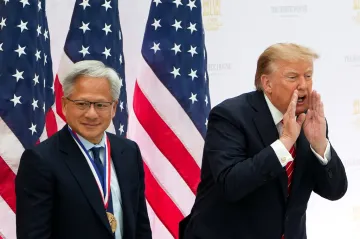
Nvidia’s AI financing role faces scrutiny amid leadership uncertainty
Nvidia’s role as a major backer of AI companies is drawing attention as questions swirl around its leadership. Board head Harvey Jones said directors have no plans to restore Jensen Huang to the CEO position, though Huang has indicated he would consider coming back. Nvidia has said its operations, customer commitments and product plans will continue without interruption.
AI Funding Gaps Could Put U.S. Competitiveness at Risk
America cannot afford to let promising AI companies lose ground because financing decisions are delayed. Nvidia’s investments have helped bring other investors into large funding rounds, and uncertainty around its leadership raises questions about who will decide which deals the company backs and when. Nvidia says its operations and customer commitments will continue, but interim CEO Colette Kress says future investments are under scrutiny.
Independent AI labs and specialist cloud providers do not have the resources of Microsoft, Meta or Google. They may need outside funding to train models or buy chips before they can earn revenue. If a lead investor hesitates, other backers may wait too, putting teams and computing capacity at risk.
The stakes reach beyond individual companies. Chinese models drew nearly 1.8 billion Hugging Face downloads during July–September, while U.S. models got 500 million, and Huawei is showing customers how to run Alibaba’s Qwen on its chips. Countries choosing AI systems for their own infrastructure may stick with suppliers once they have adapted software and trained staff.
Private investors should lead, but government should be ready to address a documented financing gap in a viable project tied to national security. The proposal calls for Treasury to convene investors, an initial $100 billion in combined public and private commitments, and a temporary federal credit guarantee with oversight, limits and an expiration date. Proper safeguards can protect taxpayers while helping ensure allies have American AI alternatives.
Government Guarantees Should Not Become AI Industry Bailouts
The push for a $100 billion pool of public and private AI financing risks turning a private investment problem into a taxpayer obligation. Nvidia remains a powerful investor, but interim CEO Colette Kress says the company is scrutinizing future commitments. The company says its operations and existing customer commitments will continue.
The proposal itself recognizes that private investors should decide which companies merit funding. It would allow a narrow exception for a documented gap threatening a viable project considered vital to national security, with private investors keeping capital at risk. Any federal guarantee should have a firm cap, an expiration date, published criteria and independent oversight, including rules addressing conflicts of interest.
There are legitimate strategic stakes: Chinese models recorded nearly 1.8 billion downloads on Hugging Face during July–September, while U.S. models got 500 million, and Huawei is promoting systems that run Alibaba’s Qwen. But those concerns do not justify open-ended government support for companies seeking to train models or reserve computing capacity.
Nvidia should clarify who can approve pending investments and whether it plans follow-on financing. Independent venture firms and institutional investors can assemble deals without making taxpayers the backstop. If Congress authorizes a temporary guarantee, it should apply only after private funding options are assessed and should ensure the public is not left carrying the risk of ordinary investment decisions.