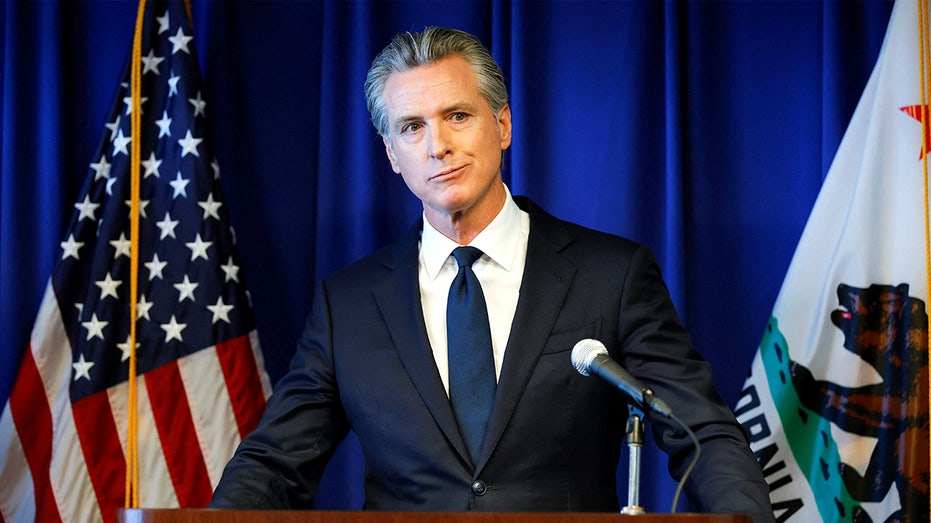
Trump to Condemn Newsom’s California Death Sentence Commutations
On November 23, President Donald Trump is scheduled to appear at the Department of Justice with families of murder victims and senior federal law enforcement officials to denounce California Gov. Gavin Newsom’s decision to commute 548 death sentences. Justice Department chief Todd Blanche and FBI head Kash Patel are also expected to attend. The commutations change the sentences to life without parole; nearly 400 await the California Supreme Court’s approval before becoming final.
The family of Polly Klaas, a 12-year-old who was kidnapped and murdered in 1993, is expected at the event. Her father, Marc Klaas, has criticized the decision, arguing it could bring people sentenced to death closer to freedom. Richard Allen Davis was convicted of her murder and sentenced to death in 1996.
Newsom said he acted because he believes state executions conflict with California’s values and that flaws in the legal system make execution incompatible with justice. California has not carried out an execution since 2006. The state’s voters have rejected efforts to repeal capital punishment twice, and prosecutors have objected to the commutations.
On November 16, a coalition representing crime victims, prosecutors and police officials said it would take Newsom to court. They argue his clemency authority does not permit blanket commutations that bypass legal procedures and victims’ rights. Victims have also asked a state Supreme Court justice to recuse themselves from considering the cases, citing perceived closeness to Newsom’s policies. The court’s review remains pending.
Trump Turns Newsom’s Death Row Decision Into a Political Show
President Donald Trump is using a planned November 23 event at the Department of Justice to attack California Gov. Gavin Newsom over his decision to commute 548 death sentences. The appearance, joined by top federal law enforcement officials and families of murder victims, puts a deeply painful issue at the center of a political fight.
Newsom said he believes executions are incompatible with California’s values and that an imperfect legal system cannot reliably carry them out justly. The sentences were changed to life without parole, though nearly 400 commutations still need approval from the California Supreme Court. California has not executed anyone since 2006.
The anguish of victims’ families deserves to be taken seriously. Polly Klaas’s father, Marc Klaas, has spoken against the commutation affecting Richard Allen Davis, who was convicted of her 1993 murder. But staging a presidential denunciation does not resolve the difficult questions Newsom raised about state executions; it turns them into a platform for attacking a political opponent.
A coalition of victims, prosecutors and law enforcement leaders says it plans to sue, arguing the governor’s action exceeded his clemency authority and disregarded victims’ rights. The court must still review many of the commutations, while victims have sought a justice’s recusal over perceived ties to Newsom’s policies. Trump’s event adds political pressure, not a substitute for that process.
Trump Stands With Victims as Newsom Commutes 548 Death Sentences
Gov. Gavin Newsom’s decision to commute 548 California death sentences has left victims’ families facing a fresh fight over whether murderers sentenced to death will receive the punishment imposed by the courts. President Donald Trump plans to meet some of those families at a November 23 Justice Department event and denounce the decision.
The commutations change the sentences to life without parole, but nearly 400 await the California Supreme Court’s approval. Polly Klaas’s family is expected at the event. Klaas was 12 when she was kidnapped and murdered in 1993; Richard Allen Davis was convicted and sentenced to death. Her father, Marc Klaas, has argued the commutation brings Davis closer to freedom.
Newsom says execution conflicts with California’s values and that flaws in the legal system make it incompatible with justice. But prosecutors have emphasized that the death penalty remains legal in the state, and California voters have twice rejected attempts to repeal it. Those limits matter: a governor’s moral judgment should not erase the role of courts, voters and victims’ families.
A coalition of crime victims, prosecutors and police officials said it would sue, arguing the blanket action bypassed required procedures and victims’ rights. The state’s high court has yet to approve many of the commutations, and victims have asked a justice to recuse themselves over perceived ties to Newsom’s policies. The legal challenge will determine what happens next.
Reported by New York Post, SFist, The Washington Examiner.