Musk’s MAGA Break Shows How Fast Billionaires Change Sides

Elon Musk poured almost $500 million into Republican campaigns, saw the party lose ground in the midterms, and now says he is not MAGA. Donald Trump replied with a warning wrapped in friendship: people who leave his movement, he said, “don’t do very well.” This Musk MAGA break is more than a clash between two powerful men. It shows how quickly wealthy political patrons can change their language when their chosen party looks less useful. It also shows how readily a leader can make loyalty a condition of belonging.
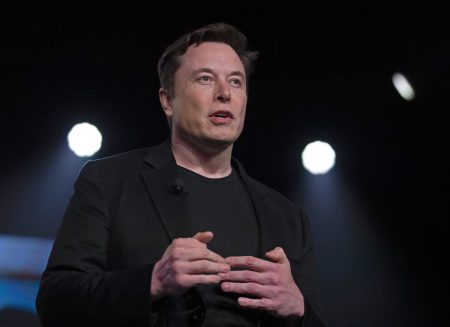
At Wednesday’s New York Times DealBook Summit, Musk said MAGA was not a fixed label he understood. He rejected what he called blind obedience to Republican policy. He described himself as ideologically moderate and said both parties have strengths and weaknesses. He said his campaign spending aimed to keep either party from dominating the presidency and Congress. In his telling, the goal was balance, not full Republican control. Yet almost all the money went to Republican candidates, who suffered heavy midterm losses. Musk conceded the spending brought little apparent return and said he felt foolish about it. He also suggested matters might have been worse without his involvement. Musk’s remarks at the summit place his new self-description alongside the scale of his recent political investment.
The contrast with his recent public performance is hard to miss. In 2024, Musk appeared at Trump rallies and called himself “dark MAGA.” After Trump’s election, he attended the Conservative Political Action Conference in the same branded hat. He waved a chainsaw, a prop linked to his push to shrink the federal bureaucracy through the Department of Government Efficiency. During Trump’s return to office, Musk led that initiative. It oversaw mass firings and USAID’s dismantling; the government also spent billions paying idled workers on leave. This was no distant observer just discovering the rough edges of party politics. Musk had a prominent role in the project he now describes with greater distance. The account of his midterm regrets highlights the distance between the money spent and the results he says he sought.
Trump responded in a Thursday phone call with NBC News. He called Musk a friend and said MAGA had a specific meaning to him. He cautioned that those who depart from it do not fare well. He later eased his tone, saying Musk meant well and noting that the two had traveled together. Musk made his comments during a China visit with Trump for the Asia-Pacific Economic Cooperation summit. Trump’s response mixed personal warmth with a public boundary. Their friendship may continue, but Trump claims the right to define loyalty to MAGA. The warning is political; it does not establish any particular consequence for Musk.
The election numbers make Musk’s account less straightforward than his talk of balance suggests. He says he wanted to prevent one party from gaining overwhelming power. Yet his almost $500 million campaign effort heavily favored Republicans, whose candidates lost. He also put more than $250 million toward Trump’s 2024 election bid. Coverage of Musk’s admission mentions that earlier contribution and his work with DOGE. The reports do not show that Musk’s spending altered the midterm result. Musk himself said the outcome demonstrated that money alone does not decide elections. They do show that immense wealth can secure access, attention and proximity to a president. It cannot guarantee electoral success or enduring agreement about a movement’s purpose.
Musk is not the only technology billionaire portrayed as keeping links across party lines. Alex Karp, Palantir’s chief executive and co-founder, says he has long been a Democrat. He has called the company’s products progressive and said his political donations are split between Democrats and Republicans. According to the reports, Palantir has received billions in Trump administration contracts. Karp has also criticized the administration’s immigration crackdown, saying Trump acknowledged it had gone too far. The arrangement is not hard to read: a company can serve a government, appeal to different political groups and choose language that safeguards its freedom to operate. Musk’s break with the MAGA label is part of a wider pattern. Powerful business figures stress political flexibility as fortunes change.
One material point gets lost in the soap opera of billionaire spending and presidential friendships. Musk’s campaign was not a worker-led effort to decide the country’s direction. It was one exceptionally rich person trying to influence which party governed. When that gamble yielded little, he could recast his purpose as balance and moderation. Workers lack the same freedom to treat political power like a portfolio they can rebalance. That is true even when the policies at stake affect their jobs, public services and rights. Trump’s Asia trip with Musk is another reminder of corporate power’s proximity to government machinery.
For me, the most revealing detail is not Musk’s new label. He can spend fortunes trying to influence elections, then call the effort a disappointing experiment. The rest of the country still has to live with the policies those alliances set in motion.
Update, November 20, 2026: Musk’s largest reported midterm bet went to a group supporting Texas Attorney General Ken Paxton’s Senate run; Paxton lost to state Representative James Talarico. Democrats also took both chambers of Congress and won Texas’s Senate race and governorship, victories the reports describe as historic. Musk offered a conciliatory forecast about incoming governor Gina Hinojosa, while Democratic lawmakers signaled that his change of label would not spare him scrutiny: Senator Ruben Gallego said he would still face a subpoena, and Representative Yassamin Ansari said an investigation was continuing.
Reported by The Daily Beast, The Daily Caller, Raw Story, The Washington Examiner, New York Post, Breitbart, CNN, Newsweek, The New Republic.