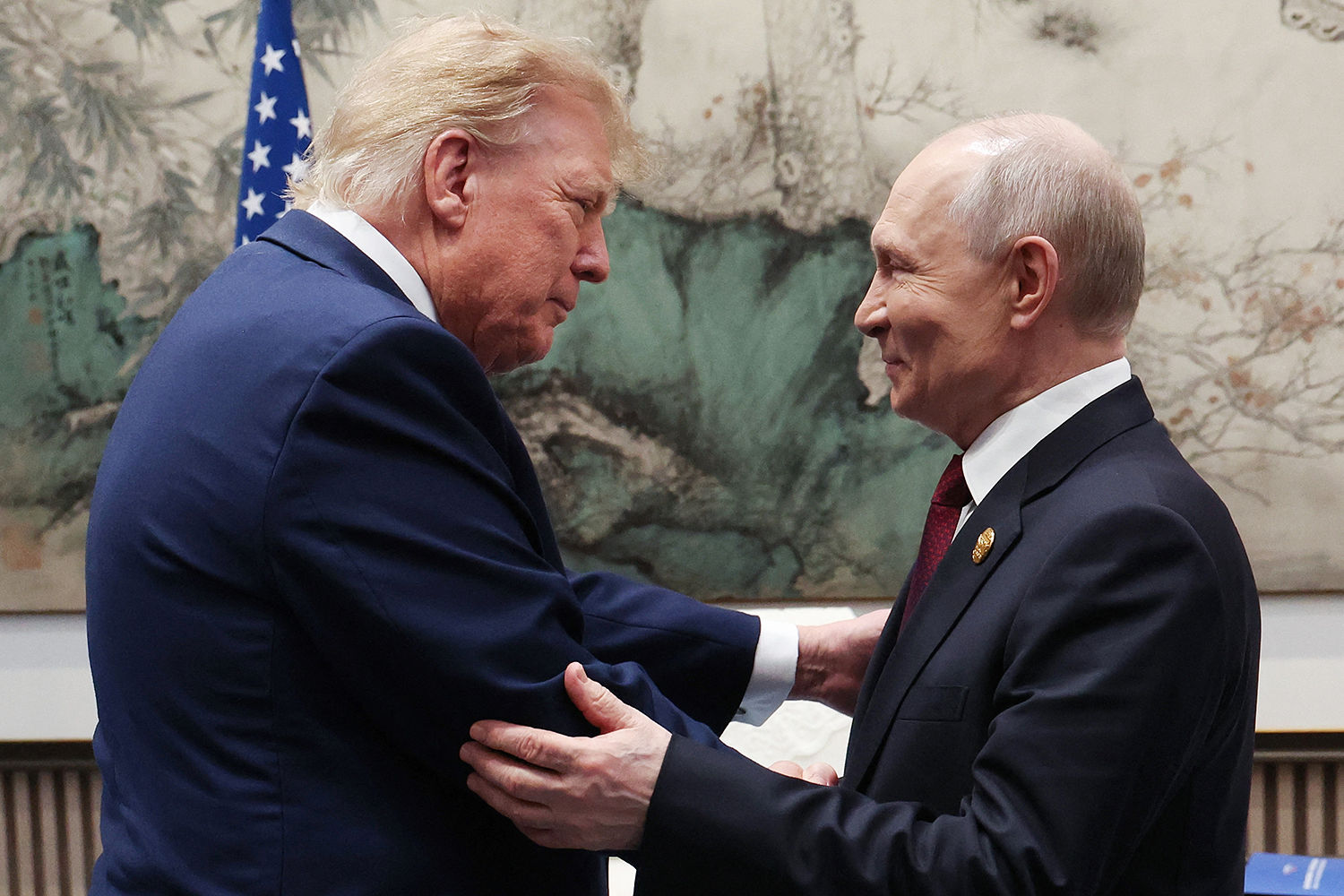
Trump, Xi and Putin Issue a Broad, Nonbinding Peace Declaration
The leaders pledged to discuss ways to reduce nuclear risks and prevent proliferation, and reiterated that victory in a nuclear conflict is impossible and such fighting must never occur. The declaration sets no timetable for talks and does not commit the countries to binding limits on their arsenals or reductions in nuclear weapons.
The pledge comes after New START, the last major U.S.-Russian treaty limiting strategic nuclear weapons, expired on February 5. The declaration draws China into nuclear-risk discussions as its arsenal expands, but does not set out specific steps for negotiations.
The three governments also agreed to pursue U.N. reform and expand output and distribution of processed petroleum goods, while keeping energy flows steady. They specified no changes to the U.N.’s membership, voting rules or veto powers, and provided no targets, deadlines or mechanisms for measuring increased fuel supplies.
On international courts, the leaders emphasized state consent and protections for government officials, and said the International Criminal Court and similar bodies must not exceed their jurisdiction. None of the three countries is an ICC member. The court issued an arrest warrant for Putin in 2023 over claims concerning the illegal removal and relocation of Ukrainian children.
The declaration does not offer plans to end the wars in Ukraine or Iran. Trump was due to address reporters at the White House after returning from China.
Three Leaders Offer Lofty Words, but No Plan for Peace
The declaration from Trump, Xi and Putin puts the language of peace on paper while leaving ongoing wars untouched. It offers no plan for Ukraine or Iran, and no binding nuclear reductions, deadlines or concrete limits on the three countries’ arsenals.
Their pledge to discuss nuclear risks comes as the last major treaty limiting U.S. and Russian strategic weapons, New START, has expired. The leaders restated that victory in a nuclear conflict is impossible and such fighting must never occur, but offered no timetable for talks or commitments to cap their arsenals. Words alone cannot substitute for measures that reduce the danger.
The declaration also calls for U.N. reform without saying whether the leaders would alter Security Council membership, voting rules or the veto held by permanent members. The same governments that wield that veto have left the meaning of reform undefined.
Their energy pledge is similarly open-ended: they promised more refined petroleum products and stable energy flows but set no production goals or deadlines. On international courts, they stressed official protections and warned against the ICC exceeding its jurisdiction. The court has issued a warrant for Putin over allegations concerning Ukrainian children, while not one of the three countries has joined the court.
The declaration’s broad assurances do not resolve the conflicts or specify how its promises will be carried out. Trump was due to address the White House after returning from China.
U.S. Brings China Into Nuclear Risk Talks With New Declaration
Trump’s summit with Xi and Putin produced a declaration that draws China into nuclear-risk discussions alongside the United States and Russia. The leaders affirmed that victory in a nuclear conflict is impossible and such fighting must never occur, and pledged talks on proliferation and reducing nuclear dangers.
The agreement does not impose binding reductions or set a timetable, and New START, the last major treaty limiting U.S. and Russian strategic arsenals, expired on February 5. Still, the three governments have put nuclear-risk discussions on their shared agenda at a moment when China’s arsenal is growing.
They also committed to work toward U.N. reform and to expand refined petroleum supplies while preserving stable energy flows. The declaration does not specify production targets or how the U.N. should change. That leaves difficult work ahead, including the need for any Charter amendments to win broad approval among U.N. members and all five permanent Security Council members.
The leaders’ call for respect for national sovereignty and limits on international courts’ jurisdiction also signals their concern about institutions exercising authority over governments. Not one of the three countries has joined the ICC, which has issued an arrest warrant for Putin over claims concerning Ukrainian children. The declaration does not spell out how its principles would affect the court’s authority.
The agreement is a starting point, not a detailed arms-control or energy plan. Trump was due to speak with reporters after returning to the White House.
Reported by Newsweek, WBUR, The Daily Caller, The American Prospect, ABC News, Deseret News, CNN, Raw Story, The Washington Examiner.