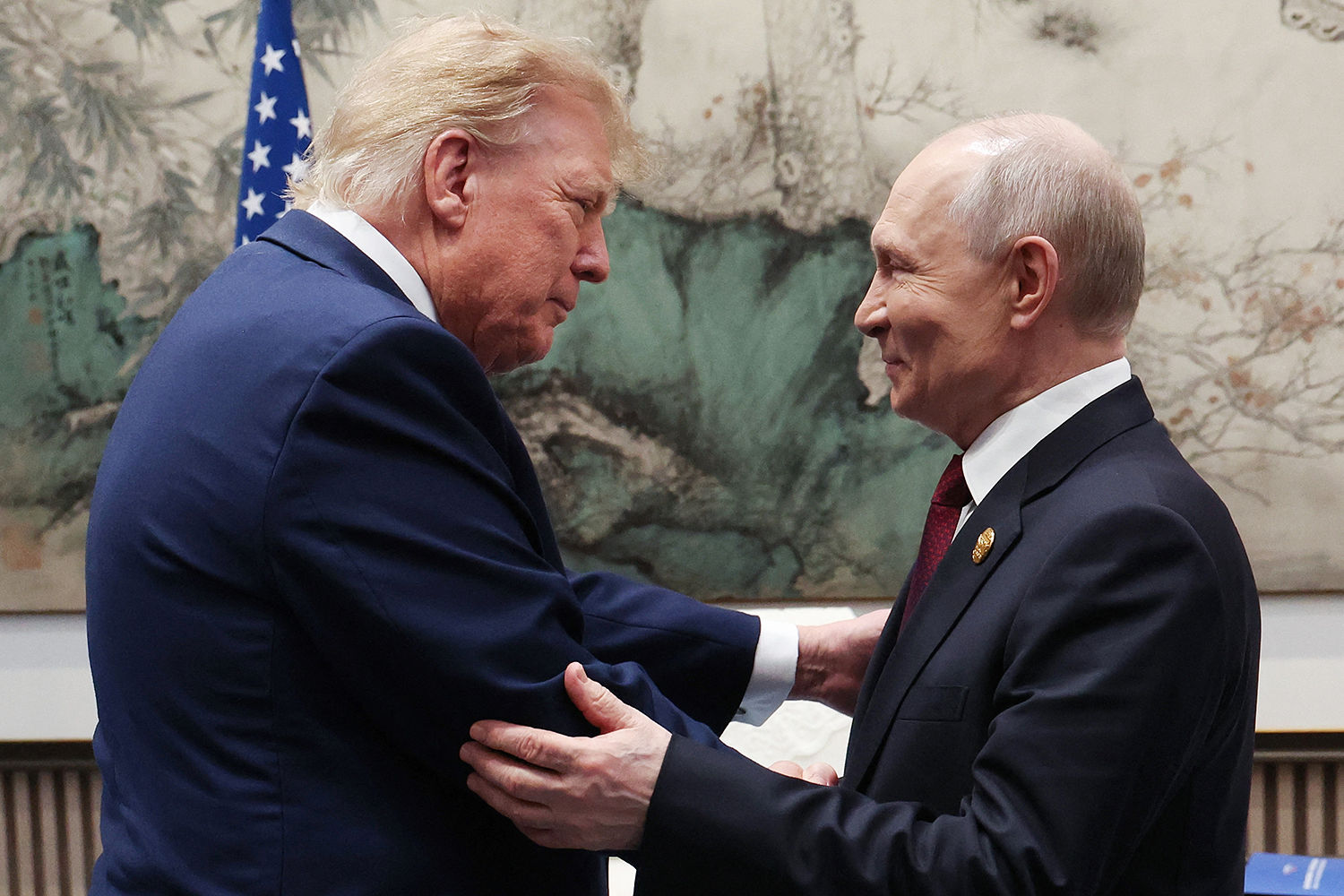
Trump Pairs Xi and Putin With Yalta Leaders in Social Media Post
Trump posted a graphic pairing a photograph of himself with Xi and Putin with the 1945 image of Franklin D. Roosevelt, Winston Churchill and Joseph Stalin at Yalta. The caption linked the great powers of 1945 and 2026. The post was part of a 35-post burst that also included photographs and AI-generated images of the three leaders, as well as posts criticizing former President Barack Obama.
The image came after the leaders held their first formal three-way summit, a 90-minute meeting in Shenzhen on November 19. Their joint declaration called for dialogue to reduce nuclear risks and included commitments on U.N. reform and refined petroleum supplies, but did not set negotiations on an arms-reduction treaty or resolve the war in Ukraine.
The Yalta comparison has drawn concern in Ukraine and parts of Europe, where the 1945 conference is associated with the postwar division of Europe and decades of Soviet control in the region. German Chancellor Friedrich Merz said a Yalta-style arrangement would not bring peace and that Europe would not accept being divided again. Ukrainian Foreign Minister Andrii Sybiha also rejected the parallel.
Trump described the Shenzhen meeting as a success and said he had discussed ending the Ukraine war with Xi and Putin. Putin said Yalta acknowledged realities that followed World War II and referred to present-day realities on the ground, language Kyiv rejects. Xi called for cooperation among major powers, while the leaders announced no timetable for further talks.
Trump’s Yalta Post Raises Fears of Ukraine Being Sidelined
Trump’s image of himself with Xi and Putin beside the Allied leaders at Yalta revived the concern that powerful countries could shape Europe’s future without the people who live there. The 1945 conference is widely associated in Ukraine and Eastern Europe with the region’s postwar subordination to Soviet rule.
The post followed the first formal three-way summit between the U.S., Chinese and Russian leaders. Their declaration included nuclear-risk dialogue and other areas of cooperation, but offered no settlement to Russia’s war in Ukraine. Nor did the leaders announce a schedule for follow-up discussions.
European leaders have made clear that Ukraine cannot be treated as a bargaining chip in a great-power arrangement. German Chancellor Friedrich Merz said a Yalta format would not bring peace and that Europe would not accept another division. Ukraine’s foreign minister also rejected the historical comparison.
Trump called the Shenzhen meeting a major success and said he had spoken with Xi and Putin about ending the war. But Putin’s appeal to accept realities on the ground carries a clear implication for a country whose territory Russian forces occupy. A summit that leaves Ukraine’s future unresolved is no substitute for a peace process that includes Ukraine.
Trump’s Great-Power Summit Puts Nuclear Dialogue on the Table
Trump’s Yalta-themed post highlighted the scale of his meeting with Xi and Putin: the leaders’ first official gathering in this three-party format. The meeting produced a joint declaration endorsing efforts to lower nuclear dangers and curb the spread of weapons, along with commitments on U.N. reform and refined petroleum supplies.
The leaders declared that nuclear conflict has no victor and must never occur. They did not, however, agree to a timetable for talks on a three-way arms-reduction treaty. The declaration also left unresolved Russia’s invasion of Ukraine and Washington’s confrontation with Iran.
Trump called the meeting a success and said he had discussed a peaceful end to the Ukraine war with Xi and Putin. Xi urged cooperation among major powers, while Putin argued that agreements must account for realities on the ground. The summit’s supporters can point to renewed dialogue among nuclear powers; its critics focus on the lack of a Ukraine breakthrough.
European leaders, including German Chancellor Friedrich Merz, pushed back on the Yalta comparison, warning against Europe being divided again. Xi called for regular high-level exchanges, but no schedule for further talks was announced.
Reported by Newsweek, The Daily Beast.